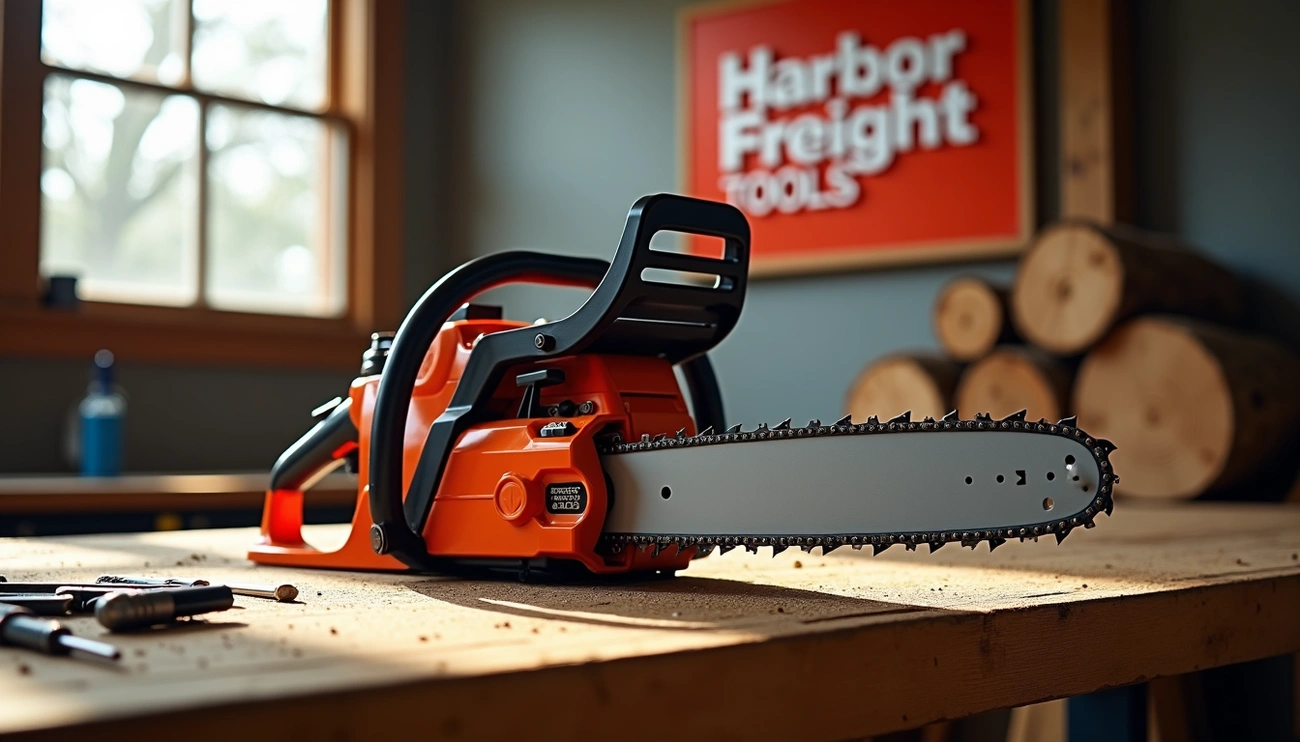
Portland chainsaws are made for Harbor Freight Tools by various overseas manufacturers. Harbor Freight owns the Portland brand and uses it for budget-friendly gas and electric chainsaws. These chainsaws are not made by major brands like Stihl or Oregon, but are produced to meet Harbor Freight’s cost and retail specifications.
The Origins of Portland Chainsaws
The story of Portland chainsaws begins with a curious observation in the forests of Oregon.
Joseph Cox and the invention of the modern saw chain
In the autumn of 1946, logger and inventor Joseph Buford Cox paused while chopping firewood to examine something fascinating—a timber beetle larva effortlessly chewing through solid wood. This small creature, about the size of a man’s finger, could cut both across and with the wood grain using its C-shaped jaws. For Cox, who struggled with the inefficient chainsaw technology of his time, this natural design offered a solution to a persistent problem.
“I spent several months looking for nature’s answer to the problem,” Cox later recalled. “I found it in the larva of the timber beetle”. Taking this biomimetic approach, Cox retreated to his Portland basement workshop and developed a revolutionary new cutting chain that mimicked the larva’s alternating jaw design.
From Oregon Saw Chain to Omark Industries
Initially, Cox established Oregon Saw Chain Manufacturing Corporation in 1947 with just four employees. The company’s first year was remarkably successful, selling $300,000 worth of saw chain. This immediate success demonstrated that Cox had indeed solved a critical problem for the timber industry.
Throughout the early years, the company expanded rapidly. By 1955, annual sales reached $7 million, prompting further growth. Subsequently, in 1957, the company was renamed Omark Industries to facilitate international expansion. The name “Omark” was derived from “Oregon mark,” creating a more globally accessible brand while maintaining “Oregon Saw Chain” as its flagship product.
The Blount acquisition and rebranding journey
After decades of success, Omark Industries was acquired by Blount, Inc. in 1985. Under Blount’s ownership, the company continued to thrive and expand globally. By 1980, before the acquisition, the company operated 17 plants across five countries, employed over 4,000 people, and generated $250 million annually.
In 2021, following years of successful operation as Blount International, the company returned to its roots by rebranding as Oregon Tool. This strategic name change honored the company’s heritage while uniting all its brands under one identity moving forward, positioning the company for future growth while acknowledging its remarkable origins.
Who Owns and Manufactures Portland Chainsaws Today
Following the evolution of the Portland chainsaw brand, it’s important to understand its current ownership and manufacturing structure.
Harbor Freight’s role in branding
Harbor Freight Tools sells Portland chainsaws as one of its house brands. The company prominently features these tools in their stores and online catalog. According to Harbor Freight’s own marketing, they “buy their top quality tools from the same factories that supply their competitors” and “cut out the middleman” to pass savings to customers. This business model explains how they can offer Portland chainsaws at competitive price points compared to more established brands.
Oregon Tool and Platinum Equity
Simultaneously, Oregon Tool (formerly Blount International) stands as a major player in the chainsaw manufacturing industry. On October 18, 2021, Platinum Equity completed its acquisition of Oregon Tool. This private equity firm, with more than $25 billion in assets under management, purchased the company from previous owners American Securities and P2 Capital Partners.
Oregon Tool is an impressive operation with approximately 3,300 employees worldwide. The company maintains 17 global locations and manufactures their products in ten different plants across five countries. Their global distribution network spans more than 110 countries, making them a dominant force in the cutting tools industry.
Are Portland chainsaws made by Oregon Tool?
Based on available information, the exact manufacturing relationship between Portland chainsaws and Oregon Tool remains somewhat unclear. Nevertheless, several connections exist. Oregon Tool (previously known as Blount and before that as Oregon Saw Chain) is based in Portland, Oregon—the namesake city of the Harbor Freight chainsaw brand.
Moreover, Oregon Tool CEO Paul Tonnesen noted after the Platinum Equity acquisition that the company was growing in the Portland area, with 46 job openings in Milwaukie in manufacturing and administrative roles. Additionally, Oregon Tool is the world’s leading manufacturer of saw chain and guide bars for chainsaws, precisely the type of components needed for Portland chainsaws.
Although no direct statement confirms that Oregon Tool manufactures Portland chainsaws for Harbor Freight, the geographical connection and manufacturing capabilities suggest a potential relationship.
What Products Fall Under the Portland Chainsaw Brand
Portland’s chainsaw lineup offers options for various cutting needs, from light yard work to more demanding tasks.
Gas-powered chainsaws
The flagship gas model is the Portland 18″ 42cc Gas-Powered Chainsaw. This powerful tool provides increased cutting capacity and mobility for tackling larger projects. With its 45cc two-stroke engine, it delivers impressive power for cutting thicker logs and larger trees. The extended 18-inch bar length gives it versatility for handling substantial cutting jobs that would overwhelm smaller models.
Portland electric chainsaws
For everyday home use, the Portland 14″ Electric Chainsaw has become particularly popular. This corded model features a robust 9-amp motor that delivers consistent power without the noise and maintenance demands of gas engines. Weighing approximately 8 pounds, it’s significantly lighter than comparable gas models, making it ideal for users who prefer more manageable equipment. This balance of power and maneuverability makes it well-suited for residential cutting tasks.
Corded vs. battery-powered models
Essentially, the choice between corded and cordless chainsaws comes down to specific needs. Corded Portland chainsaws offer unlimited runtime as long as they remain plugged in. They generally provide more consistent power for heavy-duty tasks. Conversely, cordless models excel in mobility without power cord restrictions, making them ideal for remote locations.
Furthermore, corded models typically range from $50-$250, while battery-powered options cost between $150-$500, primarily due to battery costs.
Accessories and replacement parts
A variety of replacement parts and accessories are available for Portland chainsaws. These include:
- Replacement chains (such as the AdvanceCut 91PX saw chain for the 18″ gas model)
- Bar covers and guide bars
- Chain oil and lubricants
- Chain sharpening tools
Both models include automatic chain oilers that dispense oil during operation. Regular maintenance keeps these affordable tools performing at their best.
How Portland Chainsaws Compare to Other Brands
When examining power tools, value often matters most to homeowners. Portland chainsaws consistently stand out for their cost-to-performance ratio in the marketplace.
Performance vs. price
Portland’s affordability remains its primary advantage, typically priced 10-30% lower than comparable models while offering similar basic functionality. The Portland 42cc 18″ gas-powered chainsaw costs just $179.99, earning a remarkable 4.7/5 stars from users. Notably, this represents a significant saving compared to premium brands like Husqvarna and Stihl, which often carry price tags that are difficult to justify for occasional use.
Comparison with Stihl and Echo
In direct comparisons, some reviewers actually prefer Portland models to their pricier counterparts. One reviewer stated, “In my opinion this is the best saw that you’re going to buy for this kind of money. Compared to a Stihl chainsaw of similar size, I would choose the Portland”. Nonetheless, premium brands typically use higher-quality materials in certain components, potentially offering longer lifespans with heavy, professional use.
User reviews and reliability
Consumer Reports evaluates chainsaws on cutting speed, safety, ease of use, and handling. Portland chainsaws consistently receive positive ratings from satisfied customers. Yet, many users express the sentiment that Portland chainsaws are best suited for occasional use rather than professional applications.
Common issues and recalls
In July 2025, approximately 50,000 chainsaws including Portland 9-Amp 14″ models were recalled because “the main switch can fail, allowing the saws to continue to run even after the switch is released, posing a laceration hazard”. This wasn’t Portland’s first recall—in 2018, Harbor Freight recalled Portland chainsaws after receiving 15 reports of units continuing to operate after being turned off, resulting in three laceration injuries.
Conclusion
Portland chainsaws stand out as an excellent entry point for occasional users who need reliable cutting power without breaking the bank. After exploring the history from Joseph Cox’s beetle-inspired innovation through Oregon Tool’s evolution, we can see why these affordable tools have gained such popularity.
My research shows a likely connection between Harbor Freight’s Portland brand and Oregon Tool, though the exact manufacturing relationship remains somewhat unclear. Nevertheless, both gas and electric Portland models offer impressive value compared to premium brands like Stihl and Echo.
Safety concerns have certainly emerged, as evidenced by the 2018 and 2025 recalls. Therefore, users should stay informed about potential issues while enjoying the significant cost savings these chainsaws provide.