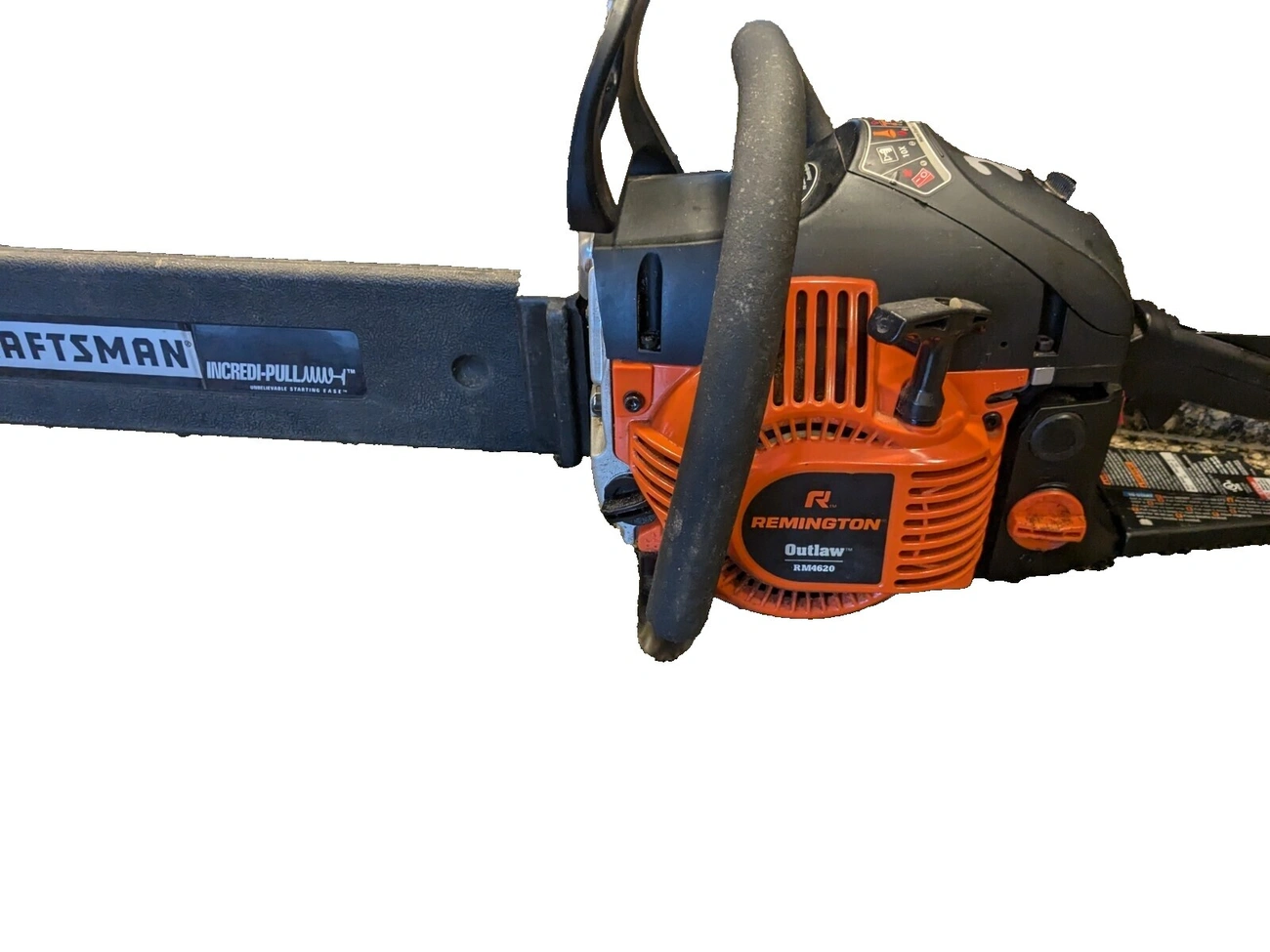
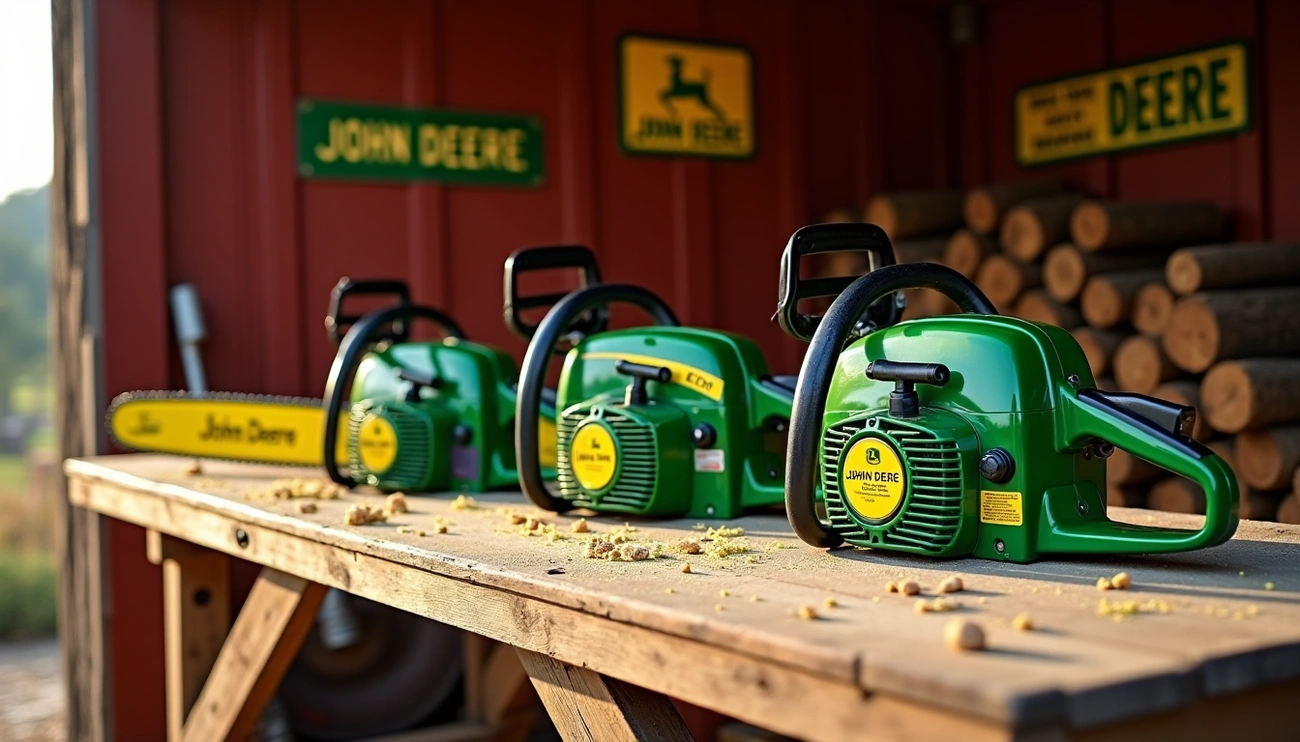
John Deere chainsaws are made by third-party manufacturers, not by John Deere itself. Over time, production has been contracted to companies such as Remington, Kioritz (Echo), and EFCO (Oleo-Mac). Recent models are often manufactured by OEMs like Zhejiang Pioneer in China and rebranded for John Deere dealers.
The Origins of John Deere Chainsaws
John Deere’s foray into the chainsaw market began not through manufacturing but through strategic licensing arrangements with established saw makers. This business approach allowed the iconic agricultural brand to expand its product offerings without investing in new manufacturing facilities.
Early partnerships with Remington and Homelite
The green chainsaw story began when John Deere established partnerships with experienced manufacturers to produce chainsaws under their trusted brand name. These partnerships started with Remington and later expanded to include Homelite, a company with significant chainsaw manufacturing credentials. Homelite had pioneered important innovations in the chainsaw industry, including producing the first one-man operated chainsaw in 1949 and introducing the world’s first “lightweight” chainsaw with a magnesium-alloy frame (the XL-12) in 1963.
By the 1990s, the relationship between these companies strengthened when John Deere acquired the Homelite brand in 1994. This acquisition formalized what had previously been a licensing arrangement, giving Deere direct control over Homelite’s operations.
Why John Deere never made their own chainsaws
John Deere chose to license their brand rather than manufacture chainsaws themselves primarily for economic and strategic reasons. The company preferred to focus on its core agricultural and heavy equipment while leveraging partnerships for consumer products like chainsaws. This approach continued throughout the history of John Deere chainsaws, with various manufacturers producing them under licensing agreements.
This strategy proved fiscally prudent considering later financial challenges. Under John Deere’s ownership, Homelite incurred substantial losses—approximately $70 million in 2000 and $30 million through the first nine months of fiscal 2001. These financial difficulties ultimately led Deere to exit the Homelite consumer products business in 2001, when they sold the brand to Techtronic Industries.
The role of branding in JD chainsaw sales
The power of the John Deere brand name played a crucial role in chainsaw sales. Interestingly, even when products appeared nearly identical to their Homelite counterparts except for color, there were notable differences. According to an engineer’s account, John Deere-branded products featured superior components such as better bearings and were designed for longer operational life compared to their Homelite-branded counterparts.
Furthermore, the company maintained separate tiers of quality, with professional handheld and portable power equipment continuing under the John Deere brand through their dealer network, even as they restructured the consumer product lines.
Who Made John Deere Chainsaws Over the Years
Throughout their history, John Deere chainsaws came from several different manufacturers, each bringing unique characteristics to the iconic green machines. The company never actually built their own chainsaws, instead forming strategic partnerships with established manufacturers to supply their dealer network.
Remington: The early years
In the 1970s, John Deere began marketing chainsaws under their own name through a partnership with Remington. This early collaboration established the pattern of John Deere licensing their brand to respected chainsaw makers. Notably, models like the Remington SL9 were sold under the John Deere brand, giving the agricultural giant its first entry into the chainsaw market.
Homelite: The homeowner era
After Remington, Homelite became a significant partner in producing John Deere-branded chainsaws. This relationship deepened in 1994 when John Deere actually acquired the Homelite Corporation. However, the financial outcomes were disappointing, with Homelite incurring losses of approximately $70 million in 2000 and $30 million through the first nine months of fiscal 2001. Consequently, John Deere sold Homelite to Techtronic Industries in 2001.
Echo: The heavy-duty models
Throughout the 1980s and early 1990s, Echo manufactured chainsaws for John Deere. These models developed a reputation for durability and reliability. Moreover, Echo produced other outdoor power equipment for John Deere during this period, including heavy-duty weed trimmers that have demonstrated remarkable longevity.
Efco / Oleo-Mac: The final OEMs
Following Echo, John Deere turned to Italian manufacturer Efco to produce their chainsaws. These models were considered decent quality saws, although they often had to compete with premium brands like Stihl and Husqvarna on dealer shelves. Efco-made John Deere chainsaws generally received positive reviews from users.
Olympyk and EMAK connections
The corporate connections became somewhat complex in the final years of John Deere chainsaw production. Olympyk, Oleo-Mac, and Efco were all connected through parent company EMAK of Italy. Henceforth, John Deere dealers began selling these Italian-made chainsaws in 2001. Interestingly, these same basic designs appeared under multiple brand names, with Oleo-Mac also manufacturing private label chainsaws for other companies under various names.
Popular John Deere Chainsaw Models and Their Specs
Let’s examine four distinctive John Deere chainsaw models that represent different manufacturing partnerships in the company’s chainsaw history.
CS56 – Built by Efco
The CS56 was a 55.9cc powerhouse manufactured by Efco in Italy. Despite specifications suggesting less power than the CS62, many users reported minimal real-world difference between the two. Indeed, some dealers noted the CS56 ran nearly as strong as the CS62 while costing $50-$100 less. The saw supported both .325 and 3/8 chain pitches, commonly paired with 16″-20″ bars. With a metal chassis and closed ports, the CS56 earned praise for durability and reliable performance.
J3816 – Homelite’s contribution
This 38cc homeowner model featured a 16″ bar with a 3/8″ low profile pitch and 0.050″ gage chain. Primarily designed for occasional use, the J3816 came equipped with Quik-Fire advanced start and Quik-Tight chain tensioning systems. Essentially a green-painted Homelite, it earned a reputation as a “pretty good runner for what it is”.
CS40 – A green Efco
The CS40, another Efco-made model, featured detailed specifications in John Deere’s technical manuals. This compact saw required a 50:1 fuel/oil mixture when using John Deere 2-Cycle Engine Oil. Identification plates were located under the handle on the rear of the main case.
66SV and 610 – Rare collector models
The twin-cylinder 66SV stands as perhaps the most collectible John Deere chainsaw. Built by Echo and based on their CST 610 EVL, these unique saws were painted yellow rather than green. Surprisingly smooth-running despite their power, these rare models now command significant prices among collectors, with the 66SV being particularly difficult to find.
Are John Deere Chainsaws Any Good Today?
After examining John Deere’s chainsaw history, the question remains: are these green machines worth owning today?
Build quality and durability
The quality of John Deere chainsaws varies significantly depending on who manufactured them. Efco-built models like the CS56 featured impressive build quality with metal chain covers and cylinders bolted from the top for easy servicing. Nevertheless, earlier plastic-housing models received criticism, with one user describing their 300CS as “basically a throwaway tool”. Efco-manufactured saws generally earned respect for durability and performance, especially their professional-grade models.
Parts availability and maintenance
Presently, parts remain available through specialized retailers like Jack’s Small Engines. Owners can find everything from chainsaw bars to spark plug accessories and sprockets. Ultimately, compatibility with their original manufacturers’ parts helps extend serviceability – many Efco-made John Deere saws can use Efco replacement components.
How they compare to Stihl and Husqvarna
In reality, John Deere chainsaws typically couldn’t match the market dominance of Stihl and Husqvarna. One dealership reported selling 50 Stihls for every Deere chainsaw. The CS52 was considered a “semi-pro model” with a plastic chassis, whereas equivalent Stihl and Husqvarna models featured professional-grade construction.
Why collectors still seek them
Collectors primarily pursue rare models like the dual-cylinder 66SV, potentially worth $700-1,000 if in good working condition. Occasionally, collectors find value in their unique esthetics and historical significance as rebadged products from various manufacturers.
Conclusion
John Deere chainsaws represent a fascinating chapter in the company’s product diversification strategy. Though bearing the iconic green and yellow branding, these tools were never actually manufactured by John Deere itself. Instead, the agricultural giant formed strategic partnerships with established manufacturers like Remington, Homelite, Echo, and finally Efco/Oleo-Mac.
Throughout their production history, these chainsaws varied significantly in quality and performance. Efco-built models generally earned respect for their durability and metal components, while some earlier plastic-housing versions fell short of professional standards. Undoubtedly, John Deere chainsaws faced tough competition from dedicated chainsaw manufacturers like Stihl and Husqvarna, which dominated dealer shelves.
Today, these green machines occupy a unique position in chainsaw history. Parts remain available through specialized retailers, making maintenance possible for current owners. Collectors particularly value rare models like the twin-cylinder 66SV, which commands impressive prices when found in good working condition.