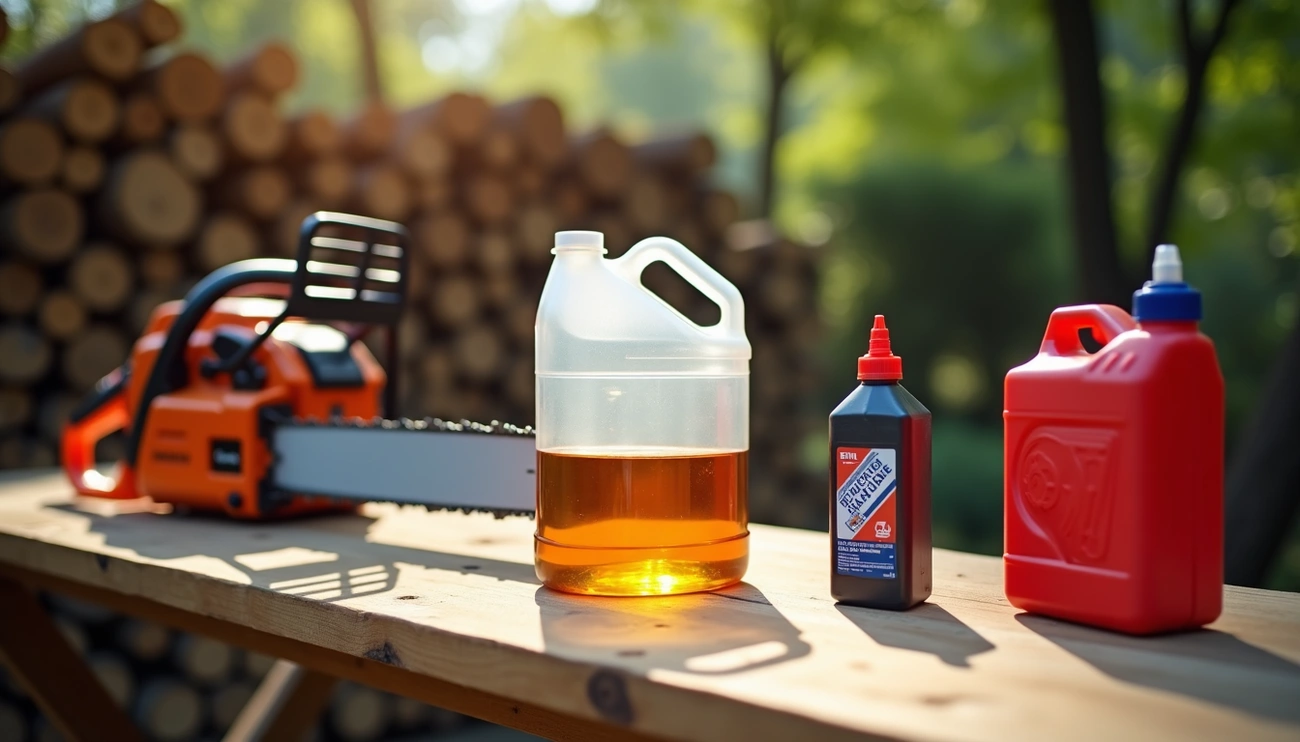
Most chainsaws use unleaded gasoline mixed with two-stroke engine oil. The standard fuel mix is 50:1, meaning 50 parts gas to 1 part oil. Some models use 40:1, so always follow the manufacturer’s fuel ratio to prevent engine damage.
Understanding Chainsaw Fuel Basics
Chainsaws operate differently from most engines you’re familiar with. Understanding the basics of chainsaw fuel will help you keep your tool running optimally and avoid costly damage.
Why chainsaws need a fuel mix
Fundamentally, most chainsaws use two-stroke (also called two-cycle) engines rather than four-stroke engines found in cars. The key difference? Two-stroke engines don’t have an internal oil reservoir. Instead, these engines require oil mixed directly into the gasoline to ensure proper lubrication during operation.
Two-stroke engines are popular in chainsaws, trimmers, and other outdoor power tools because they have fewer moving parts, generate less heat, and are more efficient for their size. Unlike four-stroke engines, two-stroke models have no valve train, timing gears, cams, or pushrods – meaning only the combustion chamber needs lubrication, which the oil-gas mixture provides.
Without this crucial oil-gas mix, your chainsaw’s engine would quickly overheat and suffer catastrophic damage from metal-on-metal contact.
What is the standard gas-to-oil ratio?
The most widely accepted standard for chainsaw fuel is a 50:1 ratio – that’s 50 parts gasoline to 1 part two-stroke oil. This translates to about 2.6 ounces of oil per gallon of gas or 100ml of oil per 5 liters of gasoline.
While 50:1 is standard for most modern chainsaws including Husqvarna and STIHL models, some older equipment might require different ratios:
- 40:1 for some Echo chainsaws
- 32:1 for certain heavy-duty models
The ratio matters tremendously. Too much oil leads to excessive smoke, carbon buildup, and reduced power. Conversely, too little oil can cause engine damage through insufficient lubrication. Always check your owner’s manual for the exact ratio your model requires.
Do chainsaws use regular gas?
Yes and no. Chainsaws can use regular unleaded gasoline from gas stations, but not just any gas will do. For optimal performance, chainsaw manufacturers recommend:
- Mid-grade unleaded gasoline with a minimum octane rating of 89-90 RON
- Fresh fuel (ideally less than 30 days old)
- Low ethanol content – most modern chainsaws can handle E10 (10% ethanol) fuel, though ethanol-free is preferred
Using lower octane fuel risks increasing engine temperatures and potentially causing piston seizure. Additionally, ethanol-based fuels can attract moisture and cause carburetor issues if stored for extended periods.
Choosing the Right Gas and Oil
Selecting the proper fuel and oil makes all the difference between a smoothly running chainsaw and an expensive repair bill. Let me share what professionals recommend based on years of experience.
Minimum octane rating for chainsaw gas
For optimal performance, your chainsaw requires high-quality unleaded gasoline with a minimum octane rating of 89. Furthermore, many manufacturers including Stihl and Husqvarna specifically recommend 91 octane “supreme” fuel available at most gas stations. Using lower octane gasoline may seem economical initially, yet it significantly diminishes power and performance.
Low octane fuel increases engine temperatures, consequently raising the risk of piston seizure and potentially causing permanent damage to your chainsaw’s engine.
Ethanol content: E10 vs E5
Although most modern chainsaws can run on E10 fuel (containing up to 10% ethanol), E5 is generally a better choice for your equipment. E5 petrol contains only 5% ethanol compared to 10% in E10, making it more stable and gentler on engine components.
The primary concern with ethanol is its hygroscopic nature – it attracts moisture from the air. Subsequently, this absorbed moisture can lead to:
- Corrosion inside fuel tanks and carburetors
- Degradation of rubber seals and fuel lines
- Formation of sticky residues that clog fuel passages
- Potential separation of ethanol and water from gasoline
E5 absorbs moisture more slowly than E10, making it particularly beneficial for equipment that sits unused for extended periods.
Recommended 2-stroke engine oils
For chainsaw operation, you should mix high-quality 2-stroke engine oil with a TC classification with your gasoline. Both Stihl and Husqvarna have developed special oil formulations with additives that improve blending and stabilize today’s fuels.
Most professional mechanics recommend sticking with manufacturer-branded oils whenever possible since they’re specifically engineered for chainsaw engines.
Can synthetic oil be used?
Absolutely! Many professionals consider synthetic 2-stroke oils superior for chainsaw use. Notably, Stihl’s Ultra oil (100% synthetic) receives high praise from mechanics who frequently examine engine internals. Husqvarna similarly offers a premium oil made from a blend of conventional and synthetic bases.
Some users prefer mixing at a slightly richer ratio (32:1 instead of 50:1) when using synthetic oils, especially in demanding applications. Regardless of which type you choose, quality matters more than price when protecting your chainsaw investment.
How to Mix Chainsaw Fuel Correctly
Properly mixing fuel for your chainsaw isn’t just a recommendation—it’s essential for your tool’s performance and longevity. Let me walk you through this critical process.
Step-by-step mixing instructions
Creating the perfect chainsaw fuel mix requires precision:
- Start by filling your container with half the amount of gasoline you’ll be using
- Add the entire amount of 2-stroke oil required for your ratio (typically 2.6 ounces per gallon for 50:1)
- Securely close the container and shake it for about 30 seconds
- Add the remaining gasoline to complete the mixture
- Shake once more to ensure thorough blending
Using approved fuel containers
Not all containers are suitable for chainsaw fuel. Always use:
- Clean, airtight containers specifically designed for fuel
- Containers that prevent permeation and evaporation
- Dedicated canisters for your 2-stroke mix to avoid confusion with regular gas
- No-Spill fuel containers that reduce spillage and feature view stripes for easy monitoring
Common mistakes to avoid when mixing
Even experienced users make these errors:
Using old or stale gasoline can cause rough running or failure to start. Likewise, selecting the wrong oil type (avoid using car motor oil) can result in smoking, power loss, or engine damage. Measuring imprecisely leads to improper ratios—too much oil creates smoke and carbon buildup, whereas too little oil risks engine seizure.
How to shake and store the mix
After mixing, shake vigorously until the solution appears uniform—floating oil indicates insufficient mixing. Regarding storage, never keep mixed fuel longer than 30 days. For extended shelf life, consider adding fuel stabilizers. Before seasonal storage, drain tanks and run equipment until fuel is depleted.
Storage, Safety, and Troubleshooting
Proper storage and safety practices are just as crucial as using the right chainsaw fuel mix. Following best practices helps avoid costly repairs and ensures your equipment works when you need it.
How long can chainsaw fuel be stored?
Standard gasoline-oil mixtures deteriorate quickly. Even with stabilizers, STIHL recommends not using fuel older than 60 days, preferably no longer than 30 days. For extended shelf life, consider premixed fuels like STIHL MotoMix, which can last up to two years in proper storage.
Signs of bad or separated fuel
Watch for these indicators of degraded fuel:
- Vacuum sound when opening the fuel cap
- Bubbling from the fuel filter
- Rough running or inability to start
- Excessive smoking during operation
What to do if you used the wrong fuel
If you’ve accidentally used incorrect fuel, first drain the tank and refill with proper mix. For straight gas without oil, damage might be severe—scoring the cylinder and possibly requiring engine replacement. For minor issues, running a full tank of correct mixture can help clear residual bad fuel.
Safety tips when refueling your chainsaw
Always store fuel in approved containers stamped by Department of Transportation. Allow the saw to cool before refueling and fuel it on bare ground. Use a funnel to prevent spills and tighten the fuel cap securely after refilling. Finally, move fuel containers at least 4 meters away from the saw before starting.
Conclusion
Proper fueling stands as the cornerstone of chainsaw maintenance and performance. Throughout this guide, we’ve explored how using the correct 50:1 gas-to-oil ratio with high-octane fuel (89+) significantly extends your chainsaw’s life. Most notably, choosing the right fuel prevents costly engine damage while ensuring optimal cutting power when you need it most.
Many chainsaw owners learn these lessons the hard way. However, you now understand why two-stroke engines require this special mixture and how ethanol content affects your equipment over time. Additionally, you’ve gained practical knowledge about proper mixing techniques and storage limitations that professionals use daily.
Remember that fuel quality matters just as much as your cutting technique. Fresh fuel with minimal ethanol content, properly mixed with quality two-stroke oil, will keep your chainsaw running smoothly for years. Conversely, cutting corners on fuel quality or mixing ratios will undoubtedly lead to performance issues and potentially expensive repairs.