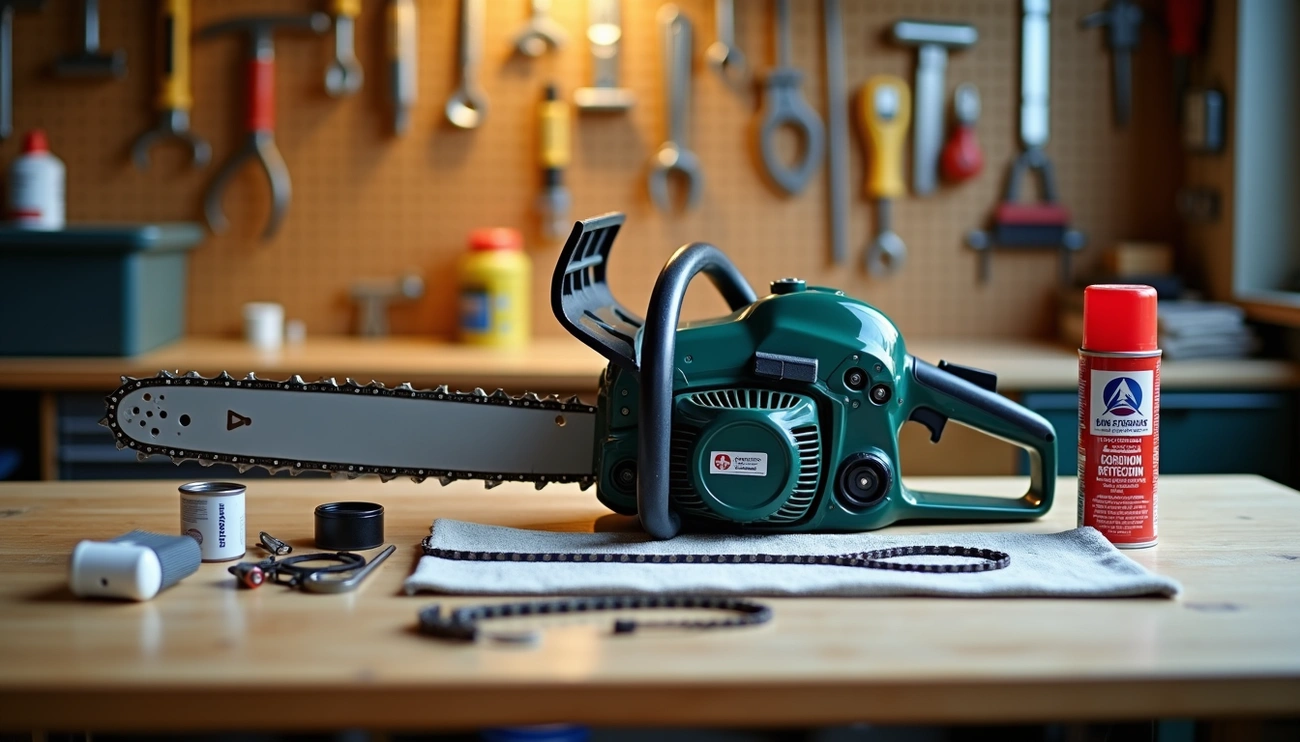
Winterize a chainsaw by draining the fuel tank and running the engine dry on gas models. Clean the bar, chain, and air filter, sharpen the chain, and lubricate metal parts to prevent rust. Add a small amount of oil to protect the cylinder, then store the saw in a dry, moisture-free location. Electric chainsaws require cleaning, sharpening, and dry storage only.
Prepare the Chainsaw for Fuel Shutdown
The first step to properly winterize your chainsaw focuses on fuel management. Gasoline degrades over time, especially when it contains ethanol, creating issues that can damage your saw’s engine and fuel system.
Add fuel stabilizer to gas mix
Fuel stabilizer prevents gasoline from breaking down during storage. This additive eliminates the need to drain fuel prior to storage by keeping it fresh for up to 24 months. For optimal results, add stabilizer to fresh fuel according to the manufacturer’s directions. Typically, one ounce treats approximately 2.5 gallons of fuel.
If storing your chainsaw for 30 days or longer, high-quality fuel stabilizer prevents gum, varnish, and corrosion while protecting internal engine components. Moreover, this simple step helps ensure quick, easy starts next season.
Run engine to circulate stabilized fuel
Once you’ve added stabilizer, it’s essential to run the engine for 5-10 minutes. This critical step ensures the treated fuel circulates throughout the entire fuel system, including the carburetor and fuel lines. During operation, the engine warms up, helping coat internal components with the stabilized mixture.
Drain remaining gas from tank
For storage longer than one month, consider draining the fuel completely. Turn the chainsaw upside down over a funnel to empty the tank contents back into your gas container. Since you’ve added stabilizer, this fuel remains usable next season. While emptying the tank, pump the primer bulb several times to flush out any remaining gas in the lines.
Restart engine to burn off residual fuel
After draining the tank, take these final steps:
- Start the chainsaw and let it idle until it stalls from lack of fuel
- Wait approximately one minute
- Pull the starter again to try starting it
- Repeat this process until the saw won’t start anymore
Additionally, gently shaking the chainsaw while it’s idling helps move any leftover fuel through the system. This method ensures you’ve removed as much gasoline as possible from the carburetor and fuel lines.
Remember to allow the saw to idle rather than running at full throttle during this process, as idling ensures the fuel/air mixture stays within proper specifications.
Disassemble and Inspect Key Components
Proper disassembly and inspection form a crucial part of the winterizing process for your chainsaw. This step ensures your tool remains in peak condition throughout its dormant period and readies it for smooth operation come spring.
Remove bar and chain
Once you’ve completed the fuel shutdown process, it’s time to dismantle key components:
- First, ensure the chainsaw is completely cool and cannot accidentally start
- Locate the nuts or bolts holding the chain cover in place
- Use a scrench or appropriate wrench to loosen these fasteners
- Set aside fasteners in a safe place to avoid losing them
- If your chainsaw has a brake attached to the guide bar side plate, unlock it before removing the cover
- Carefully lift away the chain cover to access the internal components
- Gently remove the chain from around the sprocket
- Lift the guide bar away from the chainsaw body
This complete disassembly allows thorough cleaning and inspection impossible with the chainsaw fully assembled.
Inspect and clean sprocket area
After removing the components, focus on the sprocket area:
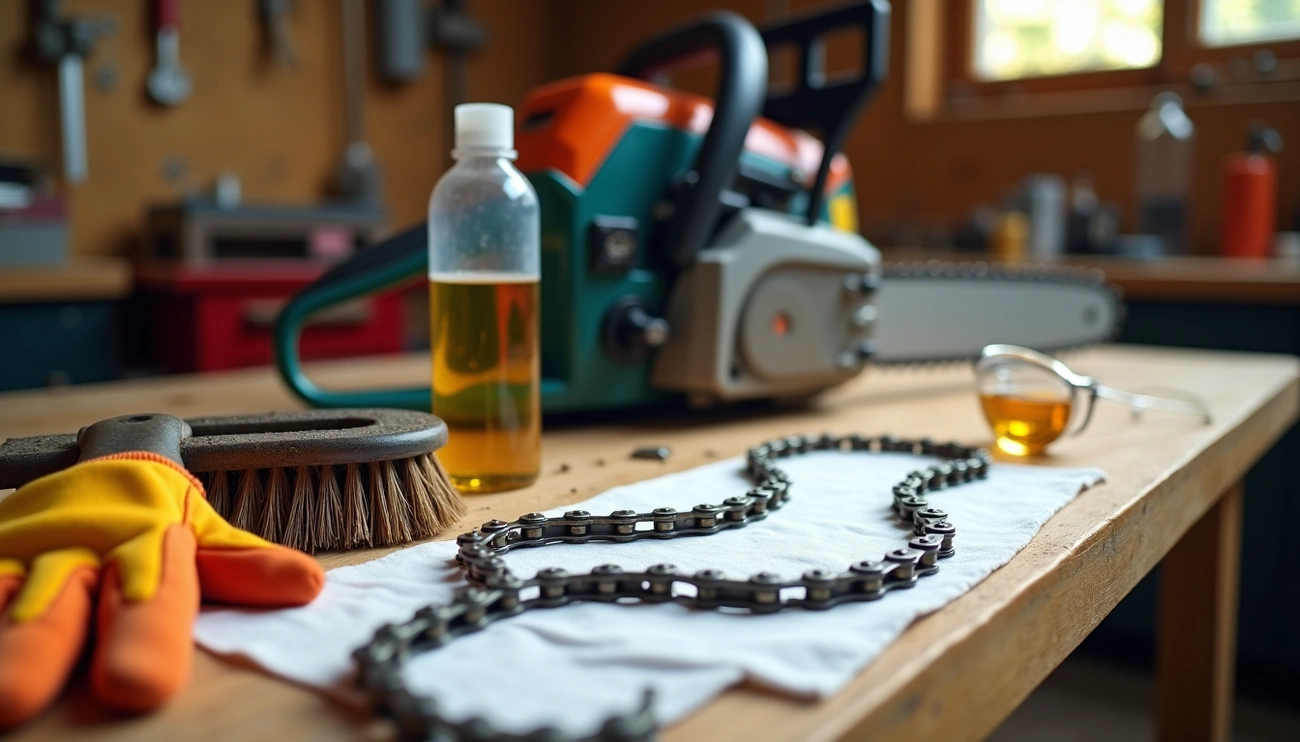
Clean thoroughly around the sprocket using a damp cloth or brush. For stubborn dirt, apply a biodegradable resin solvent. Pay close attention to the oiling holes to ensure they aren’t clogged, as these supply lubrication to your bar and chain. Furthermore, check that the oiler’s passageway and adjustment mechanism remain free of debris.
Regular cleaning of this area prevents premature wear of both the guide bar and chain while maintaining proper lubrication during operation.
Check for wear or damage on chain and bar
Inspection is the final critical step:
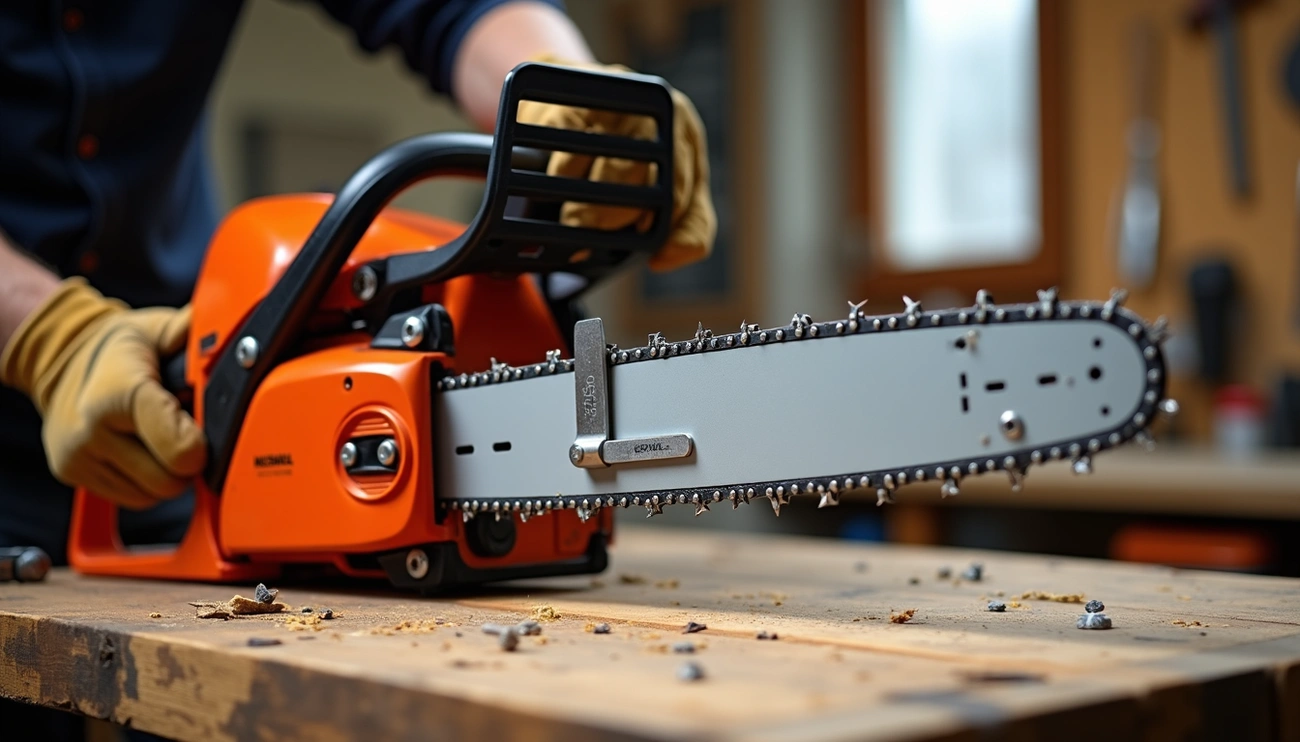
Examine the guide bar for bends, warping, cracks or significant nicks along the edges. Look for discoloration or signs of overheating. The rails should maintain equal height throughout the bar—any difference might indicate uneven wear requiring replacement.
For the chain, check for cracks, irregularly worn rivets, and damaged links. Inspect the teeth for sharpness and consistency. Consequently, this thorough inspection identifies potential issues before they become costly repairs.
As part of proper winterization, consider flipping the bar to ensure even wear over its lifetime. This simple practice extends the life of one of your chainsaw’s most essential components.
Clean and Replace Internal Parts
Continuing your chainsaw winterization process, the internal components need thorough attention. These parts directly affect performance and longevity when you’re ready to use your saw again.
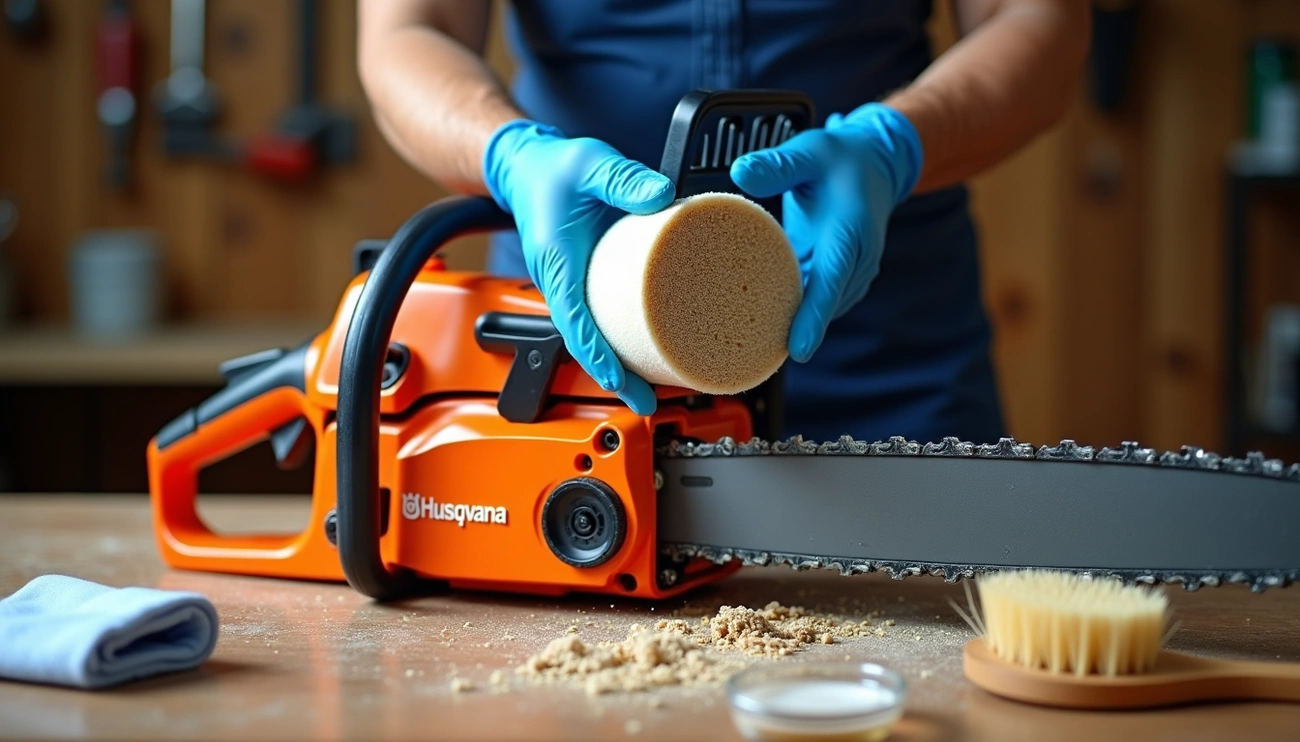
Clean or replace the air filter
The air filter prevents dirt from entering your chainsaw’s engine. For optimal performance, clean it thoroughly after each day of use. Under demanding conditions, check and clean it every time you refuel.
To clean your air filter:
- Remove the cylinder cover using a flathead screwdriver
- Release the metal latch holding the filter in place
- Carefully separate the upper and lower parts
- Clean with a brush or wash in warm, soapy water
- Allow to air dry completely overnight
Replace the filter if you notice holes, cuts, or excessive dirt buildup. Professional users should replace filters every three months with heavy use.
Disconnect and inspect the spark plug
Next, disconnect the spark plug to prevent accidental starts. This step also helps prevent corrosion during storage. After cleaning around the spark plug area:
- Remove it using a socket wrench, turning counterclockwise
- Inspect for carbon buildup, corrosion, or cracks
- Clean gently with a wire brush if dirty but not damaged
- Check the gap with a feeler gage according to manufacturer specifications
Clean engine fins and internal casing
Finally, clean the engine cooling fins and internal casing. These often-overlooked areas affect your chainsaw’s performance. Use an old toothbrush or chip brush to gently remove sawdust and debris from the cylinder fins.
Take care to clean all internal areas thoroughly, as built-up debris can trap heat and cause engine damage. This step helps ensure your chainsaw runs efficiently when you bring it out of storage.
Final Protection and Storage Tips
The final step in proper chainsaw winterization involves protection and storage techniques that shield your tool from corrosion and environmental damage. These measures ultimately save you money by preventing costly repairs.
Wipe down the powerhead
After completing the internal maintenance, thoroughly wipe the entire powerhead using a slightly damp cloth. This removes any lingering sawdust, sap, or debris that could attract moisture. Properly cleaning external components prevents premature deterioration of seals and gaskets.
Apply corrosion inhibitor to metal parts
To prevent rust formation, apply a biodegradable corrosion inhibitor to the chain and bar. Products like EcoLine® Bearing, Chain, and Roller Lube create a tenacious moisture-displacing film that clings to metal surfaces. This protective barrier actively interrupts the electrochemical reaction that causes corrosion. Certainly, a light application on all exposed metal parts provides significant protection throughout the winter months.
Store in a dry, covered location
Choose a dry, well-ventilated area away from the elements for storing your winterized chainsaw. Ideal locations include:
- A garage shelf (preferably high and out of children’s reach)
- A garden shed with proper ventilation
- Any indoor space protected from temperature fluctuations
Nonetheless, avoid direct sunlight exposure to prevent UV damage to the tool’s body.
Use a case to prevent dust and moisture
Experts generally recommend storing your chainsaw in its manufacturer’s case. In fact, this practice offers superior protection against dust accumulation and humidity. For chainsaws without dedicated cases, consider wrapping the tool in old sheets or towels. This simple protective layer creates an effective barrier between your chainsaw and potential sources of moisture, thereby extending its lifespan and preserving its condition until spring.
Conclusion
Winterizing your chainsaw might seem like an additional chore, but this simple 15-minute process saves you significant repair costs down the road. Throughout this guide, we’ve covered essential steps that protect your investment and extend your chainsaw’s life.
Remember, fuel management stands as the most critical aspect of winterization. Adding stabilizer to your gas mix prevents deterioration during those cold months. Additionally, thorough cleaning and inspection of the bar, chain, and sprocket area helps identify potential issues before they become expensive problems.
Your chainsaw deserves proper internal maintenance as well. Clean air filters and spark plugs ensure optimal performance when spring arrives. Therefore, taking time to clean engine fins and apply corrosion inhibitors to metal parts provides crucial protection against rust and degradation.