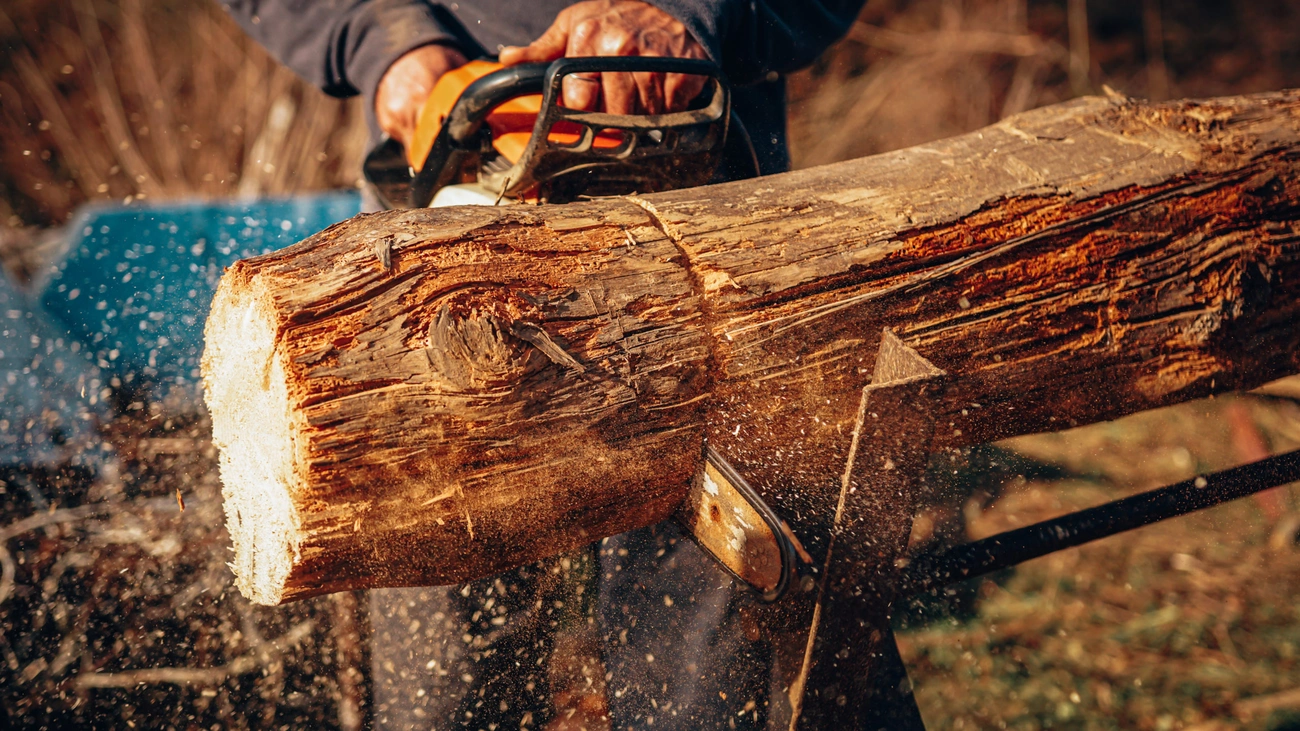
Fell a tree with a chainsaw by clearing the area, planning a safe escape route, and cutting a directional notch on the fall side. Make a back cut slightly above the notch hinge, stop before cutting through, and retreat as the tree begins to fall.
Step 1: Assess the Tree and Surroundings
Proper tree assessment stands as the foundation of safe tree felling. Taking time to thoroughly evaluate your tree and surroundings can prevent accidents and ensure successful cutting. Most professional loggers follow this critical first step in the 5 step felling plan.
Check tree height and lean
Accurately measuring tree height helps determine where the tree will land when cut. Many people underestimate tree height, leading to potential disasters. A simple field method called the “stick trick” can help:
- Hold a straight stick with your arm extended, ensuring the stick length equals the distance between your eye and hand
- Position yourself along the intended fall line
- Rotate the stick vertically to create a right angle
- Align the stick with the tree and move until the tree appears equal to the stick length
- Where you’re standing indicates approximately where the treetop will land
For measuring lean, use a plumb line (like a string with a nut tied to the end). Aim toward the top of the tree trunk and note where the line hits the ground. The distance from this point to the trunk center reveals your tree’s lean. Trees with more than 3 feet of side lean generally won’t fall in your intended direction without additional techniques.
Identify nearby hazards
Scan the entire area surrounding your tree for potential dangers:
- Power lines (never attempt felling near electrical lines without professional assistance)
- Buildings, roads, and other structures
- Other workers (they should remain at least twice the tree height away)
- Neighboring trees that could alter the fall direction
- Overhead hazards like “widow-makers” – loose or hanging branches
- Terrain obstacles that might create unstable footing
Evaluate tree health and stability
A tree’s condition significantly impacts how it will fall. Look for these warning signs:
- Fungal growth or conks on the trunk (indicates interior rot 1-2 yards above and below)
- Dead or dying branches, especially concentrated on one side
- Cracked trunk, stem damage, or thick sloughing bark
- Root problems like ground cracks around the base, decay, or lifting root mats
- Heavy lean caused by damaged roots or unstable soil
Remember that hollow or decayed trees require special techniques and may be unpredictable during felling. Additionally, always check for wind direction and speed when planning your cut, as these factors will influence the tree’s fall path.
Step 2: Prepare Tools and Safety Gear
Proper preparation of your tools and safety gear represents the crucial second step in successful tree felling. The Tree Care Industry Association reports that falling trees caused approximately one-fifth of all tree worker deaths, making proper equipment preparation a matter of life or death.
Chainsaw inspection and fuel check
Before starting your chainsaw, thoroughly read the manufacturer’s operating and safety manual. A well-maintained chainsaw reduces accidents and improves cutting efficiency. Check these critical components:
- Examine chain tension, bolts, and handles to ensure proper functioning
- Verify the chain brake, throttle lock, right hand guard, chain catcher, and spark arrestor are operational
- Fill the oil reservoir whenever refueling
- Fuel your saw at least 10 feet away from ignition sources
Remember, a dull, neglected saw is not merely harder to use but significantly more dangerous.
Essential personal protective equipment (PPE)
According to chainsaw safety standards, you must wear appropriate protective equipment that meets specific industry certifications:
- Helmet/Hard Hat: Must meet ANSI Z89.1-1986 standards to protect against falling objects
- Eye Protection: Choose safety glasses or goggles conforming to ANSI Z87.1-2003
- Hearing Protection: Select earplugs or earmuffs that reduce noise by at least 20 decibels (ANSI/ASA S12.6-2016)
- Leg Protection: Wear chaps made of ballistic nylon that meets ASTM F1414-19 standards
- Footwear: Use steel-toed boots meeting ASTM F1458-04 requirements
- Gloves: Essential for better grip and protection against cuts
A chainsaw produces approximately 110 decibels, which can permanently damage hearing after extended use.
Felling wedges and escape tools
Felling wedges serve as your humble heroes in challenging felling situations. These tools:
- Control the direction of tree fall
- Prevent the tree from pinching your saw during cutting
- Provide remarkable lifting force for greater control
- Can release a pinched saw if needed
Choose wedges made from durable, high-impact materials like plastic or aluminum that won’t damage your chain if accidentally contacted. For advanced felling, carry multiple wedge sizes alongside impact tools such as an ax or sledgehammer to drive them effectively.
Always put a wedge in any tree you’re felling – this good practice helps prevent setback.
Step 3: Plan the Fall and Escape Route
Planning where your tree will fall represents the most critical safety decision in the entire felling process. This step requires careful analysis and preparation to prevent accidents once cutting begins.
Determine fall direction using lean and weight
Felling a tree directly against its natural lean is often dangerous. Use a plumb line (string with attached weight) to measure lean accurately – aim toward the treetop, note where the line hits the ground, and measure the distance to the trunk. Trees with side lean exceeding 10% of their height shouldn’t be attempted without professional assistance. Furthermore, consider branch distribution and crown weight, as these factors significantly affect fall direction. Heavy branches on one side can pull the tree unexpectedly in that direction.
Clear the fall zone and escape path
The “90-15-5 rule” reminds us that most accidents happen within 15 seconds of tree movement and within 5 feet of the trunk. Consequently, establish your escape route at a 45-degree angle opposite from the planned fall direction. Clear all obstacles along this path – removing branches, underbrush and tripping hazards. Meanwhile, ensure everyone maintains a minimum distance of 2.5 times the tree height from the felling area.
Communicate with others on site
Establish clear communication signals with all workers prior to cutting. Always give a timely warning yell before making the final cut. Never assume commands have been heard – wait for confirmation responses like “all clear” from ground personnel.
Step 4: Execute the Felling Cuts
Now comes the moment of truth – executing the precise cuts that will safely bring down the tree.
Make the directional notch
Initially, create a directional notch (face cut) on the side toward which you want the tree to fall. This notch controls fall direction and forms part of the hinge. For most situations, use an open-face notch (70° or wider opening) which maintains the hinge throughout the entire fall, providing maximum control. The notch depth should be 1/3 of the tree’s diameter.
Perform the back cut or bore cut
For straight trees with minimal lean, make a standard back cut slightly above the bottom of the directional notch. Alternatively, for trees with forward lean, use the bore cut technique to prevent dangerous “barber chair” splits. Insert the saw using the bottom part of the bar tip to avoid kickback, then cut parallel to the hinge. Leave a small “strap” of wood at the back to hold the tree securely while you perfect the hinge.
Use wedges if needed
Insert plastic or aluminum wedges into the back cut as soon as there’s space. These prevent the tree from sitting back on your saw and can lift trees with back lean in your desired direction. For trees with significant back lean, multiple wedges may be required.
Retreat using escape route
Once cuts are complete, move diagonally backward at a 45° angle for at least 20 feet. Never retreat directly behind the tree where the trunk might kick back. Continue watching the falling tree while moving to safety.
Conclusion
Felling a tree with a chainsaw requires careful planning, proper equipment, and precise execution. Throughout this guide, we’ve walked you through the professional 5-step felling plan that prioritizes safety above all else. Remember, 90% of accidents happen within just 15 seconds of the tree beginning to move, therefore establishing and using your escape route remains absolutely critical.
Assessment stands as the foundation of any successful tree felling operation. Before making any cuts, you must thoroughly evaluate the tree’s lean, height, and health alongside potential hazards in the surrounding area. Additionally, proper equipment inspection ensures your chainsaw performs reliably when needed most.
Personal protective equipment saves lives. Helmets, eye protection, hearing protection, chaps, and proper footwear aren’t optional extras—they form your essential defense against serious injuries. Likewise, felling wedges provide crucial control during the cutting process and should always accompany your chainsaw kit.