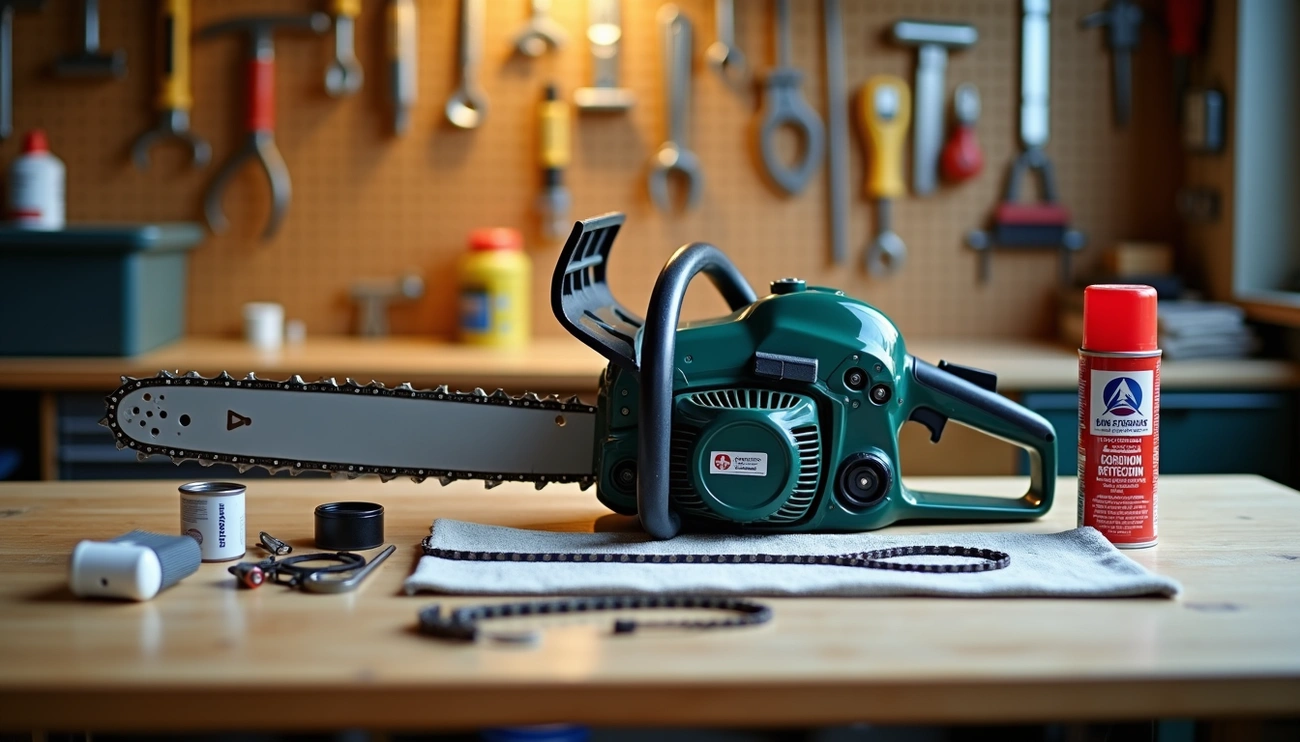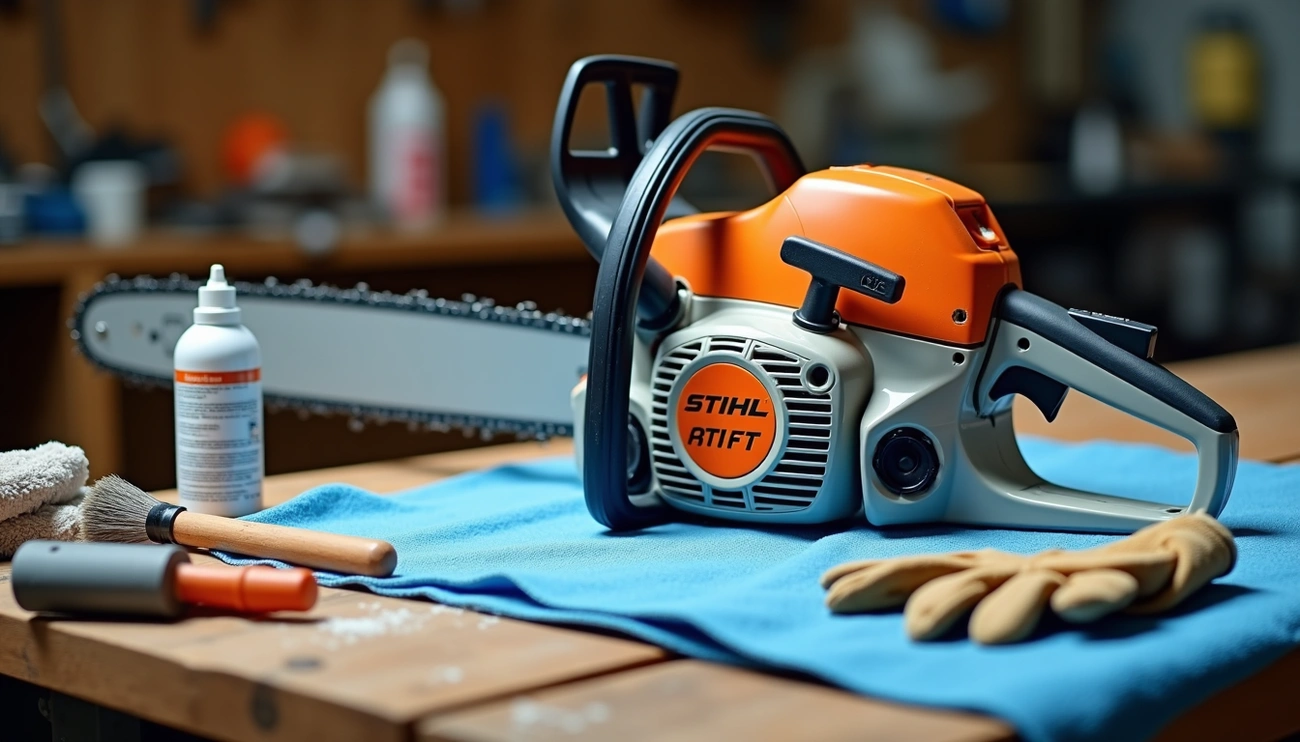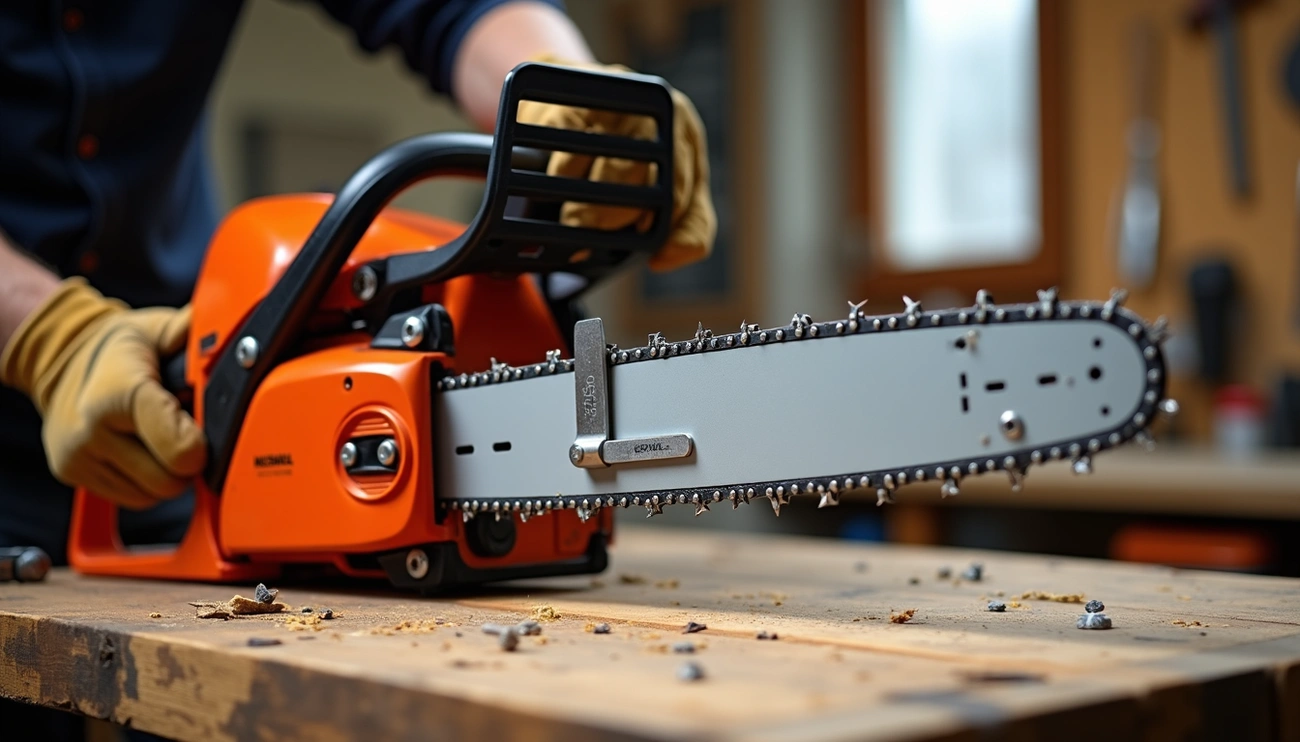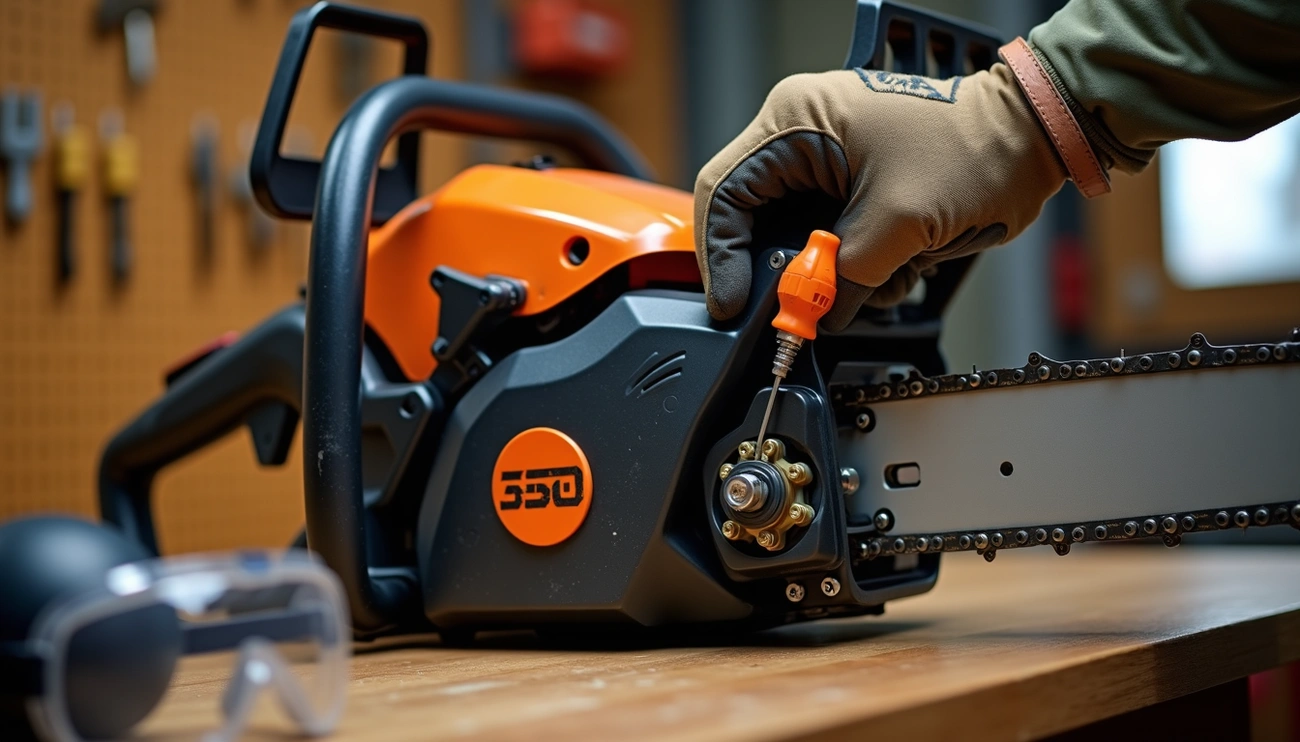
Adjust a chainsaw carburetor by warming the engine for 3–5 minutes, then setting the Low (L) and High (H) screws. Turn screws clockwise to lean and counter-clockwise to richen the fuel mix. Start from a baseline of lightly seated screws turned out 1–1.5 turns. Finish by adjusting the Idle (T) screw so the chain does not spin while maintaining smooth acceleration and strong cutting power.
Get Ready: Safety and Setup
Before attempting to adjust your chainsaw carburetor, proper safety preparation is essential. The combination of sharp cutting equipment and fuel makes this a task that requires careful attention to safety details.
Wear gloves, goggles, and ear protection
Safety gear is non-negotiable when working with chainsaws. I always start with a complete set of personal protective equipment:
- Protective gloves with slip-resistant palms to protect from abrasions, splinters, and cuts
- Safety goggles or properly fitted safety glasses with adequate side protection
- Ear muffs or plugs rated for 90+ decibel noise levels
- Hard hat for protection from potential falling debris
Additionally, wearing snug-fitting clothing prevents anything from getting caught in the saw or its components. For serious chainsaw work, consider specialized protective chaps that prevent the running chain from contacting your legs at speeds of 45 to 55 miles per hour.
Work in a well-ventilated area
Your chainsaw produces poisonous exhaust fumes as soon as the combustible engine starts running. These gasses, including carbon monoxide, may be colorless and odorless yet extremely dangerous.
I always ensure proper ventilation when adjusting my chainsaw carburetor to avoid inhaling toxic fumes. Furthermore, never refuel a hot engine—always allow it to cool first. Keep the refueling area free from combustible materials and never smoke during this process.
Check fuel level and air filter condition
Prior to making any carburetor adjustments, two critical checks are necessary:
First, examine your chainsaw’s air filter and clean it if needed. Adjusting the carburetor with a partially clogged air filter is comparable to adjusting with the choke partially engaged—once the filter is cleaned, your saw will run too lean.
Second, verify the fuel level is over half full. If you adjust your carburetor when the tank is nearly empty, it may run too rich after refilling. Clean away any sawdust or debris from fuel and oil caps before opening to prevent contamination.
Following these setup steps creates the foundation for properly adjusting your chainsaw carburetor and ensures both your safety and the tool’s optimal performance.
Understand the Carburetor Screws
Understanding the adjustment screws on your chainsaw’s carburetor is essential before making any tweaks. Most chainsaws feature three distinct adjustment screws, each controlling a different aspect of engine performance.
Low-speed screw (L)
The low-speed screw (typically marked with an “L”) controls the fuel-air mixture at idle speed. This screw primarily affects how your chainsaw performs during startup and idle operation. When adjusted correctly, it ensures smooth idling and good throttle response. If set too rich (turned too far counterclockwise), the engine might load up with fuel and stall at idle. Conversely, if set too lean (turned too far clockwise), the chainsaw may race, surge irregularly, or even die completely.
High-speed screw (H)
The high-speed screw (marked with an “H”) regulates the fuel-air mixture during full-throttle operation. This adjustment determines how your chainsaw performs during cutting. An overly rich H-screw setting prevents the saw from reaching maximum RPM, causing sluggish throttle response, excessive smoke, and poor performance. Nonetheless, an excessively lean setting is far more dangerous—potentially allowing the engine to reach RPM levels that can cause bearing failure or cylinder seizure, while also making the saw run dangerously hot.
Idle screw (T or I)
The idle screw (often labeled “T” or “I”) controls the throttle valve’s opening when the trigger is released. Unlike the other screws that adjust fuel mixture, this one simply regulates idle speed. Setting it too low causes the engine to die when you release the throttle. Setting it too high creates a dangerous situation where the chain moves at idle—a serious safety hazard that must be avoided.
How to identify them on your saw
These screws are typically located on the side of the carburetor and can be recognized by their small size and slotted heads. Most manufacturers mark them with “H,” “L,” and “T” (or “I”) on the chainsaw’s case. Generally, the low-speed screw sits closest to the engine and furthest from the air filter. Some models include limiter caps on the high-speed screw to prevent dangerous over-adjustment.
Step-by-Step Chainsaw Carb Adjustment
Proper carburetor adjustment begins with the right approach. Now that you understand the different adjustment screws, let’s get your chainsaw running optimally.
Start and warm up the engine
Initially, start your chainsaw and allow it to run for several minutes to reach normal operating temperature. Making adjustments on a cold engine will result in settings that are too rich once the engine warms up. If your saw won’t maintain idle, warm it by repeatedly squeezing the throttle without running at full speed.
Adjust the low-speed screw for smooth idle
Once warmed up, focus on the L-screw adjustment. Gradually turn this screw clockwise until the engine surges or starves for fuel (runs lean). Note this position, then slowly turn it counterclockwise until the engine begins to load up (runs rich). The optimal setting is approximately halfway between these two points.
Adjust the high-speed screw for clean acceleration
Next, hold the throttle wide open and adjust the H-screw. Without a tachometer, set it so the saw “four cycles” or “blubbers” at wide open throttle. This slightly rich setting will reduce performance slightly but protect your engine from damage. Never run your saw too lean at high speed.
Set the idle screw to stop chain movement
Afterwards, adjust the idle screw to the lowest RPM where the saw idles smoothly without stalling. Importantly, ensure the chain doesn’t rotate when the saw is idling – this creates a dangerous situation that must be corrected immediately.
Listen for engine sound cues
Throughout this process, listen carefully to your engine. A properly tuned saw produces a clean, consistent sound at idle and a rhythmic “four-stroking” sound at full throttle without load. If you hear a high-pitched whine, the mixture is too lean; if you hear a heavy, bogging sound, it’s too rich.
Remember that adjusting one screw often affects others slightly, so recheck each adjustment before finishing.
Final Checks and Quick Fixes
After making all your adjustments, the real proof of success comes from actual cutting performance. Consequently, it’s essential to verify your work with several final checks.
Test by cutting a small log
Once adjustments are complete, test your chainsaw on a small piece of wood. Listen carefully for any hiccups, stalling, or slow response during cutting. Observe how the chainsaw starts, accelerates, and runs under load. Should you notice any issues, make tiny incremental adjustments and test again after each change. Remember that small adjustments can significantly impact performance.
Check for chain movement at idle
Examining chain movement at idle is absolutely critical for safety. When your saw idles properly, the chain must remain completely stationary. If the chain rotates while idling, immediately readjust your idle screw (T) counterclockwise until the chain stops moving. This situation can be fixed quickly yet is extremely dangerous if ignored.
Recheck air filter and muffler
Moreover, ensure your air filter is clean and properly seated. A dirty air filter can make your saw run as if the carburetor requires adjustment. Likewise, check the muffler and exhaust port for carbon buildup, which can mimic carburetor problems. Professional users should plan to replace air filters every three months with heavy use.
When to stop and seek professional help
Finally, recognize when it’s time for professional assistance. Consider seeking help if:
- Adjustments don’t resolve running issues
- You suspect fuel system leaks
- The saw won’t maintain proper idle despite adjustments
- You notice decreased power or complete shutdown
Conclusion
Properly adjusting your chainsaw’s carburetor stands as one of the most valuable maintenance skills you can develop as a chainsaw owner. Throughout this guide, we’ve covered everything from essential safety preparations to making precise adjustments that optimize your saw’s performance. Most importantly, this simple maintenance task requires less than 10 minutes yet delivers significant benefits.
Your chainsaw will thank you with easier starts, smoother operation, and maximum power when you master these adjustments. Additionally, you’ll extend the life of your engine while reducing smoke and excessive fuel consumption. The three critical screws—low-speed (L), high-speed (H), and idle (T)—each play a vital role in your saw’s performance and safety.
Remember that safety must always come first. Therefore, never skip wearing proper protective equipment or working in well-ventilated areas. Similarly, listening carefully to your engine provides essential feedback during adjustments—that distinctive “four-cycling” sound at full throttle without load indicates you’re on the right track.