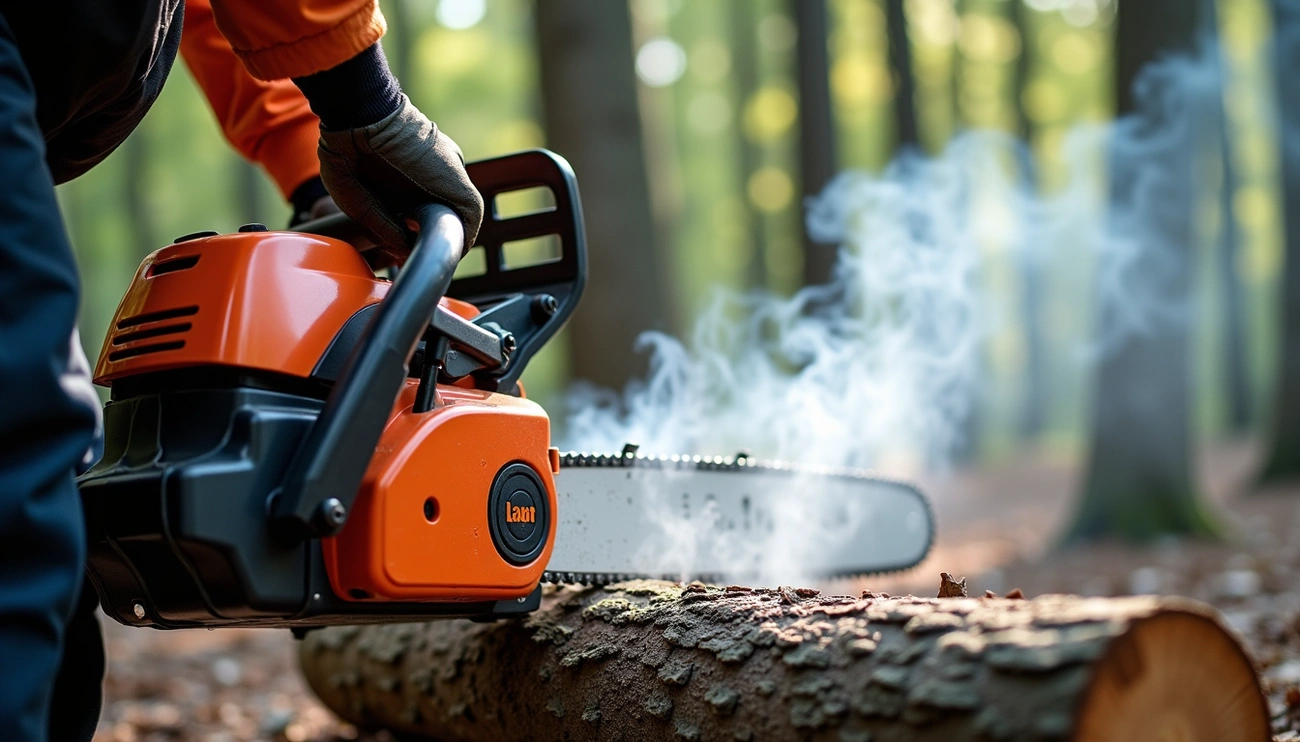
A chainsaw takes 15–20 minutes to unflood if it is mildly flooded and left to sit, allowing excess fuel to evaporate. Actively clearing a flooded chainsaw using proper steps can unflood the engine in 2–5 minutes. Simply waiting often fails to resolve internal fuel saturation.
What causes a chainsaw to flood?
A chainsaw typically floods because of an imbalance in the fuel-air ratio inside the combustion chamber. Understanding what causes this problem helps prevent it from happening and shortens the time needed to unflood your chainsaw.
Over-priming the engine
One of the most common reasons chainsaws flood is excessive priming. Many operators make the critical mistake of repeatedly pressing the primer bulb, with each press forcing raw fuel into the carburetor. Although manufacturers typically recommend only 2-3 gentle pumps for cold starts, pressing beyond 3-4 times can flood the engine.
Additionally, pulling the starter rope too many times with the choke engaged sends excessive fuel into the combustion chamber. This happens because the choke’s purpose is to enrich the fuel mixture for starting. After a few pulls, once the saw fires or “pops,” you should immediately move the choke to the run position rather than continuing to pull with full choke engaged.
Incorrect fuel mixture
The fuel-oil ratio in your chainsaw significantly affects its performance. Using pure gasoline or incorrect oil mixtures disrupts engine operation similarly to following an unbalanced recipe – the outcome is always undesirable. A mixture with excessive oil (too rich) generates smoky exhaust and creates residue inside the spark plug and combustion chamber, increasing ignition problems. Conversely, a mixture with insufficient oil risks engine seizure from inadequate lubrication.
Using stale or low-quality fuel also contributes to flooding because degraded gasoline loses its volatile components, causing poor combustion that mimics flooding conditions.
Cold weather starting issues
Temperature plays a significant role in chainsaw flooding. Extreme cold thickens oil and reduces engine lubrication. Below 40°F, fuel atomization becomes particularly challenging as the fuel doesn’t vaporize properly. Professional operators overcome this by using winter-grade fuel additives and warm storage practices.
Some chainsaw models feature specialized winter/summer air intakes that should be adjusted according to season. Using the summer setting during cold weather can cause starting difficulties and potential flooding.
Worn or dirty spark plug
Spark plug issues frequently lead to chainsaw flooding. Incomplete combustion generates carbon deposits that insulate spark plugs, reducing electrical conductivity. A weak, fouled, or incorrectly gapped plug cannot create a hot enough spark for effective ignition.
Without proper ignition, unburned fuel accumulates in the cylinder. Eventually, the electrodes between the spark plug become saturated, preventing any spark from occurring. This creates a cycle where each additional pull attempt introduces more fuel without combustion, further worsening the flooding condition.
Other contributing factors include improperly adjusted carburetors, stiff fuel pump diaphragms, and air leaks around seals.
How to tell if your chainsaw is flooded
Recognizing the signs of a flooded chainsaw is crucial before attempting to fix it. A properly diagnosed flooding problem helps determine exactly how long it will take for a chainsaw to unflood. Let’s examine the telltale indicators that confirm your chainsaw is flooded.
Hard to pull the starter cord
Unlike the normal smooth motion of a functioning chainsaw, a flooded engine creates unusual resistance when pulling the starter cord. You’ll notice a heavy, sticky feeling as you attempt to pull. This resistance occurs because excess fuel in the cylinder creates hydraulic pressure against the piston. In severe cases, the chainsaw may even become “hydro locked” – meaning you can barely move the pull cord at all due to the compressed liquid fuel inside. Moreover, if you remove the spark plug and try pulling, the resistance disappears completely.
Strong smell of fuel
One unmistakable sign of a flooded chainsaw is the potent odor of raw gasoline. This smell is significantly stronger than during normal operation. You’ll notice this concentrated gasoline scent particularly around the muffler area and carburetor. Indeed, some owners report their flooded saws smell so intensely they must keep them outside to prevent their entire house from smelling like fuel.
Wet spark plug on inspection
Removing the spark plug provides definitive evidence of flooding. A flooded chainsaw’s spark plug appears visibly wet with liquid gasoline coating the electrode. The tip might also show dark carbon deposits. This wet condition prevents proper sparking, creating a vicious cycle where each pull attempt introduces more fuel without ignition.
Excessive smoke from exhaust
If your flooded chainsaw briefly starts, it typically emits thick, dark blue or black smoke from the exhaust. This excessive smoke indicates unburned fuel being partially combusted. Normally, a properly running chainsaw produces much less visible exhaust. The smoke often carries a strong gasoline smell, further confirming the flooding condition.
Backfiring or sputtering sounds
A flooded chainsaw frequently makes distinctive popping or banging sounds when attempting to start it. These backfires happen when unburned fuel ignites unexpectedly in the exhaust system rather than in the combustion chamber. The engine might sputter briefly as if about to run before quickly dying out. Consequently, these sounds indicate significant internal combustion disruption caused by excess fuel.
How to unflood a chainsaw quickly
Getting a flooded chainsaw back to working order requires patience and a methodical approach. Here’s the fastest way to unflood your chainsaw and get back to work.
Step 1: Turn off the chainsaw and let it sit
Initially, stop all operations by locating the kill switch or engine stop mechanism. This allows the engine to cool and prepares it for troubleshooting. For mildly flooded chainsaws, simply letting it sit for 15-20 minutes can resolve the issue as excess fuel evaporates naturally.
Step 2: Open throttle and pull starter cord
Once the chainsaw has rested, set the choke to the OFF position. Subsequently, lock the throttle in the wide open position using the trigger lock. Pull the starter cord 6-10 times with the throttle open and no choke engaged. This technique effectively pushes excess fuel out through the exhaust.
Step 3: Remove and dry the spark plug (if needed)
If the previous step fails, turn off the ignition. Afterward, use a socket wrench to carefully remove the spark plug. If it appears wet with fuel, dry it thoroughly using compressed air or a clean cloth. Meanwhile, examine the electrode for carbon buildup or damage.
Step 4: Reinstall and restart with minimal choke
First thing to remember, with the spark plug removed, pull the starter cord several times to expel remaining fuel from the cylinder. Next, reinstall the dried spark plug with proper torque. To clarify, attempt starting with no choke and the throttle engaged—this provides maximum air to balance the rich mixture.
Step 5: Use correct priming technique
To prevent future flooding, use moderate pressure on the primer bulb. In fact, gentle pressing 2-3 times before starting is sufficient for most chainsaws. Ultimately, avoid overzealous pumping which forces too much raw fuel into the carburetor and creates a vicious flooding cycle.
How long does it take to unflood a chainsaw?
The time required to unflood a chainsaw varies depending on several factors. Understanding these timeframes helps manage expectations and choose the right approach.
Typical wait time: 10–15 minutes
For most mildly flooded chainsaws, waiting 10-15 minutes allows excess fuel to evaporate naturally. This passive method requires patience but demands minimal effort on your part.
Factors that affect unflooding time
The severity of flooding significantly impacts recovery time. Minor flooding might resolve in 5-20 minutes, whereas moderate flooding typically requires 20-60 minutes. Furthermore, environmental conditions play a crucial role—warm, dry conditions accelerate evaporation (20-30 minutes), while cold or humid environments extend the process to 30-60 minutes. Severe cases involving carburetor issues might take several hours to resolve completely.
When to use the manual method vs. wait
Simply waiting won’t resolve internal fuel saturation in most cases. Therefore, active intervention through spark plug removal becomes necessary for moderate to severe flooding. Nevertheless, for minor flooding, the passive waiting method often suffices. The manual unflooding technique proves essential whenever you detect a strong gasoline smell or witness a wet spark plug.
Signs that it’s ready to restart
Your chainsaw is likely ready when the starter cord resistance returns to normal. Likewise, a dry spark plug indicates readiness. Upon restarting, expect brief sputtering—this normal behavior signals the chainsaw is clearing remaining excess fuel.
Conclusion
Dealing with a flooded chainsaw doesn’t need to ruin your workday. Throughout this guide, we’ve seen how excessive priming, incorrect fuel mixtures, cold weather, and spark plug issues can quickly turn your reliable tool into a frustrating problem.
The telltale signs remain consistent across most chainsaw models – resistance when pulling the starter cord, strong gasoline odors, wet spark plugs, excessive smoke, and unusual backfiring sounds all point to flooding issues.
Thankfully, most flooding situations resolve relatively quickly. Minor flooding often clears up within 10-15 minutes through natural evaporation, while moderate cases might need 20-60 minutes using the manual methods we’ve covered. Remember that environmental factors play a significant role too – warm, dry conditions speed up the process considerably compared to cold, damp weather.