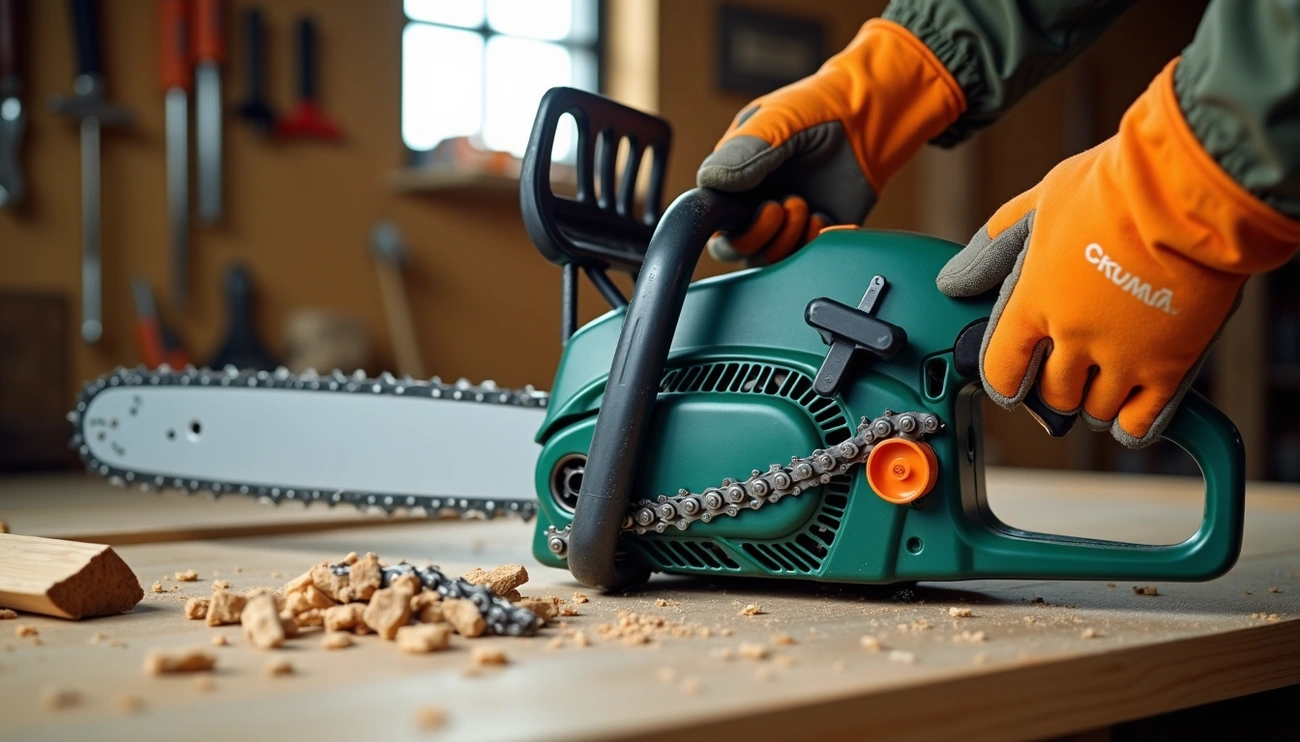
Put a chain back on a chainsaw by loosening the side panel nuts and the chain tensioning screw, then removing the cover. Place the chain onto the drive sprocket and into the bar groove with […]
Chainsaw Bar and Chain
19 posts
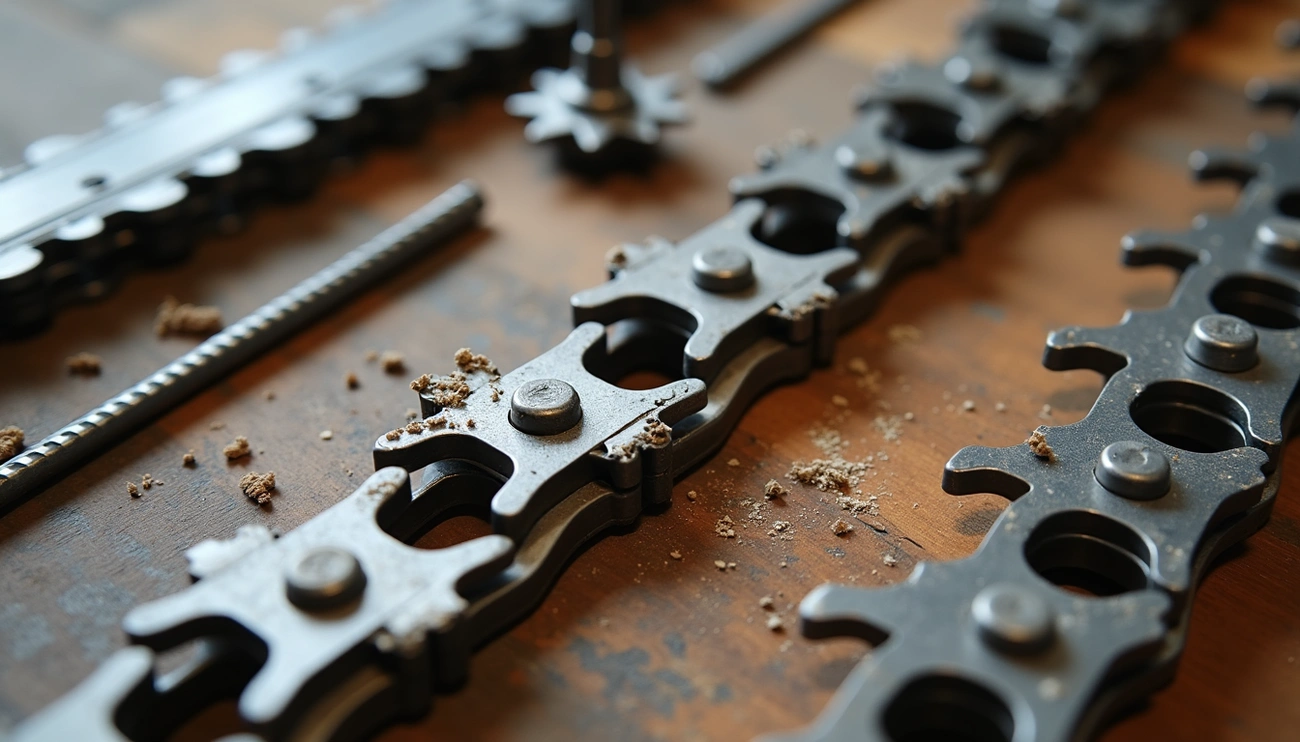
Replace a chainsaw chain when the cutting teeth are broken, cracked, or worn down to the wear line. Replace the chain if the saw cuts crooked, smokes, or requires excessive force even after proper sharpening […]
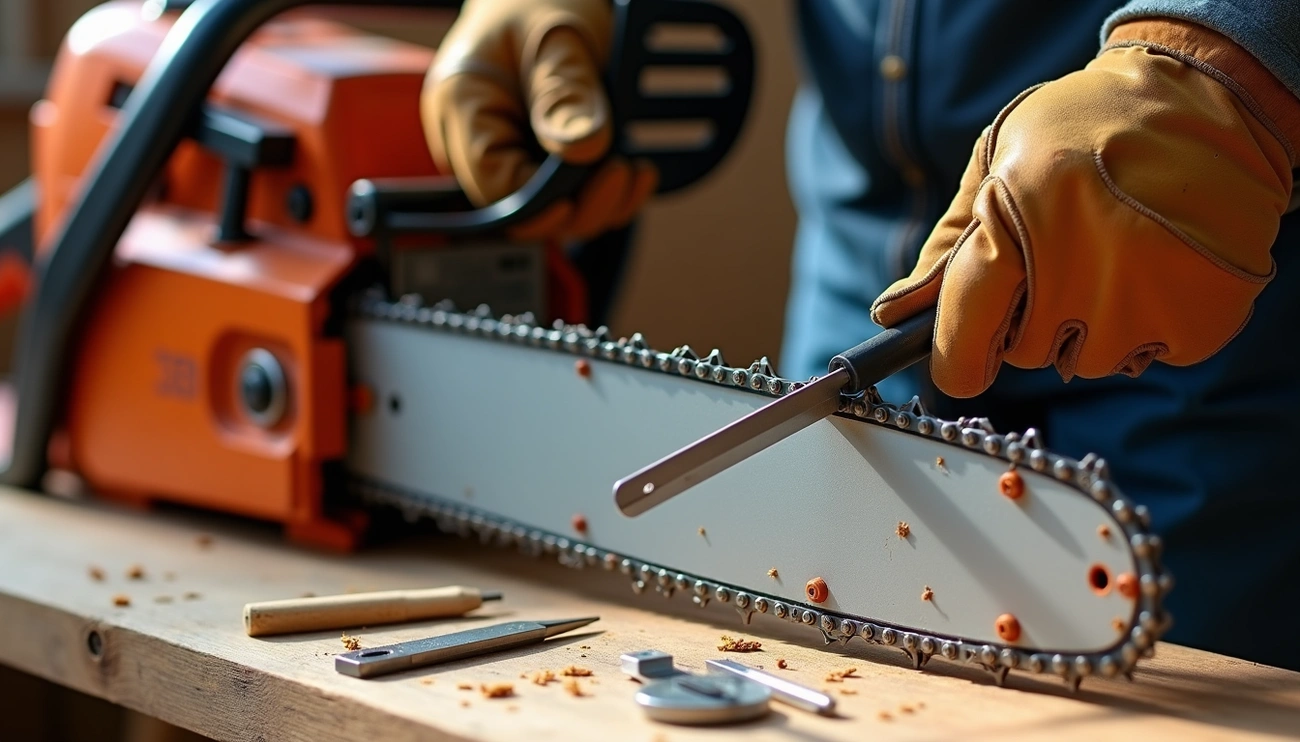
Sharpen a chainsaw chain at a top plate angle between 25° and 35°. Use 30° for general cutting. Apply a steeper 35° angle for softer woods and a shallower 25° angle for harder woods. Always […]
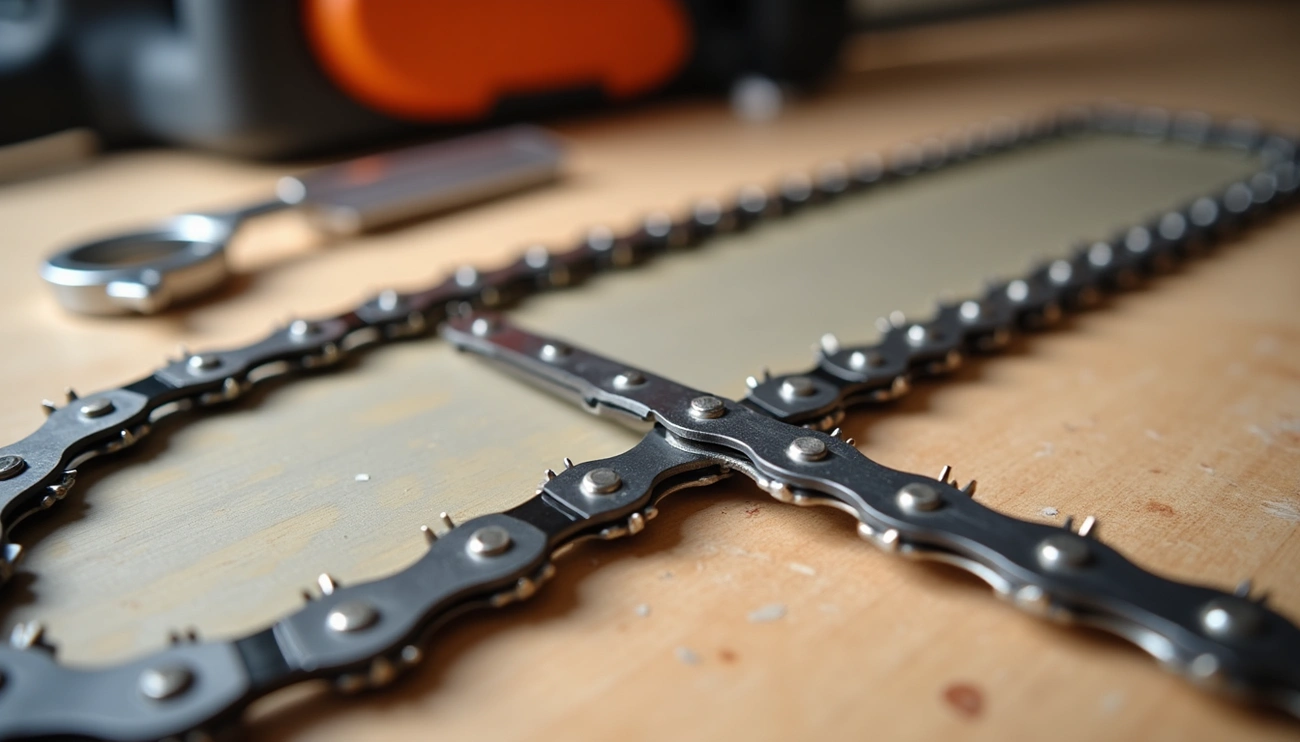
The pitch on a chainsaw chain is the distance between three consecutive rivets divided by two. Chain pitch determines chain size and compatibility with the guide bar and sprocket. Common chainsaw chain pitches include 1/4 […]
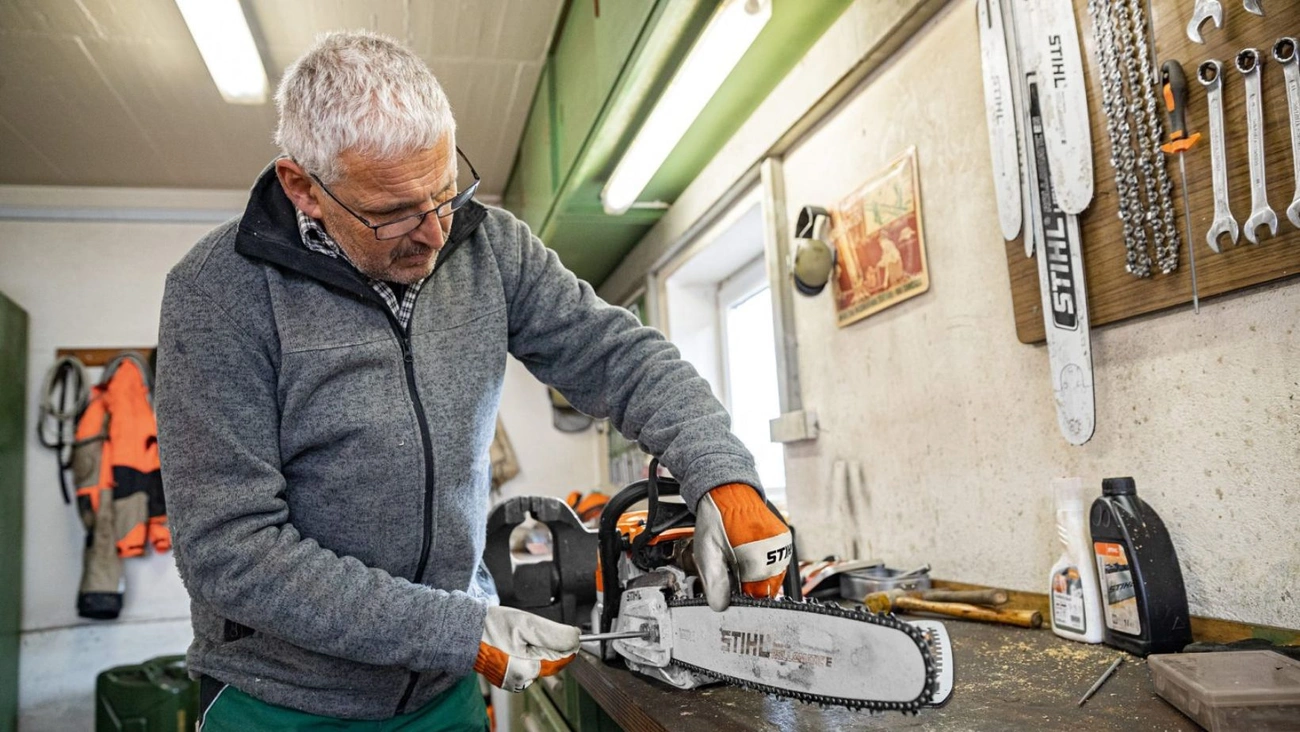
Your chainsaw chain keeps coming off because the chain tension is too loose. Chain derailments also occur from worn bars, sprockets, or chains, incorrect chain size or type, poor tensioning technique, or new chains stretching […]
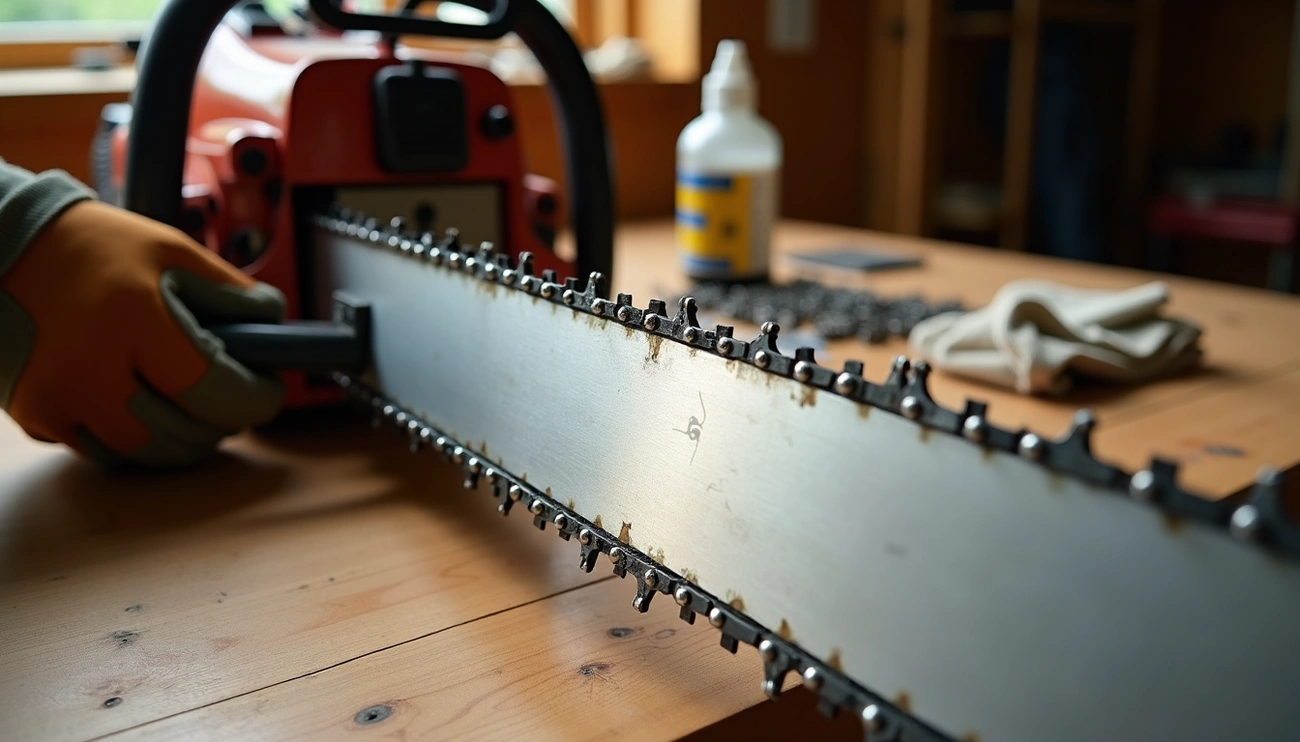
Replace a chainsaw bar if it’s bent or twisted, the groove is badly worn, the edges are flared, or the nose sprocket is damaged. Excessive chain wobble or a large lip also means it’s worn […]
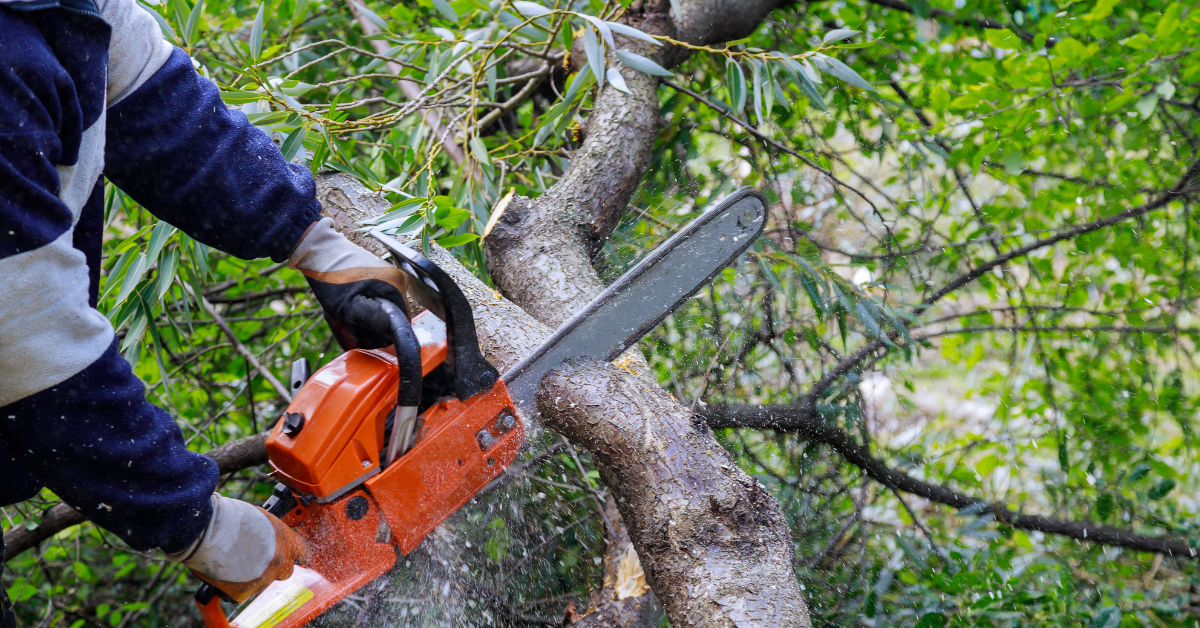
Use a chainsaw depth gauge by placing the gauge tool over the chain so the raker protrudes through the slot. File the exposed raker flat with a depth gauge file until level with the tool. […]
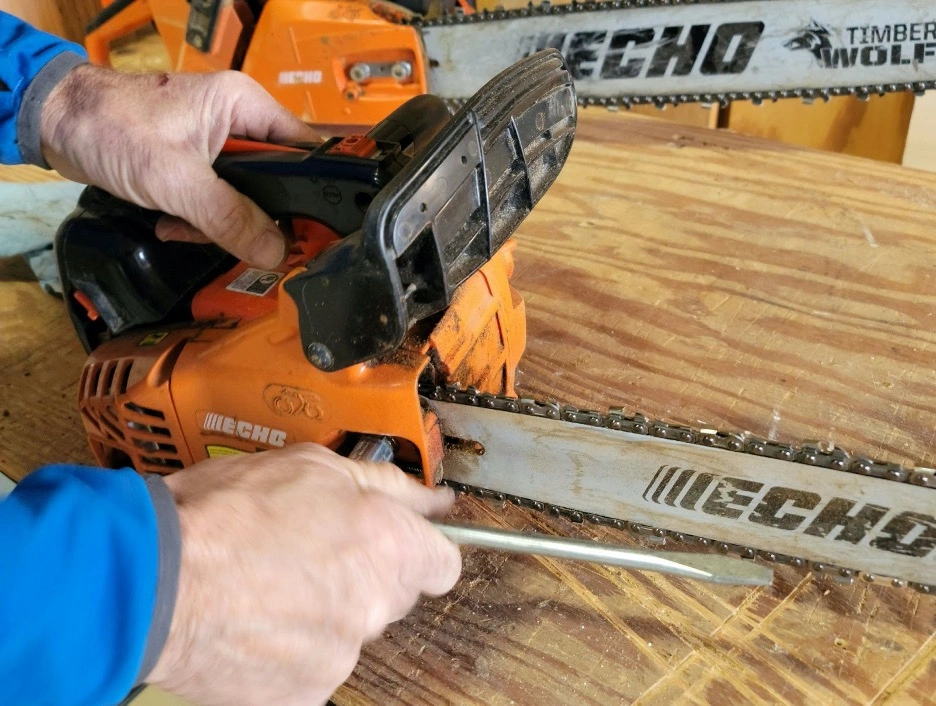
Yes, a chainsaw chain can stretch, but the change comes from wear, not elasticity. Friction wears the pins, bushings, and rivets, which causes chain elongation and looseness. New chains stretch faster during break-in and require […]
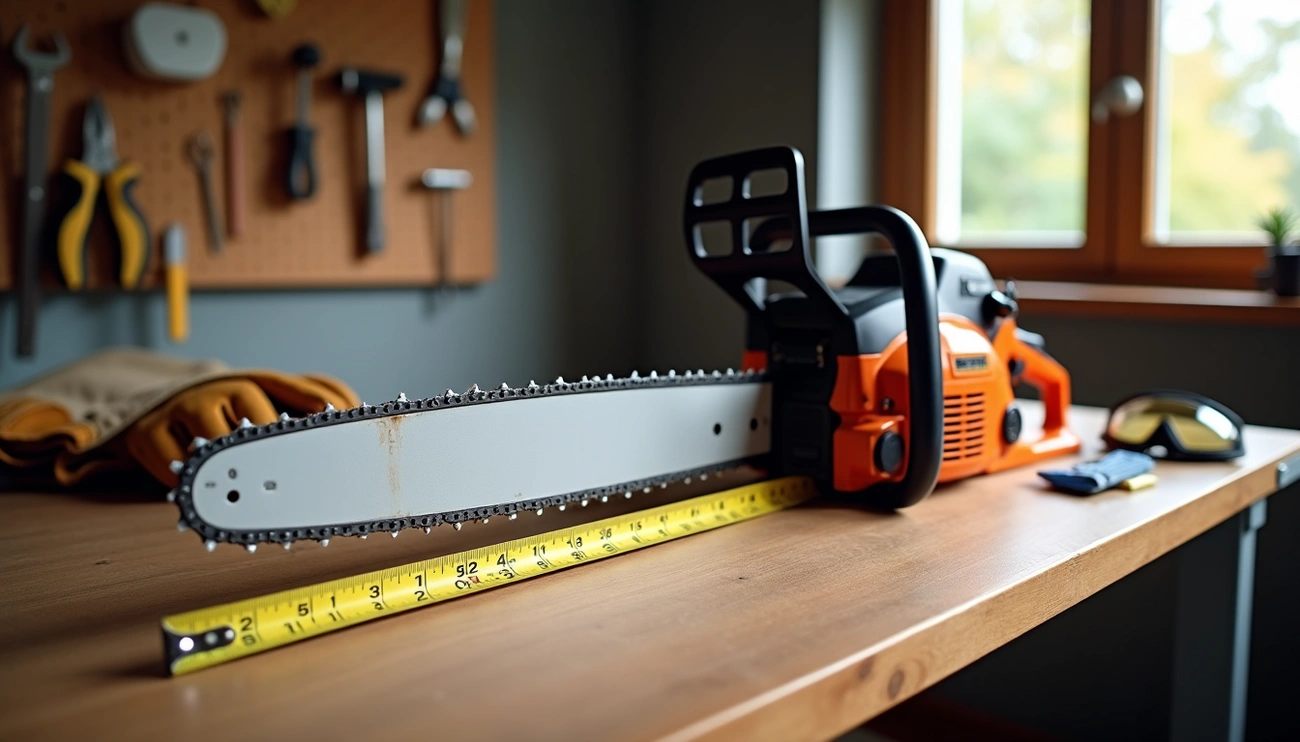
Measure chainsaw bar length by checking the stamped marking near the bar’s tail or by measuring from the bar tip to where it enters the saw body. Round this measurement up to the nearest even […]