Yes, You can use 10W-40 motor oil as a temporary emergency substitute for chainsaw bar oil, but it is not recommended for regular use. Motor oil lacks tackifiers, so it is thinner, slings off the bar quickly, and provides poor lubrication. This increases heat, wear, and potential damage. Use proper chainsaw bar oil for consistent lubrication, reduced overheating, and longer bar and chain life.
What is chainsaw bar oil and why it matters
Chainsaw bar oil differs significantly from regular motor oil. Specifically designed for the unique demands of chainsaw operation, bar oil is a specialized lubricant that maintains optimal performance of your cutting equipment. Understanding why proper bar oil matters can help you make informed decisions about potential substitutes like 10w40 motor oil.
Lubrication and cooling explained
The primary function of bar oil is reducing friction between the chainsaw’s bar and chain. As your chain spins at high speeds, it generates substantial heat through metal-on-metal contact. Quality bar oil creates a protective layer that prevents premature wear while extending the life of these critical components.
Unlike regular motor oils, chainsaw bar oil is formulated to perform under extreme conditions. During heavy cutting, chainsaws can reach dangerously high temperatures. Consequently, the oil needs to maintain consistent viscosity to continue providing adequate protection. Proper lubrication keeps your saw cutting smoothly while preventing early wear.
Furthermore, bar oil’s cooling properties help regulate temperature. This cooling action prevents the bar and chain from overheating or warping during extended use. Without adequate cooling, your chainsaw components could suffer permanent damage, leading to costly repairs or replacement.
Why tackiness is important
Perhaps the most crucial difference between standard motor oil and chainsaw bar oil is “tackiness” – the oil’s ability to adhere to moving parts. This adhesion quality prevents the lubricant from slinging off the chain during high-speed operation.
The robust additives that increase tackiness actually reduce overall oil consumption. This means less frequent refilling of the oil reservoir during operation. Additionally, bar oil’s tacky formula enables it to cling to the chain even at extremely high speeds, ensuring continuous lubrication throughout cutting sessions.
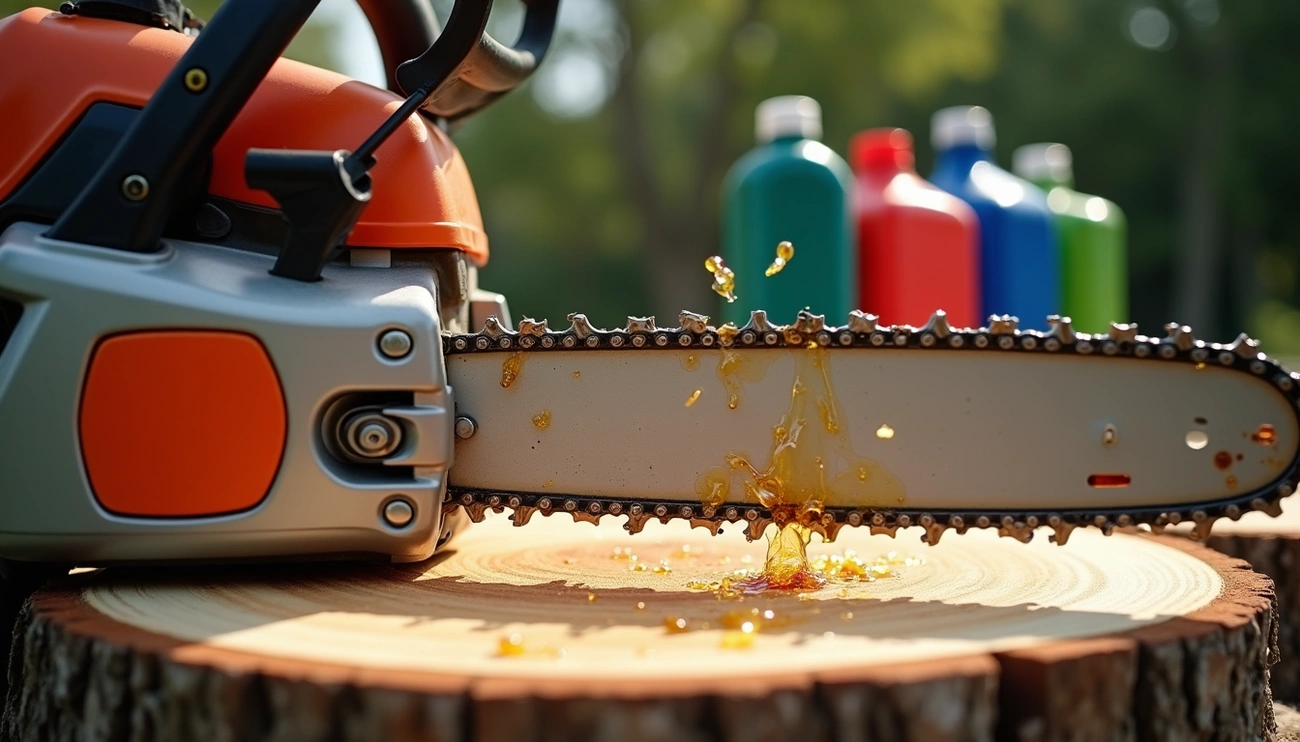
You can easily observe the difference between proper bar oil and substitutes through a simple test. The superior anti-sling properties of quality bar oil significantly reduce wasted lubricant that might otherwise be thrown off the chain. This not only improves operating efficiency but also minimizes environmental impact.
How bar oil protects your chainsaw
Beyond lubrication and cooling, bar oil provides critical protection for your equipment. Its special formulation prevents rust and corrosion of all parts of the bar and chain. Moreover, advanced additives prevent sap and debris from collecting on vital components, keeping your chainsaw running smoothly.
Using proper bar oil regularly adds years to your chainsaw’s life. It significantly reduces wear on metal parts, prevents corrosion, and protects the guide bar from damage. This means fewer chain replacements and less downtime for repairs.
From a safety perspective, appropriate lubrication is essential. Proper bar oil helps prevent equipment failures that could lead to serious accidents. Additionally, it reduces chain drag, allowing for smoother cuts while enhancing overall cutting efficiency.
Despite the temptation to substitute 10w40 motor oil for chainsaw bar oil, understanding these specialized functions makes it clear why manufacturer-recommended lubricants perform best. While motor oil might flow through your chainsaw’s oiling system, it lacks the specific properties that make bar oil effective in this unique application.
Can you use 10w40 motor oil for chainsaw bar oil?
Many chainsaw owners wonder about using 10w40 motor oil as a substitute for dedicated bar oil, primarily because it’s often readily available in their garage. Yet, understanding the significant differences between these lubricants is essential for proper equipment maintenance and longevity.
Understanding 10w40 viscosity
10w40 is a multi-grade motor oil designed for internal combustion engines—not chainsaw bars and chains. The “10w” indicates how the oil flows at cold temperatures (winter rating), whereas “40” refers to its thickness at operating temperature. Although 10w40 appears adequately thick, it lacks critical properties necessary for chainsaw application.
Motor oils like 10w40 are formulated to withstand high temperatures inside engines rather than the unique demands of a chainsaw’s cutting system. They’re engineered for enclosed systems with pressure-fed lubrication—quite different from the exposed application method of chainsaw bar oiling.
How it compares to standard bar oil
When examining motor oil for chainsaw use, the differences become immediately apparent. First and foremost, 10w40 lacks the specialized tackifiers found in proper bar oil. These additives help the lubricant adhere to the chain during high-speed operation. Without these crucial components, motor oil simply cannot match the adhesion properties of dedicated bar oil.
Indeed, 10w40 will result in higher consumption rates because it doesn’t cling to the bar and chain effectively. This means you’ll use more oil and achieve less protection—an inefficient compromise at best.
The specialized formulation of bar oil includes extreme-pressure additives and polymers specifically optimized for the wet, high-shear contact between chain and bar. In contrast, motor oils are optimized for engine bearings and their viscosity-shear behavior, not for chain adhesion.
Does it stick to the chain?
The simple answer is: not well enough. The most critical difference between 10w40 and proper bar oil is tackiness—the ability to adhere to moving metal parts. Bar oil contains specific tackifiers that make it cling to chain links at high speeds. Unfortunately, 10w40 is fundamentally too thin and will fling off the chain.
As a result of this poor adhesion, much of the 10w40 will be thrown off before it even reaches the end of your bar. This creates two significant problems: inadequate lubrication of the cutting system and environmental contamination as oil is dispersed throughout your work area.
One user’s experience notes that 10w40 is “too thin and lacks the tackifiers needed to adhere to chains. This results in insufficient lubrication”. Although some sources suggest 10w40 offers better viscosity characteristics than thinner oils, they still acknowledge it “cannot match the adhesion properties of proper bar oil”.
Is it safe for your chainsaw?
Using 10w40 as chainsaw bar oil poses several potential risks to your equipment. Primarily, manufacturers design their machines to work with specific lubricants. Using alternatives may void warranties and lead to denied claims if problems arise.
Beyond warranty concerns, insufficient lubrication due to poor adhesion can accelerate wear on your bar and chain. The oil pump in your chainsaw is calibrated for the viscosity of proper bar oil—thinner motor oils may not provide consistent coverage throughout the cutting system.
Some chainsaw users report that using motor oil substitutes “resulted in more rapid chain wear”. Although 10w40 won’t immediately damage your chainsaw, extended use will likely lead to premature equipment failure.
Even in short-term use, you should monitor your equipment closely for signs of inadequate lubrication such as excessive heat, unusual noise, or visible metal-on-metal contact. Generally speaking, dedicated bar oil remains the safest option for maintaining your chainsaw’s performance and longevity.
Risks of using 10w40 as a chainsaw oil substitute
Substituting 10w40 motor oil for proper bar oil introduces serious risks to both your chainsaw and the surrounding environment. Throughout this section, we’ll examine the specific dangers you face when using the wrong lubrication for your cutting equipment.
Increased wear and tear
Using 10w40 motor oil substantially accelerates the wear of critical chainsaw components. Primarily, this occurs because motor oil lacks the tackiness needed for proper chain lubrication, causing it to fling off during operation. As the chain spins at high speed, inadequate lubrication leads to metal-on-metal contact that rapidly damages your equipment.
The bar groove wears out faster with motor oil substitutes, requiring more frequent replacement. Likewise, chain wear increases noticeably when standard bar oil isn’t used. For this reason, repair costs often exceed any potential savings from using motor oil instead of proper chainsaw lubricant.
Overheating and performance issues
Insufficient lubrication creates excessive friction, causing the chain to overheat and potentially fail. This overheating presents a genuine safety hazard since it can lead to chain breakage during operation. Chain overheating can contribute to dangerous kickbacks, a major factor in many of the 36,000 chainsaw-related injuries reported annually.
Beyond safety concerns, performance suffers markedly with improper lubrication. Without adequate oil coverage, cutting becomes less efficient. The chainsaw might struggle through cuts that would otherwise be straightforward with proper bar oil. Soon after switching to motor oil, many users notice their equipment running hotter and louder.
Environmental concerns
Motor oils create significant environmental hazards when used in chainsaws. Unlike many purpose-made bar oils, motor oil isn’t biodegradable, meaning it persists in soil and water systems. Moreover, motor oil spills during outdoor chainsaw operation lead to environmental contamination.
Even more troubling, many motor oils contain additives that are directly harmful to natural ecosystems. Given that motor oil substitutes typically result in higher consumption rates, this creates more waste and greater environmental impact.
Warranty and manufacturer warnings
Manufacturer warnings about oil substitution exist for good reason. Using motor oil or any non-recommended lubricant typically voids your chainsaw’s warranty. This means that even if damage occurs that isn’t directly related to lubrication, the manufacturer may still deny warranty claims if they determine the wrong oil was used.
Some users report having to replace oil pumps after extended use of motor oil substitutes. The truth remains that chainsaw manufacturers design their equipment to work with specific lubricants, and deviating from these recommendations puts both your warranty coverage and your equipment at risk.
When is it okay to use 10w40 motor oil in a chainsaw?
Despite the risks involved, there are rare situations where using 10w40 as chainsaw bar oil becomes a necessary compromise. Though never ideal, occasionally we find ourselves with limited options when our equipment needs lubrication.
Emergency situations only
Finding yourself deep in the woods with a chainsaw running dry presents a genuine dilemma. In these remote locations, any lubrication is better than none at all. If you’re miles from the nearest store and must complete your cutting task, 10w40 motor oil can serve as a temporary solution. Under these circumstances, using motor oil for your chainsaw is justified as it provides basic lubrication until proper bar oil becomes available.
Remember that this substitution should remain strictly an emergency measure. Motor oil lacks the essential tackiness needed for proper chain lubrication, so limit its use to situations where completing your task outweighs the temporary risk to your equipment.
Short-term use with caution
Beyond emergency scenarios, short-term use might be considered when waiting for proper bar oil delivery. For instance, if you need to cut a few branches in your yard but your online order hasn’t arrived yet, 10w40 could temporarily suffice.
To be sure, even in these limited scenarios, be mindful that 10w40 will not adhere properly to moving chains. The thinner consistency means it flings off more readily, possibly leading to inadequate coverage and increased wear. Short-term substitution should never evolve into regular practice.
Tips to reduce damage if you must use it
Should you find yourself with no alternative but to use 10w40 motor oil in your chainsaw, these precautions can minimize potential damage:
- Use the minimal amount of oil necessary for the job
- Run your chainsaw at slower speeds to reduce oil fling-off
- Monitor the equipment closely for signs of inadequate lubrication
- Replace with proper chainsaw bar oil immediately after completing your task
- Check components for unusual wear afterward
Primarily, keep safety as your top priority throughout. Always wear proper protective gear, including gloves and goggles, regardless of what lubricant you’re using.
In essence, the question “can I use 10w40 for chainsaw bar oil” has a nuanced answer—it’s acceptable only as a last resort in situations where no alternatives exist and for the shortest duration possible.
Better alternatives to 10w40 for bar oil
Looking for better alternatives to 10w40 motor oil for your chainsaw? Fortunately, several superior options exist that provide proper lubrication while protecting both your equipment and the environment.
Vegetable-based oils
First and foremost, canola oil offers an excellent alternative that clings to bars better than standard motor oils. As a surprising benefit, it’s typically cheaper than commercial bar oil, costing about $2.66/liter compared to $3.24/liter for conventional products. Canola oil forms the base of many “environmentally friendly” chainsaw lubricant formulas. Plus, it offers good natural properties including excellent lubricity, resistance to shear, high flash point, and high viscosity index. Some users even report it smells like cooking pancakes while cutting, making the experience more pleasant.
Biodegradable bar oils
Equally important, purpose-made biodegradable bar oils combine vegetable oils with special additives for enhanced performance. These formulations pose no threat to the environment while providing effective lubrication. Many manufacturers now offer these options, adding tackifiers to improve viscosity and help the oil stick to bars and chains. These products are particularly valuable when working near water sources or in environmentally sensitive areas.
Winter-grade bar oils
For cold-weather cutting, winter-grade bar oils remain fluid at freezing temperatures. Standard oils and vegetable alternatives often thicken considerably in cold conditions, potentially causing inadequate lubrication. Winter formulations like CountyLine Winter Chainsaw Bar and Chain Oil work effectively “even at bone chilling temperatures well below freezing”. These specialized products ensure your chain receives proper lubrication regardless of temperature.
What to look for in a good substitute
When selecting an alternative, prioritize products with high tackiness to prevent oil from flinging off. Consider biodegradability if environmental impact concerns you. As shown above, vegetable-based oils like canola deliver excellent performance while being renewable and readily available. On balance, the ideal substitute should offer good lubrication, appropriate viscosity for your climate, and protection for both your equipment and the environment.
Conclusion
After examining the facts, we can clearly see that 10w40 motor oil falls short as a chainsaw bar oil substitute. Though it might seem convenient to reach for whatever oil you have on hand, the risks simply outweigh any temporary convenience.
First and foremost, proper bar oil contains specialized tackifiers that help it adhere to your chain during high-speed operation – something 10w40 fundamentally lacks. Without this crucial property, your chainsaw components will wear faster, potentially overheat, and ultimately cost you more in repairs than you’d save on oil.
Nevertheless, life doesn’t always go as planned. If you find yourself in a genuine emergency with no access to proper bar oil, 10w40 can serve as a temporary solution. Still, you should use it cautiously and for the shortest time possible. Remember to check your equipment thoroughly afterward for any signs of unusual wear.