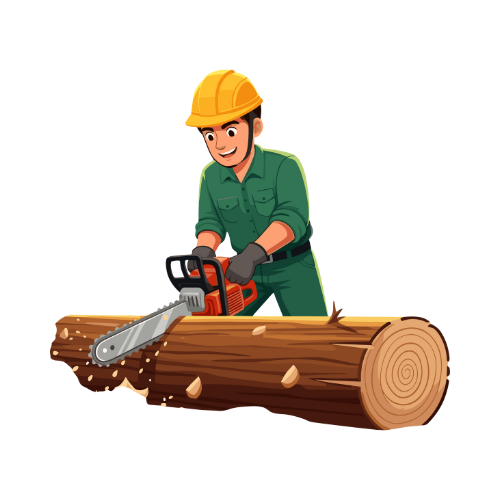
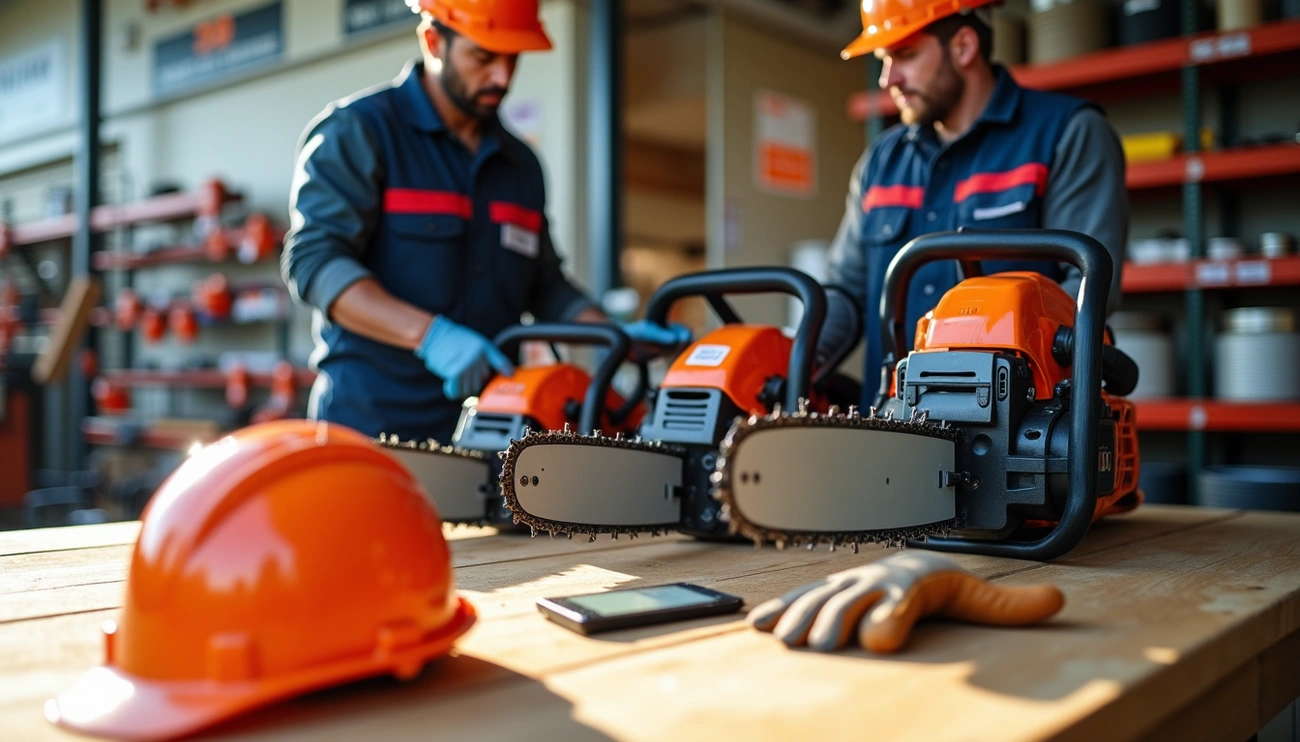
Yes, you can rent a chainsaw from major home improvement stores and equipment rental companies. Chainsaw rentals provide a cost-effective option for one-time projects or occasional use. Renting eliminates maintenance, storage, and upfront purchase costs while giving access to professional-grade equipment when needed.
Chainsaw Rental Costs by Type
When shopping for chainsaw rentals, understanding the different types and their corresponding costs helps you make the right choice for your project. The cost varies primarily based on the chainsaw’s size and power capabilities.
Light-duty chainsaws: $30–$60/day
These compact workhorses feature blades of 16 inches or less, making them perfect for occasional yard maintenance. I’ve found light-duty chainsaws ideal for trimming small branches, cutting fallen limbs after storms, or basic pruning tasks.
Most rental shops price these smaller models between $35 and $60 per day. For example, a 14-inch chainsaw typically rents for around $35 daily, whereas 16-inch models go for approximately $38 per day. If you only need the tool for a few hours, many shops offer 4-hour rentals at reduced rates—generally around $35 for a 14-inch model.
Medium-duty chainsaws: $65–$90/day
For more demanding tasks such as felling small trees, clearing large branches, or cutting firewood, medium-duty chainsaws offer the necessary power. These models typically feature 20- to 24-inch blades along with enhanced features like vibration dampening systems to reduce user fatigue during extended use.
Daily rental rates for medium-duty chainsaws generally range from $65 to $90. At most rental locations, a 20-inch chainsaw costs approximately $47 per day, while 24-inch models run about $52 daily. Some shops offer weekend packages—a 20-inch saw might cost around $70.50 for an entire weekend.
Heavy-duty chainsaws: $100+/day
Professional-grade heavy-duty chainsaws come equipped with blades of at least 30 inches and powerful engines designed for tackling major projects. These machines excel at taking down large trees or processing substantial amounts of firewood efficiently.
Expect to pay at least $100 per day for these powerful tools. For instance, a 32-inch heavy-duty chainsaw typically rents for about $95 per day, with 4-hour rentals available at approximately $75. Some rental companies charge as much as $105 for a full day with their most powerful models.
For longer projects, consider weekly rates which offer better value—a medium-duty chainsaw might cost around $250 for a full week instead of $350 for seven individual day rentals.
Buying vs. Renting: Which Is Better?
Deciding between purchasing or renting a chainsaw ultimately comes down to frequency of use, project scope, and budget considerations.
Cost of buying a chainsaw
The upfront investment for a quality chainsaw varies significantly based on type and features. For everyday household use, expect to pay between $80 and $250 for a decent model. Professional-grade options from brands like Stihl or Husqvarna typically cost $375-$500. Electric models offer lower maintenance requirements, though they restrict mobility with their cord requirements. Battery-powered options provide a happy medium—ideal if you don’t plan to use the saw daily.
Beyond the initial purchase price, factor in additional expenses for safety gear ($40+), extra chains ($20+), and maintenance tools. Consequently, even a modest setup can reach $600 all-in for a complete package.
When renting makes more sense
Renting a chainsaw becomes financially prudent primarily in these scenarios:
First, consider your usage frequency—if you’ll use the chainsaw two or fewer times annually, rental makes more economic sense. At approximately $25 per day from equipment rental stores, occasional users save substantially compared to purchasing.
Furthermore, renting gives access to higher-quality models than you might afford to buy outright. This proves particularly valuable for trying before buying or tackling a project requiring specific capabilities.
Storage limitations also favor renting. Without dedicated space for storing a rarely-used tool, renting eliminates the need to find room for bulky equipment.
Long-term ownership considerations
Owning a chainsaw involves ongoing responsibilities beyond the purchase price. Maintenance costs can accumulate quickly—gas-powered models require regular carburetor cleaning, particularly if they sit unused for extended periods.
Storage considerations remain significant since improper storage can damage the tool. Additionally, insurance may be necessary to protect your investment from theft or damage.
On the positive side, purchased equipment ensures immediate availability whenever needed, without worrying about rental store hours or availability during peak seasons.
Where and How to Rent a Chainsaw
Finding a chainsaw to rent requires knowing where to look and understanding the rental process. Here’s what you need to know about renting a chainsaw for your next project.
Where can you rent a chainsaw near you?
Numerous national retailers offer chainsaw rentals, including Home Depot with over 1,100 locations across North America. Other major rental providers include United Rentals and Sunbelt Rentals. Moreover, local equipment rental shops typically stock various chainsaw sizes from 14-inch to 24-inch models. Most rental locations maintain online inventory systems, allowing you to check availability before visiting.
Rental requirements and ID verification
Essentially all rental companies require a valid photo identification, typically a driver’s license or state-issued ID card. Age requirements vary by provider—most companies require renters to be at least 18 years old for equipment rentals and 21 years for vehicle rentals. Prior to taking possession of the chainsaw, many companies perform an inspection and document any pre-existing damage.
Chainsaw rental prices by store
Rental prices vary somewhat between stores. The average cost hovers around $70 per day, although some local shops offer more competitive rates. For instance, certain locations charge as little as $44 for an 18-inch gas-powered Stihl chainsaw, while a 20-inch battery-powered option might cost about $60 per day.
Rental duration and deposit policies
Rental periods typically include 4-hour, daily, weekly and monthly options. Daily rentals usually constitute a 24-hour period from pick-up time with a one-hour grace period for returns. Weekly rates cover seven consecutive days and provide better value than daily rentals.
Security deposits are mandatory for all rentals and vary by equipment type. Chainsaw rentals usually require deposits between $25-$300, refundable upon returning the equipment in good condition. Acceptable deposit forms include credit cards, substantial cash amounts, or local company checks.
Chainsaw Safety Basics for First-Time Users
Safety remains paramount once you’ve secured your chainsaw rental. Even for one-time users, understanding basic safety principles can prevent accidents and injuries.
Essential safety gear
Initially, ensure you have proper protective equipment before operating a rented chainsaw. You’ll need safety gloves (preferably leather with ballistic nylon), steel-toe boots, hearing protection, face shield or safety glasses, chainsaw chaps, and a safety helmet. Never operate a chainsaw without these items, regardless of how small the job might seem.
How to start and handle a chainsaw
Place the saw on firm ground with the chain brake engaged. Put your right foot through the rear handle and grip the front handle firmly with your left hand. Pull the starter cord sharply. Subsequently, maintain a two-handed grip with thumbs wrapped completely around the handles. Stand with feet apart—left foot slightly forward—for optimal balance.
Common mistakes to avoid
Above all, avoid “drop starting” (starting while holding the saw). Never cut with a dull chain or improper tension. Steer clear of the “kickback zone”—the upper half of the bar’s tip. Furthermore, don’t refuel a hot chainsaw or leave old gas in the tank over winter.
When to hire a professional instead
Complex tasks like felling large trees, handling spring-loaded limbs, or working near power lines exceed typical DIY capabilities. Accordingly, professional arborists possess specialized training, proper equipment, and insurance coverage. For jobs involving multiple trees or requiring precise cuts, the rental cost plus professional fees ($200-$760) often proves worthwhile.
Conclusion
Chainsaw rentals offer a practical solution for homeowners like me who need this powerful tool for occasional use. After all, paying $30-$100 per day for a rental makes more sense than investing $200-$500 in a chainsaw that might sit unused for months. Additionally, rental options provide access to professional-grade equipment without the long-term commitment of maintenance, storage, and upkeep.
Safety undoubtedly remains the most critical consideration whether you rent or buy. Proper protective gear and basic operational knowledge significantly reduce accident risks. Therefore, first-time users should take time to understand proper starting techniques and handling procedures before tackling any project.
While renting works perfectly for infrequent users, buying becomes more cost-effective if you need a chainsaw more than 2-3 times annually. Consequently, your decision should balance frequency of use, project requirements, and personal comfort level with chainsaw operation.