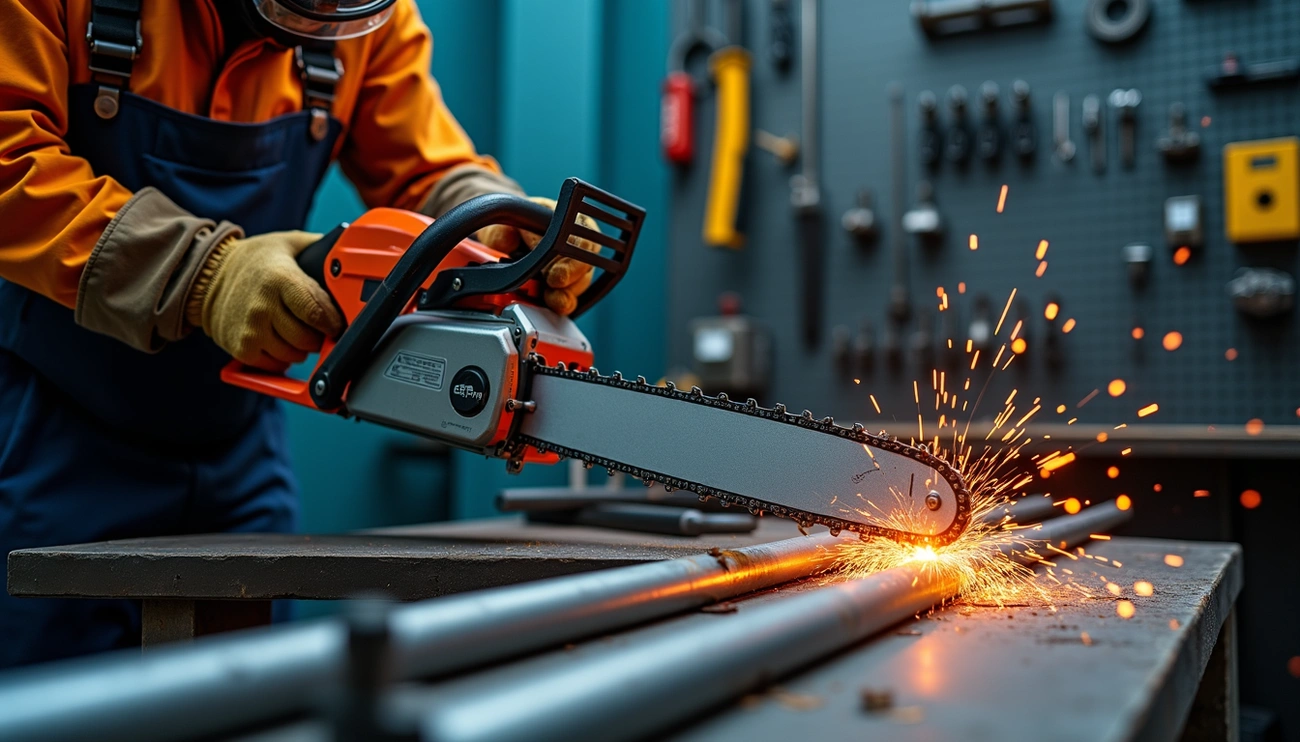
Yes, a chainsaw can cut through some metals when equipped with specialized carbide-tipped or diamond chains. Standard wood chains dull or break on metal, making the process inefficient and risky. Metal cutting with chainsaws is best reserved for emergencies or demolition tasks, such as cutting iron pipes, not general metalwork where grinders or metal-cutting saws perform better.
Understanding Chainsaws and Metal Cutting
To appreciate whether a chainsaw can cut through metal, we first need to understand the fundamental mechanics behind these powerful tools.
How chainsaws work
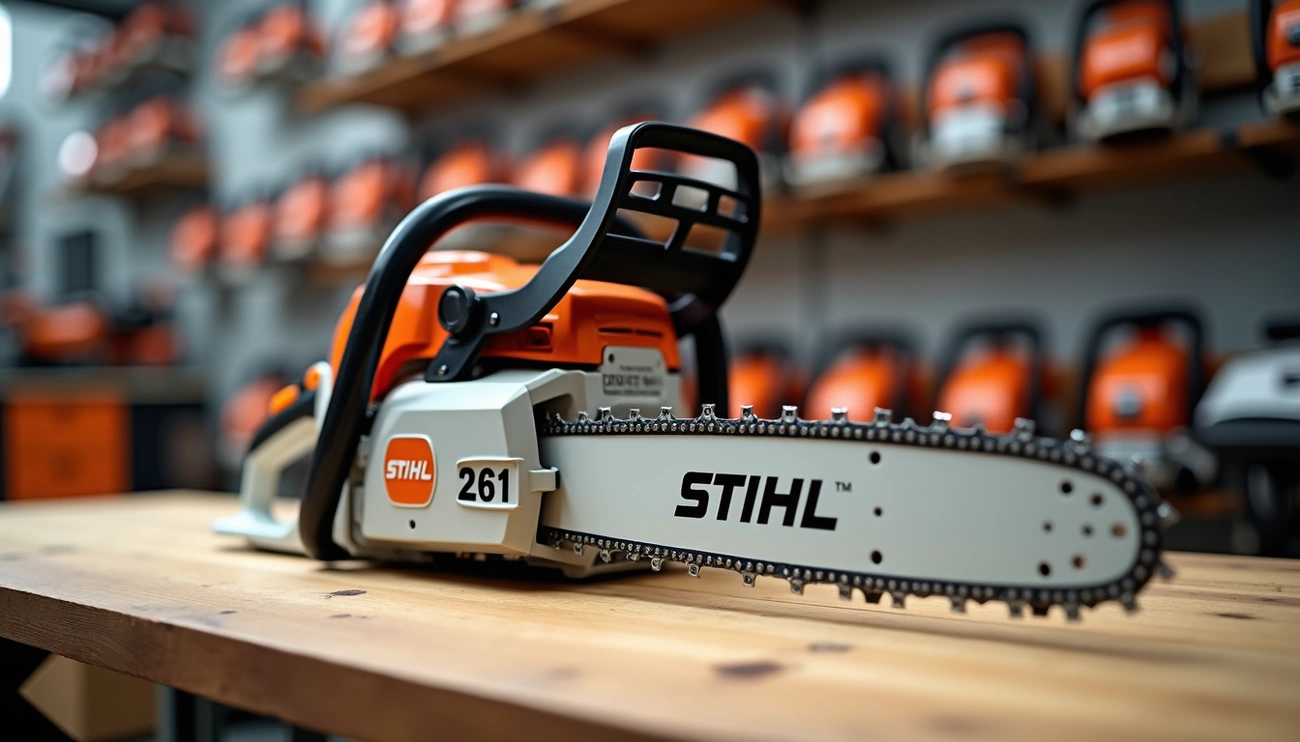
Chainsaws operate through a relatively simple yet effective mechanism. At their core, they feature a two-stroke gasoline engine that generates approximately 3 horsepower. This engine is remarkably efficient, approaching 1 horsepower per pound of weight. The power generated by the engine is transferred to a chain wrapped around a metal guide bar.
The chain consists of numerous sharp teeth made from hardened steel alloy that rotate at high speed. These teeth function like tiny chisels, each removing a small chip of material with every pass. A centrifugal clutch connects the engine to the chain only when the engine is running at high speed, ensuring the chain doesn’t spin during idle for safety reasons.
What makes metal cutting different
Metal cutting poses significant challenges compared to wood cutting. Primarily, metals have higher density and hardness than wood. Consequently, standard chainsaw chains designed for wood are made of relatively soft steel to facilitate easy hand sharpening.
When a typical chainsaw encounters metal, the friction immediately generates intense heat that quickly dulls the cutting teeth. Even brief contact with metal objects like nails embedded in wood will severely blunt a standard chain within seconds.
Can a chainsaw cut through metal or steel?
Yes—certain chainsaws can cut through metal, yet not in the same manner they cut wood. Success depends on four critical factors: the saw type, chain specification, metal characteristics, and proper technique.
Standard wood-cutting chains will rapidly become damaged when cutting metal. Instead, specialized chains are required for metal cutting:
- Carbide-tipped chains: Designed with hardened teeth that can withstand the rigors of metal cutting
- Diamond chains: Primarily used for cutting concrete but effective on certain metals
- Abrasive chains: Featuring embedded grit for cutting through metal materials
These specialized chains can effectively cut through non-ferrous metals like aluminum and thin sections of mild steel. For instance, thin metal siding, roofing materials, and embedded nails can be cut, though this will significantly reduce chain life.
For safety, reliability, and tool longevity, most professionals recommend using tools specifically designed for metal cutting rather than adapting a chainsaw for this purpose.
Types of Chainsaw Chains for Metal Cutting
When tackling the challenge of cutting metal with a chainsaw, selecting the appropriate chain makes all the difference between success and failure. Let’s examine the specialized options designed for this demanding task.
Carbide-tipped chains
Carbide chainsaw chains feature tungsten carbide tips that dramatically enhance durability. These specialized chains can stay sharp up to 25 times longer than standard steel chains. Professionals working in emergency situations often prefer carbide-tipped chains for their exceptional toughness and resilience in challenging environments.
Nevertheless, not all carbide chains are created equal for metal cutting. Many carbide-tipped options excel with contaminated timber, icy wood, and some construction materials, yet have limitations with pure metal cutting. The primary advantage lies in their ability to maintain sharpness when occasionally encountering nails, light metal, or other embedded materials.
Diamond chains
For serious metal cutting capabilities, diamond chains represent the gold standard. These specialized chains can effectively cut through rock, concrete, and various metals with remarkable efficiency. In emergency scenarios, diamond chains can slice through vehicles with surprising ease, making them essential for rescue operations.
Diamond chains require special concrete chainsaw models and typically operate with water cooling systems to manage the extreme heat generated during cutting. Their professional-grade performance comes with premium pricing, with most models ranging from $1,300 to over $2,000.
Standard vs. specialized chains
Standard chains:
- Made of conventional steel
- Require frequent sharpening (every 2-3 hours)
- Quickly damaged by metal contact
- Typically need replacement after 10-15 sharpenings
Specialized chains:
- Feature carbide tips or diamond segments
- Last 4-5 times longer between sharpenings
- Can withstand contact with various hard materials
- Average lifespan of 12-18 months with regular use
Choosing the right chain for the job
Selecting an appropriate chain requires considering three critical factors: pitch, gage, and length compatibility with your specific saw model. Additionally, you must evaluate what materials you’ll be cutting—from clean wood to demolition materials containing metal.
For occasional metal cutting, carbide-tipped chains offer a practical solution. For dedicated metal cutting applications, especially in professional rescue or construction environments, diamond chains provide superior performance and longevity, making them worth the higher investment.
Safety Tips When Cutting Metal with a Chainsaw
Cutting metal with a chainsaw presents unique hazards that demand serious safety precautions. Even with specialized chains, this operation requires careful attention to detail.
Wear proper protective gear
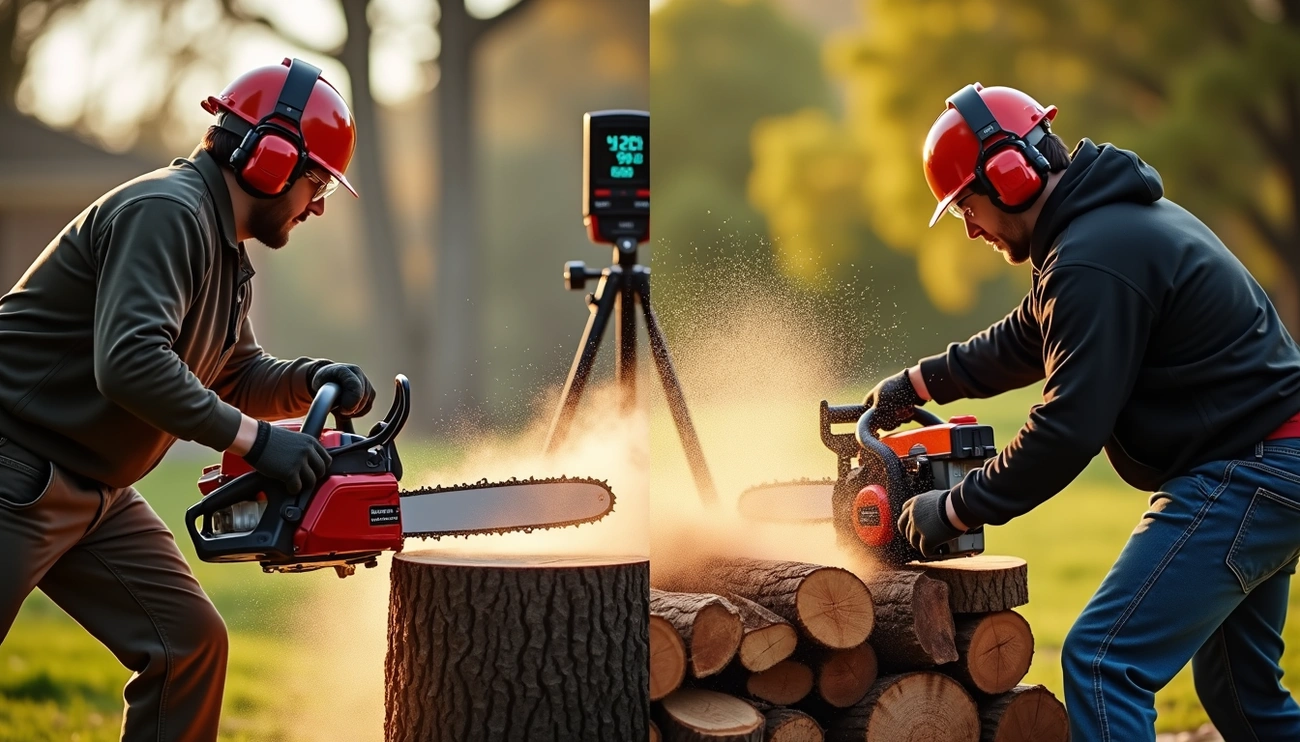
Safety equipment is non-negotiable when cutting metal. Your gear should include a hard hat with face shield, impact-resistant eye protection, hearing protection (chainsaws operate at 110 decibels), cut-resistant safety chaps, steel-toed boots with ankle support, and heavy-duty gloves. Furthermore, this protective clothing isn’t just recommended—it’s essential for preventing potentially career-ending injuries.
Check chain compatibility
Prior to cutting metal, ensure your chain is specifically designed for the task. Standard chains will immediately dull upon contact with metal. Users often select specialized chains to reduce kickback and improve overall safety.
Avoid overheating the chain
Maintaining your chainsaw properly prevents dangerous overheating. Regularly clean air filters to prevent restricted airflow, keep chains well-lubricated, and avoid applying excessive pressure during cutting. Take periodic breaks as running at high revs without pauses causes rapid heat buildup.
Secure the metal before cutting
Metal materials must be firmly stabilized before cutting begins. Unstable materials increase the risk of kickback—a potentially deadly reaction where the saw violently jerks backward. Essentially, proper material stability helps prevent the saw from grabbing and shattering.
Watch for sparks and debris
Metal cutting generates flying sparks and debris that pose serious eye and fire hazards. Work in well-ventilated areas and immediately clean any oil spills. Always wear face protection as metal fragments can cause permanent eye damage.
Know when to stop
Immediately stop cutting if you notice excessive chain heating, unusual vibrations, or kickback. Remember that safety chaps aren’t cut-proof—they only slow or stop the chain. Above all, never operate a chainsaw when fatigued or under the influence of medications or alcohol.
Maintenance and Longevity of Metal Cutting Chains
Proper maintenance is crucial when using specialized chains for metal cutting. Even the toughest chains require care to maximize performance and lifespan.
How metal affects chain wear
Metal cutting generates intense friction, causing chains to wear much faster than when cutting wood. This friction creates excessive heat that quickly dulls teeth and can permanently damage the chain. Without proper care, carbide-tipped chains lose their effectiveness after repeated metal contact. The hardness of metal materials, particularly steel, substantially accelerates wear on the drive links, sprocket, and guide bar rails.
Sharpening carbide chains
Unlike standard chains, carbide-tipped versions require specialized diamond tools for sharpening, such as diamond bench grinder wheels, rotary burrs, or files. Many manufacturers offer professional sharpening services using original manufacturing equipment to restore factory-standard performance. Computerized sharpening services typically charge between $18-$28.75 depending on chain length.
Cleaning and lubrication
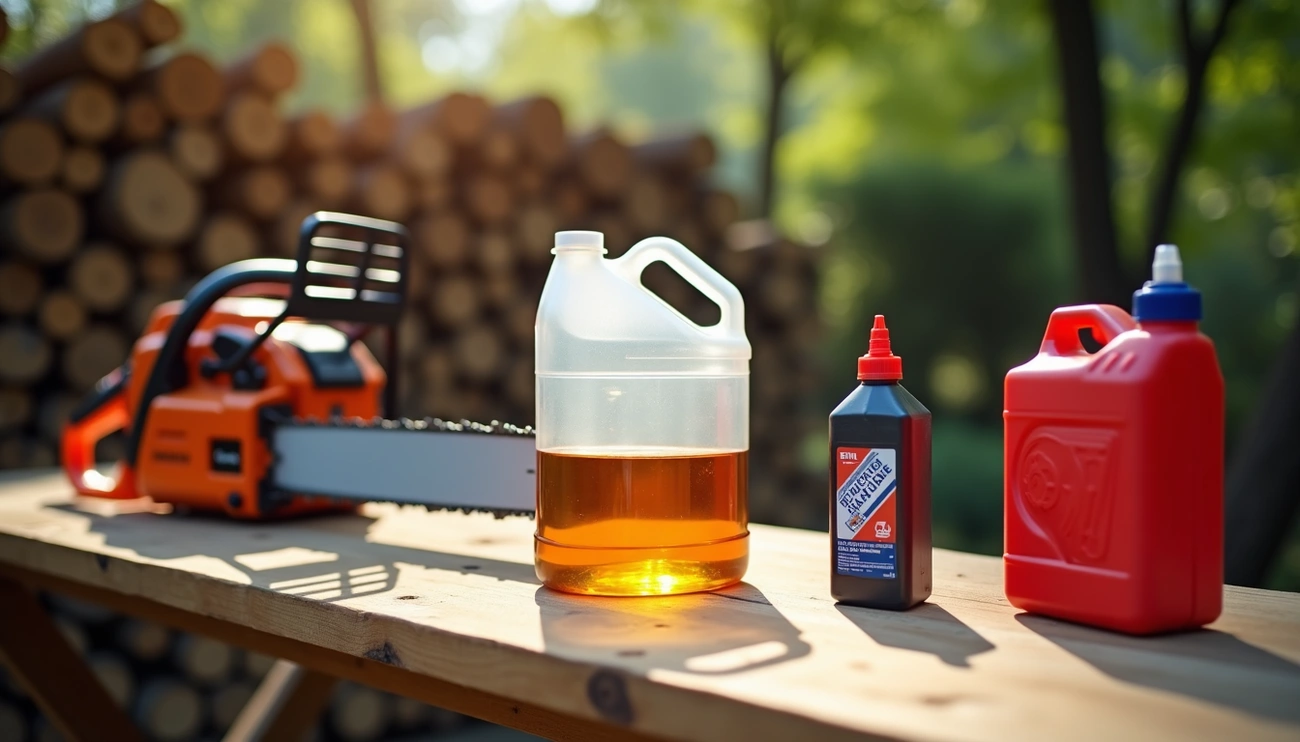
After metal cutting, thoroughly clean your chain to remove debris and metal particles. Clean the bar groove using a specialized tool or flattened wire to prevent buildup. Proper lubrication is essential—it reduces friction, extends equipment life, enhances cutting performance, and prevents rust formation. Use high-quality bar and chain oil designed specifically for chainsaws, as other oils lack necessary tackiness and additives.
When to replace your chain
Replace your chain when:
- Wear markers on teeth are reached
- Teeth become damaged or broken
- Cutting performance declines despite sharpening
- Chain has stretched beyond adjustment capability
- Bottom wear marker above the “toe” and “heel” is visible
Conclusion
Throughout this guide, we’ve discovered that cutting metal with chainsaws is indeed possible, though certainly not with standard equipment. Specialized carbide-tipped and diamond chains offer reliable solutions for metal cutting tasks when used correctly. However, this capability comes with significant responsibilities.
Safety undoubtedly remains the paramount concern when attempting to cut metal with a chainsaw. Proper protective gear, correct chain selection, and secure workpiece mounting all play crucial roles in preventing dangerous accidents. Remember that even specialized chains generate intense heat, sparks, and debris that pose serious risks without adequate precautions.
Maintenance also deserves careful attention. Metal cutting drastically accelerates wear on chainsaw components, making regular cleaning, proper lubrication, and professional sharpening essential practices. Your specialized chain will serve you well only if you commit to its proper care.