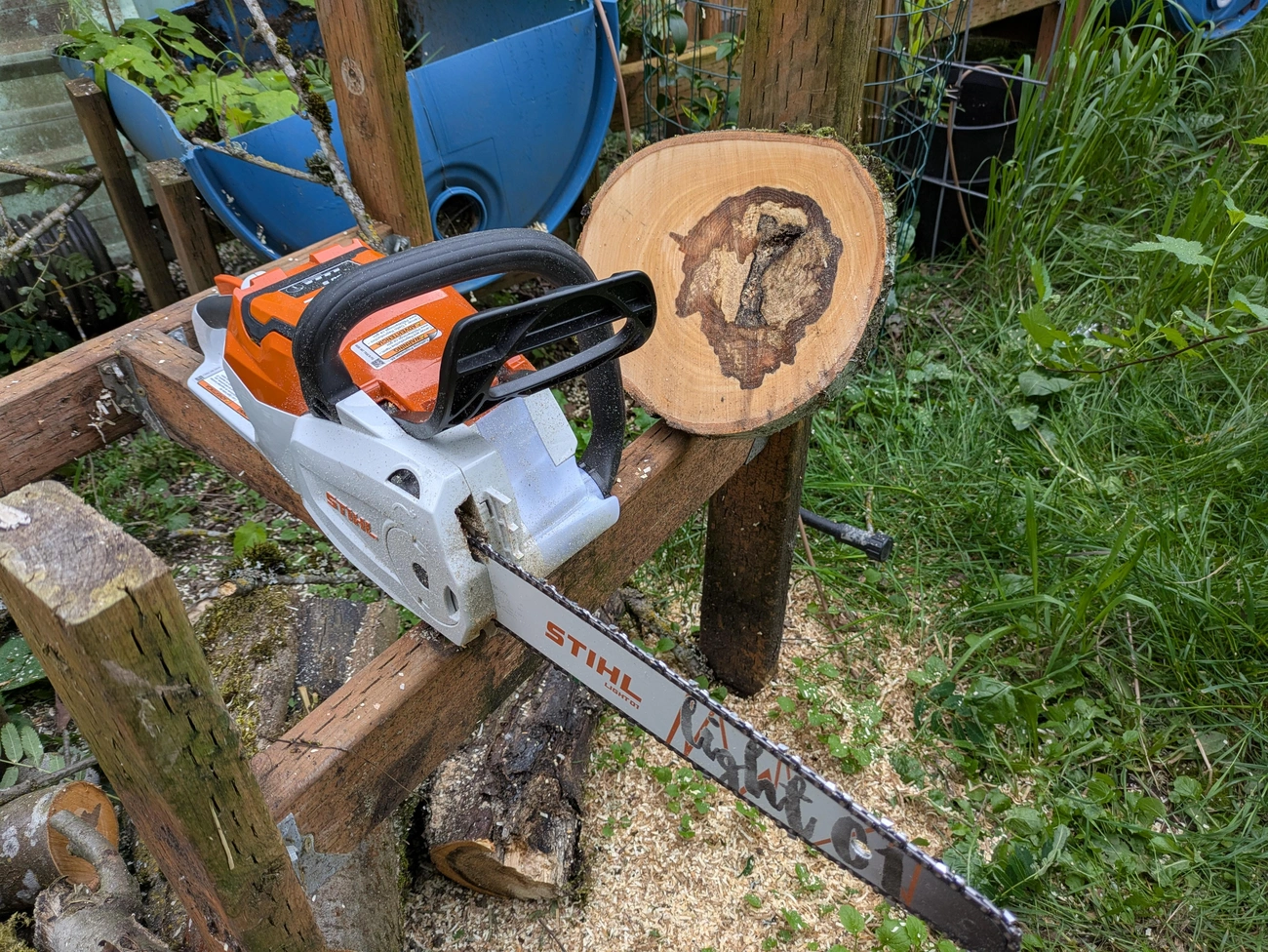
Yes, California has banned the sale of new gas-powered chainsaws starting January 1, 2024. The ban comes from Assembly Bill 1346 and targets manufacturers selling new equipment to reduce air pollution. Existing gas chainsaws remain legal to use, and used models can still be purchased.
What the California Gas Equipment Ban Actually Says
The California legislation on gas-powered equipment has created confusion among homeowners and professionals alike. Understanding exactly what the law says is essential for anyone who uses landscaping tools in the state.
What is Assembly Bill 1346?
Assembly Bill 1346, signed by Governor Gavin Newsom in October 2021, directs the California Air Resources Board (CARB) to develop and adopt regulations prohibiting engine exhaust and evaporative emissions from new small off-road engines (SORE). The bill specifically targets equipment with engines that produce 19 kilowatts gross power or less (equivalent to 25 horsepower or less), primarily used in lawn and garden equipment.
The legislation emerged after findings showed that in 2020, daily emissions from SORE in California exceeded those from light-duty passenger cars. Additionally, one hour of operating a commercial leaf blower can emit as much reactive organic gasses plus nitrogen oxides as driving 1,100 miles in a new passenger vehicle.
When did the law take effect?
The regulations took effect on January 1, 2024. Nevertheless, it’s important to note that the law does not ban the use of existing gas-powered equipment. Rather, it prohibits the sale of newly manufactured gas-powered small engines produced after December 31, 2023.
Furthermore, retailers can still sell gas-powered equipment that was manufactured before the cutoff date and remains in their inventory. The legislation also allocated up to $30 million for commercial rebate programs to assist with the transition to zero-emission equipment.
Does it include gas chainsaws?
Yes, the ban includes small chainsaws under 45cc. According to the official documentation, the following equipment falls under the regulation:
- Lawn and garden tools (mowers, leaf blowers, string trimmers)
- Small chainsaws (under 45cc)
- Pressure washers
- Generators (with implementation delayed until 2028)
Notably, larger chainsaws (45cc and above), construction equipment, farm equipment, and off-road vehicles such as ATVs or motorcycles are not affected by this legislation.
The primary goal of this regulation is to improve air quality throughout California, especially considering that the state exceeds both EPA and state standards for ozone in many areas.
Which Tools Are Banned Under the Law
California’s gas equipment ban specifically targets small off-road engines (SORE) rated at or below 19 kilowatts (25 horsepower). These spark-ignition engines power various landscaping and outdoor maintenance tools that contribute significantly to air pollution. Let’s examine exactly which equipment falls under this new legislation.
Lawn mowers and trimmers
The California ban encompasses both residential and commercial lawn equipment. As of January 1, 2024, newly manufactured gas-powered lawn mowers—both push and riding varieties—can no longer be sold in the state. String trimmers (weed whackers) are likewise prohibited under the new regulations. Homeowners and landscaping professionals must consequently shift toward electric or battery-powered alternatives for these everyday lawn care tasks.
Leaf blowers and edgers
Gas-powered leaf blowers represent some of the worst polluters in the lawn equipment category. Gallon for gallon of gasoline used, these devices pollute at dramatically higher rates than other equipment. The ban prohibits sales of new gas-powered leaf blowers, edgers, and hedge trimmers manufactured after December 31, 2023. Moreover, several California municipalities had already implemented local bans on gas-powered leaf blowers prior to the statewide legislation.
Chainsaws and log splitters
For those wondering “are gas chainsaws banned in California,” the answer is partially yes. The legislation applies primarily to smaller chainsaws with engine displacement under 45cc. Larger chainsaws (45cc and above) remain exempt from the current regulations. Similarly, gas-powered log splitters using small engines fall under the ban. Professional arborists and forestry workers can essentially continue using larger chainsaws for heavy-duty work.
Snow blowers and pressure washers
Snow blowers powered by small gas engines are technically covered by the ban, though manufacturers may opt out of certain emission standards for equipment used exclusively in winter. Pressure washers face a two-phase implementation—standard models are prohibited as of 2024, while larger pressure washers (≥225cc) face more stringent regulations until 2028, when they must meet zero-emission standards. This graduated approach primarily gives manufacturers time to develop suitable alternatives for high-demand equipment.
Why California Is Banning Gas-Powered Lawn Equipment
The environmental and health concerns behind California’s ban on gas-powered lawn equipment extend far beyond simple pollution reduction. This sweeping regulation addresses multiple serious issues that affect both equipment operators and surrounding communities.
Air pollution and emissions
Gas-powered landscaping equipment emits pollution at dramatically higher rates than other vehicles. Indeed, small off-road engines (SOREs) contribute 5-10% of all toxic air pollution designated as “probable carcinogens” by the EPA. The California Air Resources Board found that gallon for gallon, these small engines pollute at significantly higher rates than other equipment. One hour operating a commercial leaf blower produces emissions equivalent to driving a car 1,100 miles. This equipment releases:
- Nitrogen oxides and volatile organic compounds (primary contributors to ground-level ozone)
- Benzene, formaldehyde, and 1,3-butadiene (linked to increased cancer risk)
- Fine particulate matter (PM2.5) that damages hearts and lungs
Noise pollution and hearing risks
Beyond emissions, gas-powered equipment generates excessive noise that penetrates walls and travels long distances. Most gas-powered leaf blowers exceed 70 decibels measured at 50 feet—considered dangerous to hearing. At the operator’s ear, sound levels can reach 95+ decibels, comparable to a jackhammer or jet taking off. The World Health Organization recommends outdoor noise levels of 55 dB(A) or less, yet low-frequency sound from this equipment often exceeds standards up to 800 feet away.
Health impacts on children and communities
The health toll from gas-powered equipment disproportionately affects certain populations. Children are particularly vulnerable as they breathe more air per pound of body weight than adults, thus inhaling more pollutants. Their developing lungs and other organs are inherently more sensitive to environmental hazards. Altogether, research shows these emissions contribute to:
- Respiratory diseases including asthma (nearly 13% of childhood asthma is linked to similar gas emissions)
- Cardiovascular disease and stroke
- Neurological conditions including developmental disorders
- Hearing damage, stress, immune system impacts, and sleep disruption
Workers who operate this equipment daily face the highest exposure risks, making California’s transition to zero-emission alternatives an urgent health priority.
What This Means for Homeowners and Landscapers
California’s ban on gas-powered lawn equipment has created practical implications for both homeowners and professionals. Let’s examine what this means for your equipment and services.
Can you still use your gas chainsaw?
Rest assured, if you’re wondering “are gas chainsaws banned in California?” the answer is no—at least not for existing equipment. The law prohibits sales of new gas-powered devices but doesn’t restrict using equipment you already own. Californians can continue operating their current CARB-compliant gasoline-powered equipment without legal issues. Even after the sales ban took full effect, there’s no requirement to dispose of your existing gas chainsaw.
Buying new equipment after 2024
As of January 2024, retailers cannot sell most new gas-powered outdoor equipment manufactured after December 31, 2023. Yet, you can still purchase older models remaining on store shelves. Eventually, as these supplies diminish, consumers will need to transition to electric or battery-powered alternatives. Your local servicing dealers will continue maintaining existing gas-powered equipment even after the regulations took effect.
Rebates and incentives available
Given these points, California has established several programs to ease the transition. The state allocated $30 million to help small landscaping businesses purchase zero-emission equipment. Various counties offer additional support—some residential programs cover 50% of costs up to $100, whereas commercial rebates reach 75% with maximums around $500. Many programs require recycling gas equipment before applying for rebates. The CORE Voucher Incentive Project provides point-of-sale discounts for commercial purchasers.
Challenges for small landscaping businesses
Small businesses face substantial hurdles during this transition. Electric equipment costs 25-50% more upfront than gas counterparts. Battery limitations present operational challenges—typically lasting only 2-4 hours, necessitating multiple batteries to complete a full day’s work. Electric tools are often heavier, causing increased operator fatigue. Commercial electric riding mowers cost approximately double their gas equivalents ($7,000-$11,000).
Impact on service pricing
For this reason, higher equipment costs will likely affect service pricing. Many landscaping businesses may increase rates to cover transition expenses. Albeit some companies plan to absorb costs internally to remain competitive, the industry association warns that increased equipment expenses will inevitably trickle down to customers. As one industry source notes, “absolutely everything costs 50 percent more than it did last year”.
Conclusion
California’s ban on gas-powered equipment marks a significant shift in the state’s approach to environmental protection. Gas chainsaws under 45cc certainly fall under this legislation, though larger models remain exempt. Homeowners and professionals should understand that while new sales are restricted, using existing equipment remains perfectly legal.
The transition to electric alternatives presents both challenges and opportunities. Battery-powered equipment costs more upfront but offers long-term benefits through reduced maintenance, zero emissions, and quieter operation. Small landscaping businesses face the most significant hurdles, particularly regarding battery life limitations and higher equipment investments.
Fortunately, state rebate programs provide financial support during this transition period. These incentives help offset the initial costs, though consumers should expect potential increases in service pricing as businesses adapt to the new regulations.