Who Manufactures Poulan Chainsaws? (And Why It Matters)
Poulan chainsaws are manufactured by the Husqvarna Group, a Swedish outdoor power equipment company. Husqvarna owns the Poulan brand and produces its chainsaws using shared consumer-grade technology also found in brands like McCulloch and Jonsered. Poulan targets the mid-level and budget market with affordable, reliable chainsaws under Husqvarna ownership.
Who Makes Poulan Chainsaws?
Poulan chainsaws have become a staple in the outdoor power equipment market, yet many users remain unaware of the brand’s corporate parentage. Currently, Poulan is a brand name of the Swedish manufacturer Husqvarna AB. This connection represents more than just a business relationship—it fundamentally shapes the chainsaws you purchase.
The Husqvarna connection
Husqvarna Group stands as the world’s largest producer of chainsaws and other portable petrol-powered garden equipment. The Swedish giant firmly maintains ownership of Poulan, a fact confirmed by industry insiders who have visited manufacturing facilities where Poulan products are produced.
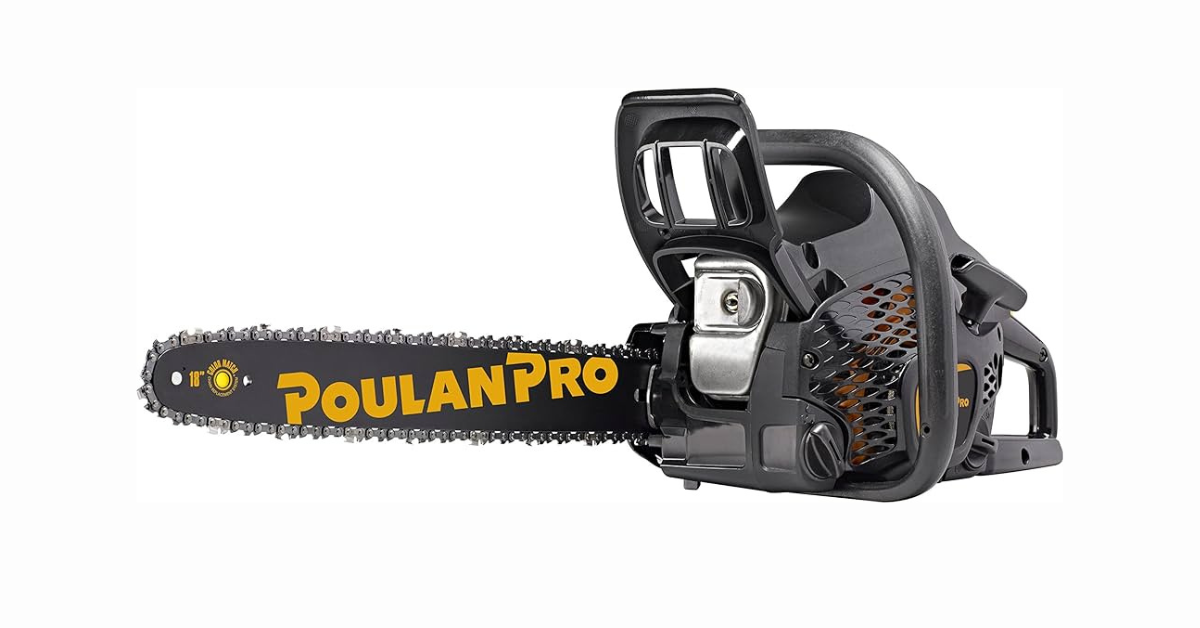
Since Poulan operates under Husqvarna’s umbrella, the two brands often share technologies. This partnership creates a strategic market positioning: while Husqvarna focuses on higher-end chainsaws primarily for commercial use, Poulan targets the consumer segment with more affordable options. Poulan Pro, specifically, serves as a sub-brand designed for both homeowners and professionals seeking reliable yet budget-friendly equipment.
Electrolux’s role in the transition
Before Husqvarna took control, Electrolux played a pivotal role in Poulan’s development. The Swedish appliance giant acquired Poulan in 1984 as part of its expansion strategy into the U.S. outdoor products market. Under Electrolux’s management, Poulan was integrated into a portfolio alongside Husqvarna.
A significant shift occurred in 2006 when Electrolux decided to spin off its outdoor products division, including both Poulan and Husqvarna, into an independent entity—the Husqvarna Group. This strategic move allowed for more focused growth in both professional and consumer segments of the outdoor power equipment market.
Why this matters to consumers
Understanding who manufactures Poulan chainsaws directly impacts your purchasing decisions. First, the Husqvarna connection means Poulan benefits from advanced technology trickle-down effects. Shared engine designs and ergonomic features between brands improve performance and reliability across product lines.
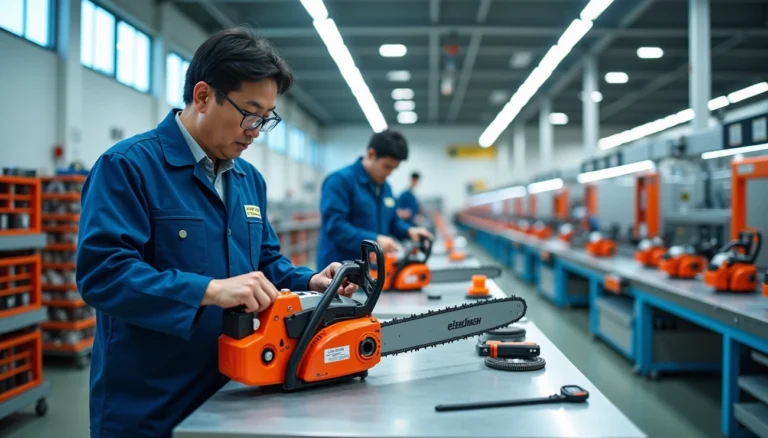
Additionally, manufacturing locations influence product quality and availability. As of 2025, North American Poulan products are primarily manufactured by Flex Ltd. at facilities in Orangeburg, South Carolina. Furthermore, in 2022, Husqvarna licensed production of select Poulan Pro walk-behind mowers to Evans in Mexico, indicating a partial outsourcing strategy.
For budget-conscious buyers, recognizing that Poulan chainsaws incorporate Husqvarna technology—albeit in a more economical package—provides confidence in their purchase. The relationship ensures Poulan products maintain respectable quality standards while hitting more accessible price points than their premium Husqvarna counterparts.
A Look Back: The History of Poulan
The story of Poulan begins with an innovative solution to a common logging problem. Back in 1944, Claude Poulan, while supervising German prisoners of war cutting pulpwood in East Texas, noticed that traditional chainsaws required three men to operate effectively – two for the saw itself and one to handle a pry pole that prevented the chain from binding. This observation led to a groundbreaking invention that would change the industry forever.
Founded in 1946 by Claude Poulan
Claude Poulan, a Louisiana lumberjack born in 1915, officially established Poulan Chain Saws in 1946 in Shreveport, Louisiana. Starting with just $4,000 and operating from a tiny 20-by-20 foot shed with rented equipment, Poulan began producing chainsaws using engines purchased from Homelite. The first model was appropriately named the 2400. The company was actually divided into two entities: Poulan Saw Company (headed by Harry Poulan as President and Claude as VP) and Poulan Manufacturing Company (with Claude as President and Harry as VP).
Early chainsaw models and innovations
The breakthrough that put Poulan on the map was Claude’s invention of the “bow guide.” Created from an old truck fender hammered into a curved piece, this guide allowed chainsaws to be operated by a single person rather than multiple workers. Consequently, this simple yet effective innovation revolutionized the post-war wood cutting industry.
By 1951, Poulan had purchased a 12-acre site in Shreveport and constructed a new manufacturing facility. That same year, the company began producing its first completely in-house manufactured chainsaw, also called the Model 2400. Throughout the 1950s, Poulan continued innovating, introducing models like the B100, F100, and K100. Notably, the K100 was not only powerful enough for professionals but also became the first practical saw for farmers and casual users.
Expansion into other outdoor tools
Following years of success in the chainsaw market, Poulan diversified its product line. In 1975, the company entered the water pump market with self-priming centrifugal pumps capable of moving 5,000-10,000 gallons per hour. Subsequently, in 1978, Poulan introduced a line of grass and weed trimmers. After selling the company, Claude Poulan himself went on to develop one of the first self-propelled lawn mowers under a different company name. This expansion set the foundation for Poulan’s eventual evolution into a comprehensive outdoor power equipment manufacturer.
Poulan Pro vs Husqvarna
Examining the relationship between these two brands reveals fascinating insights into their market positioning. Currently, as both brands operate under the same corporate umbrella, they maintain distinct identities yet share significant DNA.
Technology sharing between brands
Since Poulan is owned by Husqvarna, the two brands often share technologies. This relationship creates a unique ecosystem where innovations frequently trickle down from premium to value models. Nevertheless, the implementation varies significantly between product lines, with Poulan receiving simplified versions of Husqvarna’s advanced features.
Design and performance differences
Husqvarna chainsaws typically feature proprietary technology absent in Poulan models. These include Smart Start® for easier engine startup, X-TORQ® engines for better efficiency, Air Injection™ for improved engine life, and LowVib® anti-vibration technology. Essentially, Poulan uses more plastic components and simpler internals while Husqvarna employs premium materials for durability under heavy use.
Target users: homeowners vs professionals
Poulan primarily targets the mid-level consumer market, offering budget-friendly options perfect for occasional yard work. Meanwhile, Husqvarna positions itself as a premium brand for professionals and serious hobbyists. This distinction explains why Husqvarna commands higher prices despite technological similarities.
Does Husqvarna make Poulan Pro chainsaws?
Yes—Husqvarna definitely manufactures Poulan chainsaws. Interestingly, some entry-level Husqvarna models (specifically the 136 and 141) are actually rebadged Poulans, creating occasional confusion among buyers regarding which brand truly represents superior quality.
Where Are Poulan Chainsaws Made Today?
The manufacturing landscape for Poulan chainsaws has evolved substantially over the decades, reflecting broader shifts in global production strategies.
U.S. manufacturing facilities
Poulan’s U.S. production footprint remains significant, with headquarters in Charlotte, North Carolina. Currently, manufacturing of Poulan products for the North American market is primarily handled by Flex Ltd. at the Orangeburg, South Carolina facility. This arrangement operates under a long-term supply agreement with Husqvarna Group, covering both assembly of handheld products and production of wheeled products. Another important facility is located in McRae, Georgia, where designs prioritize user-friendly features tailored for homeowners.
Outsourcing to Mexico and global production
In recent years, Poulan has expanded its manufacturing beyond U.S. borders. Notably, in 2022, Husqvarna sold manufacturing tooling for Poulan Pro walk-behind mowers to Valsi S.A. de C.V. in Mexico and licensed the brand for regional production. This move mirrors the broader industry trend toward manufacturing diversification. Interestingly, some industry experts note quality differences between U.S. and Mexican production, suggesting that a Poulan saw made in Mexico at $299 may not match the durability of premium brands from Japan, Sweden, or Germany/America.
Impact on quality and availability
The shifting production landscape has created mixed results for consumers. On one hand, manufacturing diversification has improved product availability across regions. Conversely, Poulan faces ongoing challenges from past factory adjustments, including the 2018 relocation of snow thrower production from McRae, Georgia, which contributed to perceptions of inconsistent quality in some consumer reviews. Furthermore, as Electrolux (previous owner before Husqvarna) noted in corporate filings, relocation of manufacturing capacity is costly and presents possibilities of disruptions during transition periods.
Conclusion
Understanding who stands behind Poulan chainsaws provides valuable context for your next purchase. Throughout its 75+ year journey from a small Louisiana workshop to becoming part of the world’s largest chainsaw manufacturer, Poulan has maintained its identity as a brand focused on affordability without sacrificing essential performance.
Undoubtedly, the Husqvarna connection represents the most significant factor in Poulan’s current market position. This relationship allows budget-conscious homeowners to access simplified versions of professional-grade technology at more accessible price points. Therefore, when you purchase a Poulan chainsaw, you’re essentially getting Husqvarna engineering adapted for occasional rather than commercial use.
Manufacturing locations also significantly impact what you receive when buying a Poulan product. While many items come from U.S. facilities like the Orangeburg plant in South Carolina, others originate from international production centers, particularly in Mexico. Consequently, savvy shoppers might want to check product origins before making final decisions.