How Many DB Is A Chainsaw? The Shocking Truth
A chainsaw typically produces between 106 and 125 decibels (dB) during operation. Many powerful chainsaws reach 119 dB or higher at the source, which can cause permanent hearing damage in minutes. Hearing protection such as earplugs or earmuffs with a high Noise Reduction Rating (NRR) is required.
Understanding chainsaw decibel levels
The world of chainsaw noise is measured in decibels, but understanding what these numbers mean can help you grasp just how powerful—and potentially dangerous—these tools truly are.
What is a decibel (dB)?
A decibel (dB) is a unit that measures sound intensity on a logarithmic scale, not a linear one. This means small increases in decibel numbers represent massive jumps in actual sound intensity. For instance, every 3 dB increase doubles the sound energy, while a 10 dB increase represents a tenfold rise in sound power. This logarithmic scale was developed because human hearing perceives sound logarithmically rather than linearly.
Furthermore, our ears have an extraordinary dynamic range—the difference between the quietest sound we can hear and the loudest we can tolerate exceeds a trillion-fold power ratio. This vast range is more conveniently expressed in decibels, where each 10 dB represents a power factor of 10.
Normal sound levels vs chainsaw noise
To comprehend how loud chainsaws truly are, let’s compare them with everyday sounds:
- Normal conversation: 60-70 dB
- Office environment: 60-70 dB
- City traffic: 80-90 dB
- Vacuum cleaner: 75-85 dB
- Chainsaw: 106-120 dB
Consequently, a chainsaw operating at 106 dB is approximately 16 times louder than normal speech. At their loudest (120 dB), chainsaws approach the threshold of pain, which begins around 125 dB. Notably, OSHA permits less than 30 seconds of exposure to 115 dB without hearing protection.
Why chainsaw noise feels so intense
Chainsaw noise isn’t just loud—it’s particularly intense due to several factors. The combustion engine creates significant noise through the movement and friction of its components, causing rapid air pressure changes. In addition, the high-speed chain rotation against the blade generates considerable additional noise.
The intensity varies based on operational mode. In idle conditions, chainsaws produce around 82 dB, but this jumps dramatically to 96 dB at half gas and reaches a dangerous 106-107 dB during full-speed operation. At these levels, safe operation time without hearing protection drops to just 15 minutes or less according to international standards.
Some suggest the distinctive chainsaw sound serves a safety purpose—its unique, unmistakable roar alerts anyone nearby to maintain distance. However, this safety feature comes with serious health implications for operators who must protect themselves against inevitable hearing damage.
Electric vs gas chainsaws: which is quieter?
When choosing between electric and gas chainsaws, noise level often becomes a decisive factor, especially for homeowners concerned about disturbing neighbors or their own hearing health.
Typical dB range for electric chainsaws
Electric chainsaws operate at significantly lower noise levels compared to their gas-powered counterparts. Typically, these quieter machines produce noise ranging from 85-95 dB. Some studies indicate electric chainsaws (excluding battery-powered models) can reach up to 102 dB at the operator’s ear. Nevertheless, even at their loudest, electric chainsaws remain noticeably quieter than gas models.
The Husqvarna electric model, for instance, measured just 71 dB at 25 feet—an impressive 20-30 dB less than comparable gas-powered saws. Beyond lower noise, electric chainsaws offer additional benefits including reduced vibration, no exhaust emissions, and simpler operation.
Typical dB range for gas chainsaws
Gas chainsaws create substantially more noise, generally exceeding 100 dB during operation. Most gas models operate between 106-117 dB at the operator’s ear, with some reaching up to 120 dB. The National Institute for Occupational Safety and Health (NIOSH) and OSHA measurements confirm these high levels, with chain saws typically measuring around 125 decibels.
Surprisingly, even at idle, gas chainsaws produce approximately 82 dB, jumping to 96 dB at half throttle before reaching their full roar above 106 dB. One popular gas model produced an ear-splitting 109 dB at point-blank range and remained at 89 dB from 60 feet away.
Which is better for residential use?
For residential settings, electric chainsaws clearly offer advantages. They’re up to nine times quieter than gas chainsaws, making them more suitable for urban and suburban neighborhoods where noise ordinances may restrict loud equipment operation.
Considering the narrow gap in cutting performance between modern electric and gas models, alongside electric options’ reduced noise pollution, homeowners generally benefit from selecting an electric chainsaw. This choice especially makes sense for occasional users who primarily need to handle smaller cutting tasks near their homes.
Despite electric chainsaws being quieter overall, it’s worth noting that both types still exceed the 85 dB threshold where hearing protection becomes necessary. Therefore, regardless of which type you choose, proper ear protection remains essential for safe operation.
What affects chainsaw noise levels?
Several factors combine to determine just how many db a chainsaw produces. Understanding these variables can help you select and maintain a quieter tool.
Engine type and size
The primary source of chainsaw noise comes from the engine itself. Two-cycle engines, commonly found in gas chainsaws, create significantly more noise than electric alternatives. Engine size directly correlates with noise output—larger, more powerful engines typically generate higher decibel readings. This explains why professional-grade forestry chainsaws, with their larger engines, can reach alarming levels of 106-117 dB.
Chain speed and tension
The rapid spinning of the chain contributes substantially to overall noise levels. At idle, chainsaws produce approximately 82 dB, but this jumps dramatically to 96 dB at half throttle, finally reaching 106-107 dB during full-speed operation. Proper chain tension plays a crucial role in noise reduction—loose chains create additional vibration and rattling sounds.
Material being cut
Interestingly, what you’re cutting affects noise production. Research shows that cutting direction relative to wood grain influences both vibration and noise levels. Additionally, harder materials typically generate more resistance against the chain, potentially increasing decibel output.
Maintenance and wear
A well-maintained chainsaw runs more efficiently and quietly. Worn components, dull chains, and loose parts create excess friction, vibration, and subsequently more noise. Implementing effective exhaust and intake mufflers can reduce noise levels by 18-24 dB, making a substantial difference in operator comfort and safety.
Is chainsaw noise a health or legal issue?
Chainsaw operation crosses from mere inconvenience into serious health and legal territory, often without users realizing the potential consequences.
Hearing damage risks from chainsaw use
Chainsaw noise isn’t just annoying—it’s dangerous. Most chainsaws produce between 100-120 dB, well above the 85 dB threshold where hearing damage begins. At these levels, even brief exposure can cause permanent harm. Chain saws typically measure at 125 decibels, making them among the loudest tools commonly used.
Prolonged exposure leads to clear symptoms: muffled hearing, tinnitus (ringing), and eventually needing higher TV volumes. Furthermore, these effects aren’t isolated—noise up to 85 dBA induces stress, plus raises blood pressure and heart rate.
Local noise ordinances and neighbor complaints
Most communities strictly regulate excessive noise through ordinances. Many towns prohibit sound levels above certain decibel thresholds—typically around 60 decibels for average acceptable noise. These ordinances often specify “quiet hours” (commonly 10 p.m. to 7 a.m.) when chainsaw operation may be expressly prohibited.
Violations can result in citations, fines up to $500 per occurrence, or even imprisonment for repeated offenses. Moreover, neighbors disturbed by chainsaw noise have legal recourse under nuisance laws.
How to measure chainsaw noise at home
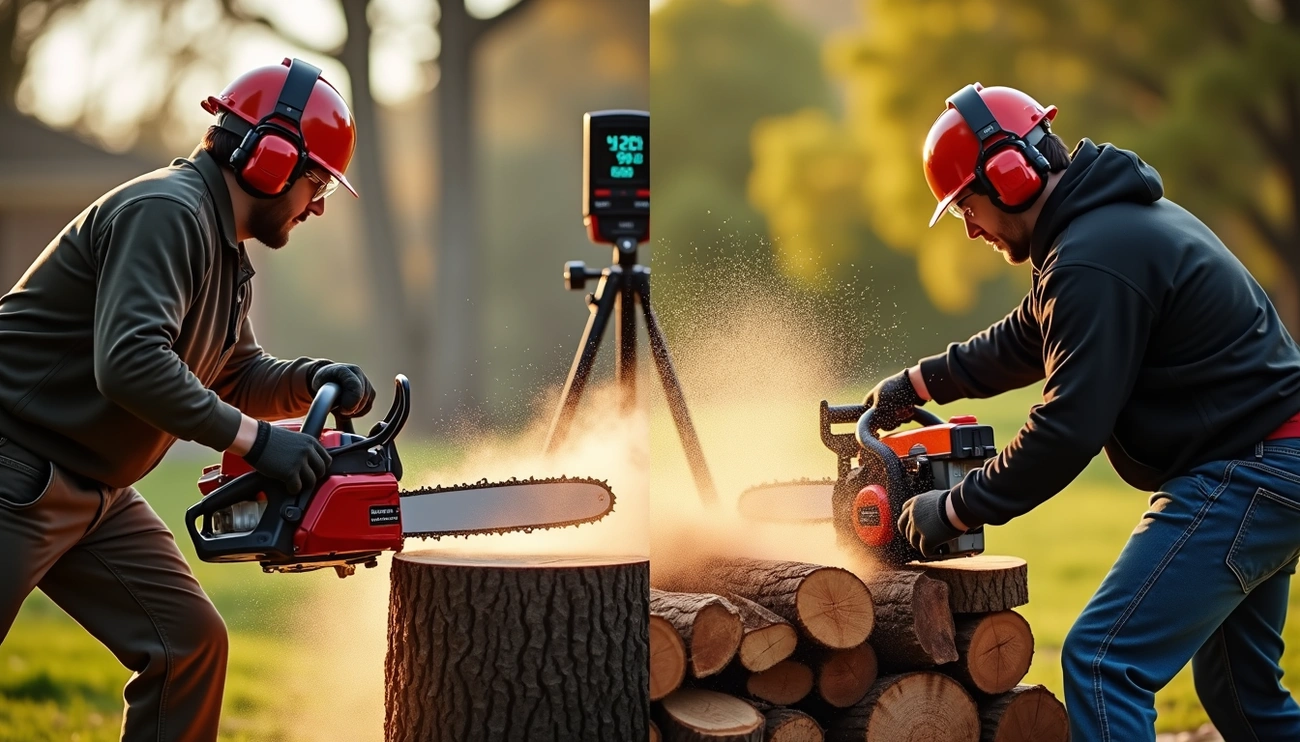
To verify chainsaw noise levels yourself, use a sound level meter. Position it at your property line, at least five feet from walls or obstructions. Even inexpensive sound meters can provide useful readings—one hobbyist measured varying levels (80-100 dB) depending on saw type.
Sound measurement apps offer another accessible option for documentation if you’re concerned about potential ordinance violations.
Conclusion
Chainsaws rank among the loudest tools most people will ever handle. After seeing the shocking numbers, we now understand why proper protection matters so much. Exposure to these intense sound levels, especially from gas-powered models reaching 120 dB, can damage hearing almost instantly.
While electric chainsaws offer a quieter alternative at 85-95 dB, they still exceed safe hearing thresholds. Therefore, regardless of which type you choose, hearing protection remains essential. Regular maintenance also makes a significant difference—keeping chains properly tensioned and components well-lubricated can reduce unnecessary noise.
Beyond personal health concerns, chainsaw noise carries legal implications too. Most communities enforce noise ordinances that limit when and how loud you can operate such equipment. Neighbors certainly won’t appreciate early morning tree cutting that exceeds local sound limits.