How to Store a Chainsaw After Use (Without Any Hassle)
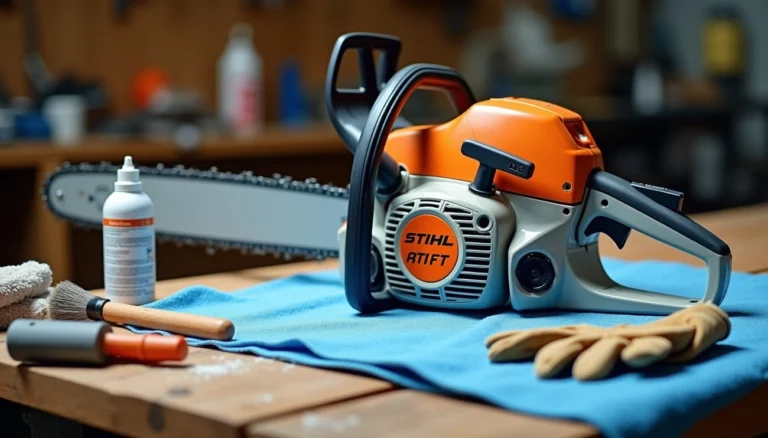
Store a chainsaw after use by cleaning the bar, chain, and air intake, then checking chain tension and lubrication. For gas chainsaws, drain fuel or add fuel stabilizer for storage over 30 days. For battery models, remove the battery. Store the chainsaw in a dry place with a bar cover to prevent rust and damage.
Step 1: Prepare the Chainsaw for Storage
Proper chainsaw preparation before storage is the first essential step in maintaining your equipment. This process requires attention to detail but pays off when your saw is ready for immediate use next time.
Let the chainsaw cool down
First, after finishing your cutting tasks, allow your chainsaw to cool completely. Hot engines and components can be dangerous to handle and might damage storage containers. Furthermore, attempting to clean or disassemble a hot chainsaw risks burns and injury. The cooling period gives you time to gather necessary cleaning supplies for the next steps.
Inspect for damage or loose parts
Once cooled, perform a thorough inspection of your chainsaw. Look carefully for any broken or missing parts that might need attention before storage. This examination should include:
- Checking all fasteners, screws, and bolts to ensure they remain tight
- Examining the machine for visible cracks or signs of wear
- Inspecting the guide bar, saw chain, and chain catcher to verify correct fitting
If you discover any issues requiring repair, consider taking your chainsaw to a professional dealer rather than attempting complex fixes yourself. As experts from STIHL recommend, addressing maintenance needs immediately prevents small problems from becoming major repairs.
Remove the battery if applicable
For battery-powered chainsaws, removing the battery before storage is crucial. This simple step prevents unnecessary battery drain during storage periods. Moreover, battery removal serves as an important safety measure by eliminating the risk of accidental startup.
Store the removed battery separately in a cool, dry location away from direct sunlight. This practice extends battery life and maintains performance. According to chainsaw experts, “Most batteries are OK if they are exposed to rain when in use, but not when stored long term”.
Following these preparation steps sets the foundation for proper chainsaw storage. Subsequently, we’ll move on to addressing the internal systems to prevent leakage and damage during your chainsaw’s downtime.
Step 2: Drain and Clean Internal Systems
Preventing internal damage to your chainsaw requires thorough attention to its fuel and oil systems. Internal fluids can cause significant problems during storage if not properly managed.
How to store chainsaw without oil leaking
Nearly all chainsaws tend to leak bar oil during storage. To prevent this issue, I recommend draining the bar oil completely before storing your chainsaw. Alternatively, if you need to keep oil in the tank, place the chainsaw on its side with the oil cap pointing upwards and slightly open the cap. This position releases pressure that builds up from temperature fluctuations, effectively preventing leaks.
Drain fuel and oil in a ventilated area
Safety comes first whenever handling chainsaw fluids. Always drain fuel and oil in a well-ventilated area. For the draining process:
- Turn the chainsaw upside down over a funnel to collect the fluids
- Empty the fuel tank completely into a suitable container
- Dispose of old fuel properly or reuse it in other equipment if appropriate
This process not only prevents leakage but additionally protects the internal components from damage caused by stale fuel.
Run the engine until it stops
After draining the main fuel tank, I’ve found that starting the chainsaw and letting it run at idle until it stops is essential. This process:
- Clears remaining fuel from the carburetor circuits
- Prevents the carburetor diaphragms from sticking together
- Eliminates the risk of varnish formation in small passageways
For battery-operated chainsaws, the process differs slightly. Instead of engine draining, clean the battery with a damp cloth and store it separately from the chainsaw.
Clean the fuel and oil tanks
Once drained, inspect both tanks for debris or residue. For long-term storage exceeding one month, a thorough cleaning is necessary. For gas-powered models, consider adding a small amount of high-quality fuel mixture to the empty tank. This leaves a protective coating on engine components, especially beneficial for winter storage. Lastly, wipe down external surfaces to remove any spilled fluids or residue.
Step 3: Disassemble and Clean the Chainsaw
Thorough cleaning is a critical aspect of proper chainsaw storage. Once you’ve drained the fluids, it’s time to break down your saw for a deeper clean.
Remove the bar and chain
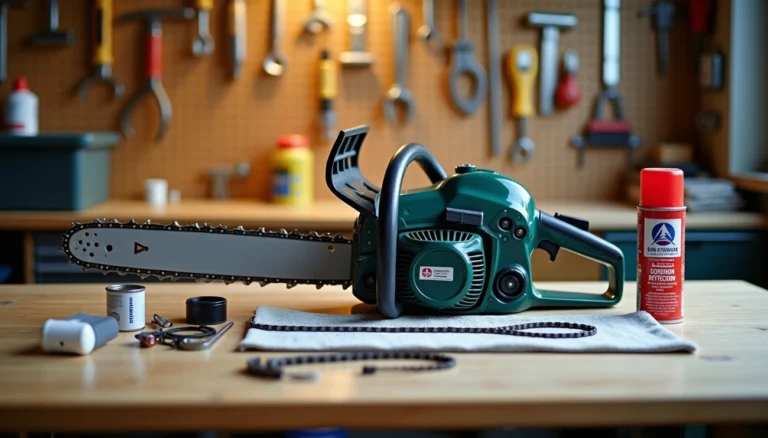
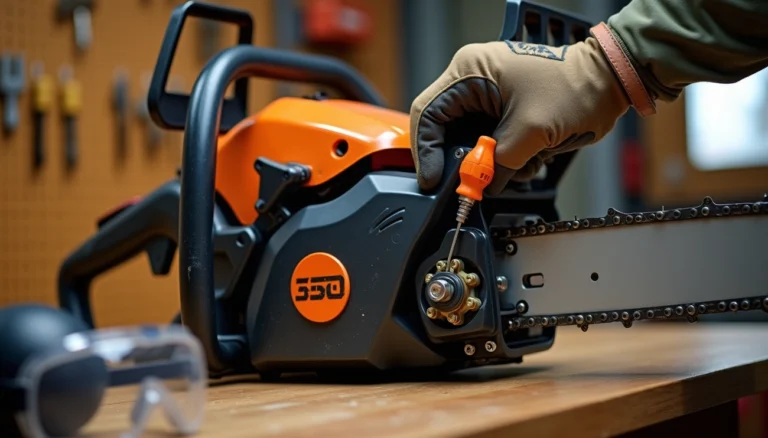
First, take off the side cover of your chainsaw. Next, carefully lift the chain off the sprocket and slide the bar away from the saw body. This separation allows for better access to clean all components thoroughly and prevents rust formation during storage.
Clean debris from chain, bar, and sprocket
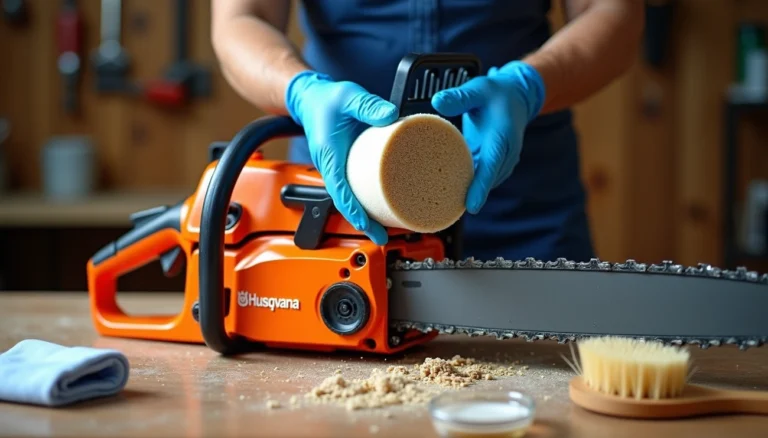
Once disassembled, I clean the saw chain and guide bar with a high-quality resin solvent. For stubborn buildup on chains, some professionals recommend soaking in a mixture of ammonia and water overnight, followed by a WD-40 rinse. After cleaning, I always spray both components with protective oil before storing them separately.
Check and clean the air filter
A dirty air filter can cause your chainsaw to bog down or even fail to start. To clean it:
- Remove the cylinder cover and take out the air filter
- Examine it for dirt buildup or damage
- For heavily soiled filters, wash with warm soapy water and rinse thoroughly
- Allow to dry completely before reinstallation
Inspect and clean the oiler system
The oil delivery system needs particular attention. I use a small brush to clear debris from the oil outlet port on the chainsaw body. Similarly, I clean the guide bar’s oil channels and ensure the chain’s oil holes remain unblocked.
Flip the bar to reduce wear
Regularly flipping your chainsaw bar prevents one-sided wear and extends its lifespan. I perform this simple maintenance step every few uses or after sharpening. In fact, many professionals flip their bars whenever they remove them for cleaning.
After completing these cleaning steps, your chainsaw will be properly prepared for storage without risk of deterioration.
Step 4: Store the Chainsaw Safely and Correctly
After completing the cleaning process, finding an appropriate storage location becomes the final crucial step for maintaining your chainsaw’s longevity.
Best way to store chainsaw in a dry place
The ideal storage location for any chainsaw must be dry and well-ventilated. I’ve found garages and insulated tool rooms work exceptionally well since they provide protection against the elements. Primarily, you want to avoid outdoor storage as it exposes your equipment to moisture and temperature fluctuations. A lockable room or cupboard serves as both a practical and safe storage solution.
Avoid direct sunlight and moisture
Exposure to sunlight can cause UV degradation of the chainsaw’s body. Consequently, store your tool away from windows or areas with direct sunlight. As well, moisture is every chainsaw’s enemy – it causes condensation to form, potentially leading to rust development. Therefore, hanging your chainsaw or placing it on a shelf helps keep it dry, particularly in case of unexpected water exposure.
Use a dust-proof case or cover
Investing in a protective covering prevents dust accumulation during storage periods. Options include:
- Manufacturer-designed carry bags and cases
- Scabbards or bar covers to protect the chain
- Thickened Oxford cloth covers that are waterproof and tear-resistant
Hang or place the chainsaw securely
Certainly, if the fuel tank is empty, you can safely store your chainsaw vertically or even hang it up. Some users prefer wall-mounted hooks or brackets that support the full weight. Alternatively, store it upright on its base to prevent leaks or chain misalignment.
Keep out of reach of children
Always treat chainsaws as live tools, even when powered off. Store them in locked cabinets or shelves with barriers, ideally in a lockable room where children don’t frequently visit.
Conclusion
Proper chainsaw storage significantly extends the life of your equipment and ensures it remains ready for immediate use when needed. Throughout this guide, we’ve seen that storage involves much more than simply placing your chainsaw in a shed or garage after use.
The preparation process requires cooling down your chainsaw, inspecting for damage, and removing batteries when applicable. Additionally, draining fuel and oil properly prevents internal damage while eliminating leakage issues that commonly plague stored chainsaws.
Thorough cleaning stands as perhaps the most crucial step for long-term chainsaw care. Your chainsaw deserves careful disassembly, debris removal, and protection against rust formation. Bar flipping and oiler system maintenance might seem like small details, but these steps make a substantial difference in your tool’s performance over time.