What Is Chainsaw Chain Pitch? A Simple Guide
Chainsaw chain pitch is the measurement that defines a chain’s size. It is calculated by measuring the distance across three consecutive rivets and dividing by two. Common pitches include 3/8 inch for general use and .325 inch for smaller chainsaws, ensuring proper fit and safe operation.
What is Chainsaw Chain Pitch?
The term “chain pitch” might sound technical, but understanding it is straightforward once you know what to look for. Let’s dive into this crucial chainsaw specification.
Definition of chain pitch
Chain pitch refers to the distance between the drive links on your chainsaw chain. More specifically, it’s calculated by measuring the distance between the center points of any three consecutive rivets (those small circular pins holding the chain together) and dividing that measurement by two. For example, if the distance between three rivets measures ½ inch, dividing by two gives you a pitch of ¼ inch.
Most chainsaw manufacturers express pitch either as a fraction (like 3/8″) or sometimes as a decimal (.404″). You’ll typically find this measurement displayed somewhere on your guide bar or in your chainsaw’s instruction manual.
Why pitch matters in chainsaw performance
The pitch measurement tells you about the overall size and weight of your saw chain. This specification isn’t just a random number – it directly impacts how your chainsaw performs in different cutting situations.
Furthermore, pitch must match perfectly between three critical components: your chain, the drive sprocket, and the bar tip sprocket. Mismatched pitch components create serious problems including:
- Binding: A tight chain struggles to move freely, causing friction and overheating
- Poor cutting: An improperly matched chain won’t engage correctly, reducing efficiency
- Derailment: The wrong pitch may cause the chain to jump off the bar groove
Additionally, no amount of power can compensate for mismatched components – as one mechanical engineer notes, “tiny mismatches create big wear because load always finds the weakest contact point”.
Common misconceptions about pitch
Many chainsaw users hold incorrect beliefs about pitch. One prevalent misconception is confusing the distance between two rivets with the actual pitch measurement. This seemingly minor error can lead to selecting a chain that’s either too large or too small for your bar groove.
Another misunderstanding is believing that pitch relates directly to bar length. In reality, two chainsaws with identical bar lengths might require completely different pitch chains.
Moreover, some users think changing to a more aggressive pitch will automatically improve cutting performance. However, this is incorrect – putting a more aggressive chain on a standard chainsaw won’t enhance performance. The right approach is ensuring your chain and saw match each other perfectly for maximum efficiency.
How to Measure Chainsaw Chain Pitch
How to Measure Chainsaw Chain Pitch
Determining your chainsaw chain pitch doesn’t require professional expertise. With the right approach, you can quickly identify this crucial measurement and ensure you’re using compatible components.
Step-by-step measurement method
Finding your chain pitch involves a simple mathematical calculation:
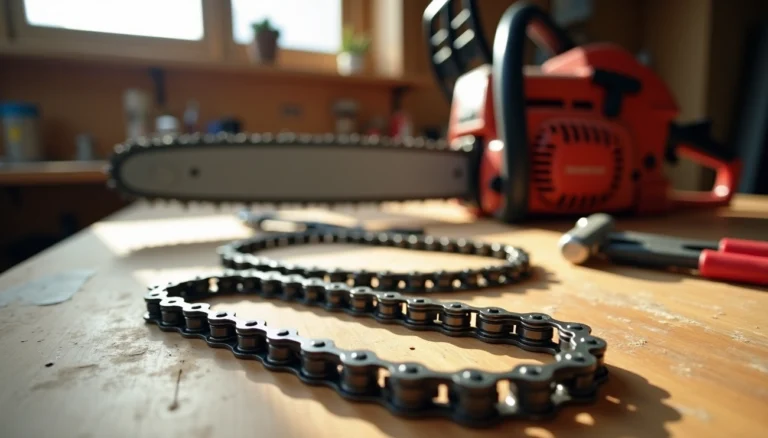
- Lay your chain flat on a stable surface
- Locate three consecutive rivets (the small metal pins connecting the links)
- Measure from the center of the first rivet to the center of the third rivet
- Divide this measurement by two
First, ensure your chain is straight when measuring. Afterward, take your time with the measurement—precision matters here. For example, if the distance between three rivets measures ½ inch, dividing by two gives you a chain pitch of ¼ inch.
Tools you can use to measure pitch
A standard ruler provides sufficient accuracy for most users, although a caliper delivers more precise results, especially when measuring center points of rivets.
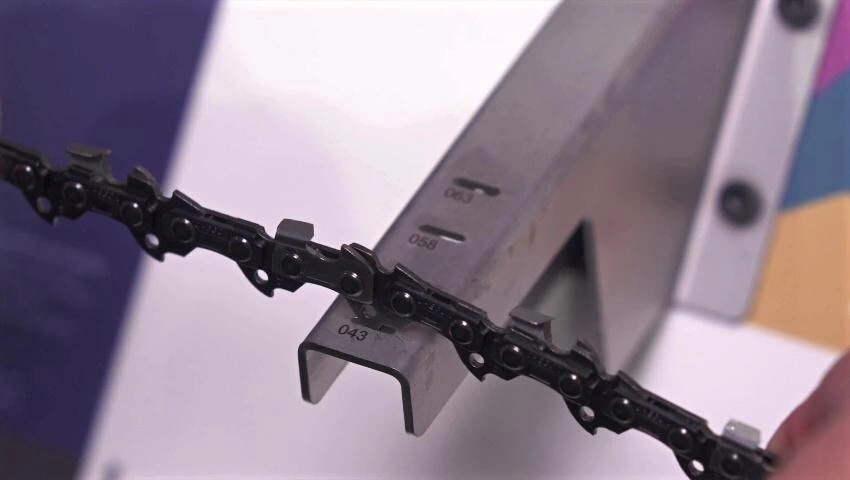
Alternatively, specialized tools like the Oregon Bar and Chain Measuring Tool or Granberg’s Pitch-N-Gage make identification effortless. These pocket-sized tools typically cost under $3 and can measure multiple chain specifications simultaneously. Some even include eight different measurements in one tool, including bar groove gage check, filing angles, and file sizes.
Where to find pitch info on your chainsaw
Instead of measuring, you can often find pitch information stamped directly on your chainsaw:
- On the guide bar’s tail
- On the chain’s drive link (look for stamped numbers)
- In your operator’s manual
- On the rim of the spur sprocket
- On the drive sprocket or clutch drum
On Oregon X-CUT chains, pitch is conveniently stamped on each drive link—usually indicated by a number (“8″ typically representing 3/8” pitch). This eliminates the need for manual measurement entirely.
Remember that pitch must match across your chain, bar, and sprocket for proper operation and safety.
Different Pitch Sizes and Their Uses
Different Pitch Sizes and Their Uses
Chainsaw chains come in various pitch sizes, each designed for specific applications. Let’s examine the five main pitch sizes and their ideal uses.
1/4″ pitch – for small electric saws
The 1/4″ pitch is the smallest chain size available, primarily designed for specialty applications. These chains work best with mini electric chainsaws, battery-powered tools, and precision carving saws. With its narrow kerf (.043″ gage), this chain requires less power while still removing substantial wood material. Consequently, it’s ideal for detailed work where precision matters more than raw cutting power.
.325″ pitch – for mid-range saws
For mid-range chainsaws, the .325″ pitch offers an excellent balance between cutting speed and power requirements. This size fits perfectly on models like Husqvarna 435/435e through 550XP. Particularly suited for professional forestry and industrial use, .325″ chains excel in tasks such as felling, bucking, and limbing.
3/8″ pitch – most common for pro users
The 3/8″ pitch represents the most popular chainsaw chain worldwide. Professional arborists and foresters prefer this size for its outstanding durability and cutting efficiency. Advanced versions like Husqvarna’s X-CUT C85 feature full chisel cutters that deliver exceptional performance while requiring minimal maintenance.
.404″ pitch – for heavy-duty cutting
Professional loggers tackling large timber often select .404″ pitch chains. These heavy-duty chains feature Oregon’s exclusive OCS-01 steel for superior durability. Notably, they’re designed for chainsaws with extreme torque capabilities, making them ideal for the toughest cutting jobs in professional forestry.
3/4″ pitch – for industrial harvesters
The largest chain pitch available, 3/4″ is exclusively designed for mechanized harvesting equipment—never for handheld chainsaws. Often called “Pond and Deck” chain, these massive links feature chipper cutters with rounded working corners for aggressive bites and exceptional durability. Their specialized design handles brutal cold-weather conditions while minimizing stretch and wear.
Matching Pitch with Other Chainsaw Parts
Matching Pitch with Other Chainsaw Parts
Think of your chainsaw as a finely tuned system where every part must work in perfect harmony. Beyond just selecting the right pitch, ensuring it matches across all components is absolutely critical.
Why pitch must match sprocket and bar
First, your chainsaw operates on a simple principle: the drive sprocket, chain, and bar tip sprocket must all share identical pitch. This three-part relationship functions like a key and lock mechanism. Indeed, the chain pitch tells the sprocket exactly how far to advance the chain with each revolution. Unlike some components, pitch compatibility leaves no room for compromise – all three elements must match perfectly.
What happens if pitch doesn’t match
Mismatched pitch creates serious problems:
- Binding and overheating: Incorrect pitch causes friction, excessive heat, and potential damage
- Poor cutting performance: The chain won’t engage properly, drastically reducing efficiency
- Dangerous derailment: Mismatched pitch increases risk of chain jumping off the bar
- Accelerated wear: Component lifespan shortens dramatically
Undoubtedly, attempting to use mismatched components is like “trying to use a 404 chain on a 30cc saw – it just won’t work”.
Tips for checking compatibility
According to experts, verifying compatibility is straightforward:
- Check for stamped markings on the bar indicating both gage and recommended pitch
- Consult your chainsaw manual for specific recommendations
- Look for pitch information stamped on the drive link or drive sprocket
- When replacing components, ensure all three measurements (pitch, gage, drive links) match exactly
Conclusion
Understanding chainsaw chain pitch proves essential for anyone using or maintaining chainsaws. Throughout this guide, we’ve examined what pitch actually means – the distance between drive links divided by two. Additionally, we’ve explored how to measure it accurately and where to find this critical information stamped on your equipment.
Different pitch sizes serve specific purposes, from the smaller 1/4″ pitch ideal for precision work to the massive 3/4″ pitch designed exclusively for industrial harvesters. Most professional users prefer the versatile 3/8″ pitch due to its excellent balance of efficiency and durability.
Perhaps most importantly, pitch must match perfectly across your chainsaw’s three key components: the chain, drive sprocket, and bar tip sprocket. Mismatched pitch leads to binding, overheating, poor performance, and potentially dangerous derailment. This knowledge helps you avoid costly mistakes when replacing parts.